


%20Cover%20photo%20Jan%2011.png)
University of Kansas students pause for a selfie at a futebol game during their winter break study abroad course.
Our first free day in Salvador came after a full week of early mornings, dense history, and constant learning. It was the first pause in the rhythm of the trip—a day without an agenda or required outcomes. In a place like Salvador, that kind of space doesn’t feel empty. It feels invitational.
A needed pause in the rhythm of the trip
We spent our morning and early afternoon shopping at the mall—Brazil does malls exceptionally well—followed by attending the opening futebol game for Bahia. Bahia won (clearly we were good luck 😉).


Later that evening, we attended a traditional Candomblé ceremony. But earlier in the week, Gabi and I had already encountered the tradition in a more personal way through shell readings with a high priest at a Candomblé temple.
Candomblé: a tradition formed through survival

Candomblé is an Afro-Brazilian religious tradition shaped by the forced displacement of West and Central African peoples during the transatlantic slave trade, particularly Yoruba, Fon, and Bantu communities. Enslaved Africans were prohibited from practicing their religions openly. To survive, these traditions adapted—most notably through religious syncretism, aligning orixás with Catholic saints as a form of protection rather than conversion. This blending was not born of choice, but of necessity.

As a result, Candomblé and Catholicism exist in close relationship in Bahia. Many practitioners participate in both traditions. Catholic feast days, imagery, and saints appear alongside Afro-Brazilian rituals, not as contradictions, but as parallel systems of meaning shaped under colonial constraint. Understanding Candomblé requires understanding this history of adaptation, resilience, and resistance.
The Orixás and the knowledge carried in the body
At the center of Candomblé are the orixás (oh-ree-SHAHS)—divine forces associated with elements of nature, human qualities, and moral orientation. Each orixá has specific rhythms, songs, colors, movements, and stories. These elements are not symbolic in a loose sense; they are precise and intentional. Knowledge of the orixás is carried through the body as much as through language.
Sitting across from a high priest
Earlier in the week, during our shell readings—known as jogo de búzios (ZHO-goo jeh BOO-zee-ohs)—a high priest used cowrie shells within a structured, lineage-based system of divination. The shells are cast in specific patterns and interpreted through training, ritual, and ancestral knowledge. The reading is less about prediction and more about orientation—offering insight into tendencies, challenges, and sources of strength. The high priest shared insights into our health (it has once again been confirmed that I do not drink enough water) and offered natural remedies to other things that may be ailing us involving common herbs in conjunction with western medicine. The orixás also had things to relate about our personal and professional relationships and professional trajectories—happy to report that the orixás say things are looking great for CU Clinical Ethics in 2026!
The shell reading process places you in a vulnerable position. You sit quietly while meaning unfolds slowly. When the reading is conducted in another language and mediated through a translator, that vulnerability deepens. You are asked to trust—not only the person offering guidance, but the interpretive process itself. There is no rush to clarity. Uncertainty is not treated as something to be eliminated.
Discovering our guiding Orixás
Through this process, Gabi learned that her orixá is Iansã (ee-ahn-SAHN), also known as Oyá. Iansã is associated with wind, storms, lightning, and fire—forces of rapid change and transformation. She is often understood as an orixá of movement, transition, and courage, closely linked to intensity and the ability to move through upheaval rather than resist it.

My orixá is Oxóssi (oh-SHO-see). Oxóssi is associated with the forest, hunting, knowledge, and provision. He is often described as patient, observant, and precise—an orixá connected to learning, focus, and sustaining the community through attentiveness rather than force.
We couldn't take photos ore videos of the ceremony or shell readings that we participated in, but this video below shows examples of both.
Nightfall at the ceremony
Later that evening, the Candomblé ceremony brought many of these elements together. The ceremony unfolded through drumming, singing, and movement—each carefully structured. Different rhythms correspond to different orixás. Songs are sung in Yoruba, calling specific orixás into the space. The movements of the dancers reflect the characteristics of the orixás being honored: the sweep and speed of wind, the grounded presence of the forest, the intensity of fire, the fluidity of water.
This is not choreography in the theatrical sense. It is invocation. The body becomes a site of memory and communication, carrying histories that were never written down but never lost. To witness this is to understand how culture survives through embodiment.
One of the most striking aspects of Candomblé—particularly in Salvador—is its openness. It does not seek to convert or claim exclusivity. It welcomes people across identities, backgrounds, and belief systems. It does not position itself in opposition to science or medicine. Instead, these domains coexist. Care for the body, spirit, community, and natural world are understood as interconnected rather than competing.
What health care in the US can learn from Candomblé
As someone who works in clinical ethics and medicine, this experience stayed with me in a very particular way. So much of ethical practice involves sitting with uncertainty, listening across difference, and recognizing that meaning is often carried through relationships rather than rules. Candomblé offers a model of care that resists false binaries—body versus spirit, tradition versus modernity, religion versus medicine. Instead, these domains are understood as working in concert.
That integration feels especially instructive in healthcare spaces that often rush toward clarity, resolution, or control at the expense of presence and understanding.
Our free day held all of it: the ordinary and the sacred, the personal and the communal. None of it felt out of place.
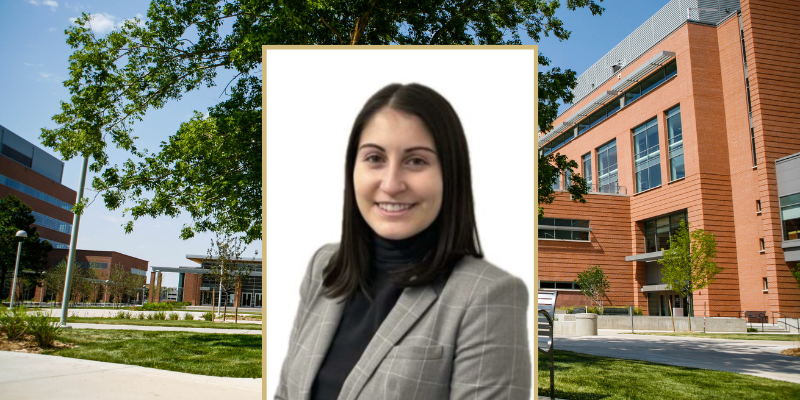
Chelsey Patten, DBe, HEC-C
Director for Clinical Ethics & Assistant Professor of Medicine
Race, History, & Health in Brazil Program Director
%20Jan%2013%20Cover.jpg)
%20Jan%2012%20cover.jpg)