

Have you ever stopped to think about how massive research and medical equipment actually makes its way to the CU Anschutz Medical Campus? Or what happens when it’s time to upgrade to newer, more advanced technology? And what becomes of the older machines? A recent campuswide effort sheds light on the complex process behind these major moves and upgrades.
After more than six months of careful planning, a high-security decommissioning of a Cs-137 irradiator was completed in the vivarium of Research 1 North on June 11. Originally installed in 2009 during the building’s construction, the irradiator – used for research requiring replicated disease models – emitted highly concentrated radiation and required multiple layers of physical and personnel security, including iris scanners and badge access, limiting researcher access to the equipment.
With the coordination of over 70 individuals and departments – including University Police, Environmental Health and Safety (EHS), Facilities Management, Events, the Office of the Vice Chancellor for Research, and several federal and state agencies – the removal was nearly a reverse of its original installation. The Cs-137 source was composed of compacted rods and encased in a main cask weighing 67,000 pounds.
The irradiator was shipped to a Department of Energy (DOE) facility for processing and potential repurposing. This effort was part of the Cesium Irradiator Replacement Project (CIRP), funded by the DOE’s National Nuclear Security Administration, which aims to eliminate Cs-137 sources nationwide by 2027. At CU Anschutz, two Cs-137 irradiators were removed over the past several years as part of the CIRP effort, making way for new X-ray technology on our campus.
The new X-ray irradiator requires much less security, and it expands access to more researchers for self-service use. Andrew Halloran, MS, CHP, radiation safety officer in EHS, said, “By replacing the cesium source with an X-ray source, we were able to substitute in a comparable technology while removing the physical and administrative controls that limit access. This will allow expanded availability to the research community as there are less hurdles for training and use.”
The operation required months of stakeholder meetings, detailed logistics and onsite coordination, including a 12-hour prep day and 10-hour execution day. The successful removal not only brought significant cost savings but also reduced security and safety risks, but also enabled CU Anschutz to bring state-of-the-art X-ray technology to our research community.
“Planning and executing this project were significant undertakings for many people on campus – all of whom have day jobs and other commitments. Safety and security were the top priorities, while striving to minimize disruptions to the research activities,” said Ethan Carter, PhD, research services director of EHS and incident commander for the decommissioning event.
The Herculean effort was a clear demonstration of CU Anschutz’s collaborative spirit and professionalism, and a prime example of what is possible when we come together as a campus.
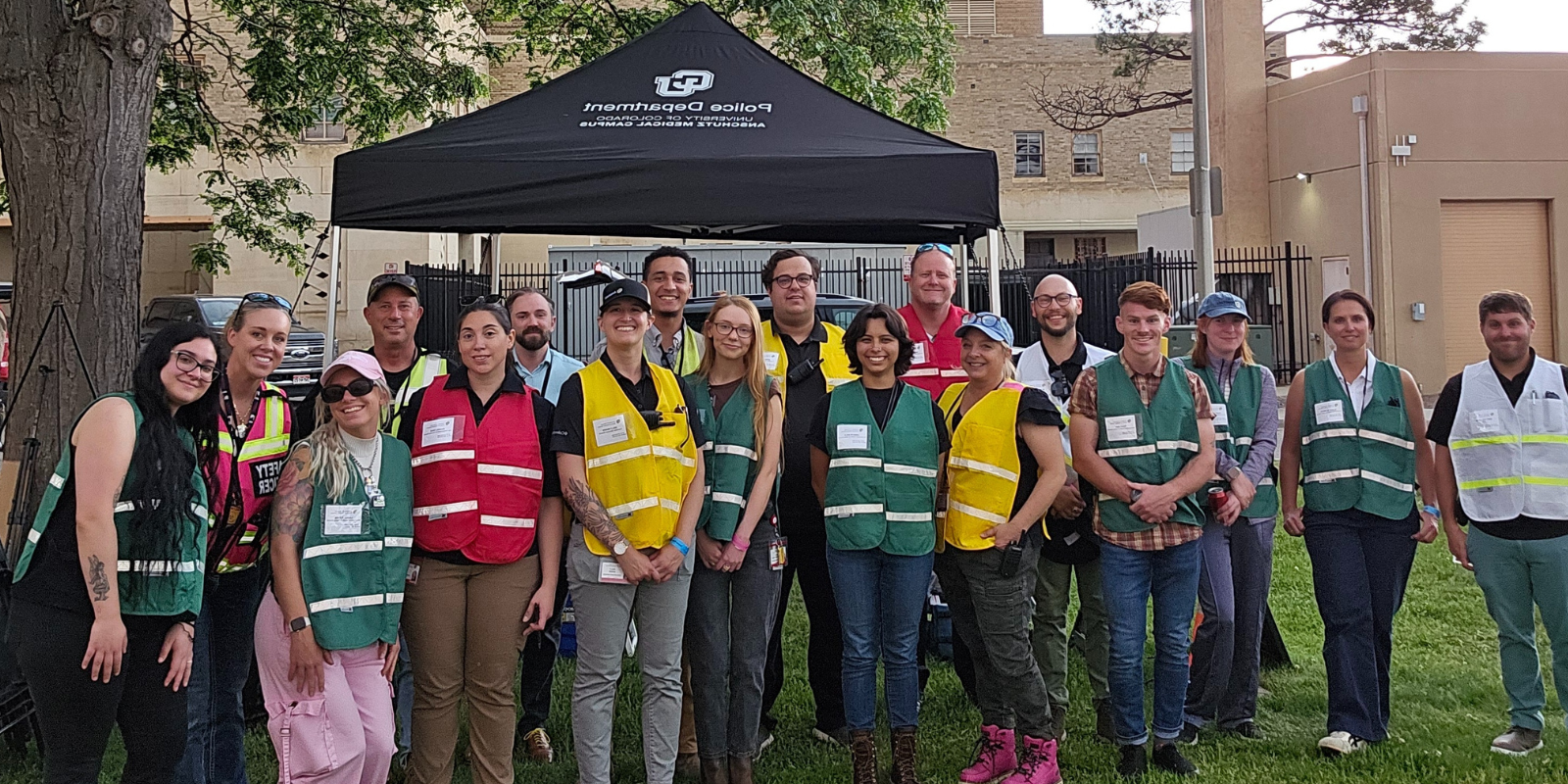
Photo at top: The Irradiator Decommissioning Team made up of individuals from several campus department poses for a group photo after completing a safety briefing, ready to ensure secure and efficient operations.
Check out photos from the move.




.png)