




The Centers for Health, Work & Environment have designed and launched an innovative program: the Occupational and Environmental Medicine Complementary Pathway (OEM-CP), a one-year virtual program that streamlines requirements and guides practicing physicians towards board eligibility in occupational medicine without stepping away from their careers. No other program like this exists.
Occupational medicine is one of the most critical and overlooked specialties in American healthcare. Physicians trained in this field help workers understand whether their illnesses or injuries are work-related, guide them safely back to work, prevent occupational disease before it starts, and navigate one of the most complicated medical-legal systems in practice. Yet there are nowhere near enough occupational medicine doctors to meet demand.
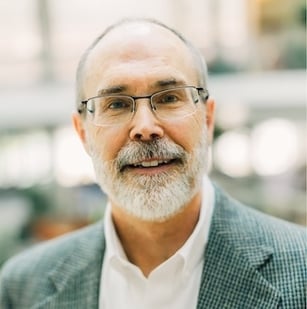
"There's a significant shortage in occupational and environmental medicine professionals," said Paul Ogden, MD, MSPH, Director of the University of Colorado Occupational & Environmental Medicine Residency and Program Director of the newly launched OEM-CP program.
Ogden continued, "There are so many jobs that need to be filled, and many of them are being filled by professionals without comprehensive occupational medicine training."
Recognizing this critical gap, the Centers for Health, Work & Environment at the Colorado School of Public Health created OEM-CP to give practicing physicians a direct route towards board eligibility in occupational medicine — no residency-length commitment, no career pause required.
A Specialty With "Unlimited Jobs"
Occupational medicine occupies a unique position in American healthcare. It sits at the intersection of clinical medicine and public health, concerned with keeping workers healthy and helping employers maintain productive, safe workforces. It's a specialty where physicians must understand work-relatedness, causation, prevention, return-to-work protocols, and the medicolegal frameworks that govern workers' compensation and occupational safety.
The problem is clear: there aren't enough physicians trained to do this work.
"The specialty is very small, and there are limited opportunities to train in it," Ogden explained. "But there are unlimited jobs in the field. Most physicians have not learned about occupational medicine, and only transition to it much later in their careers. When they do, they're missing the comprehensive training that the field demands."
In practice, this shortage means employers and injured workers often interact with physicians who lack formal occupational medicine training. Those physicians may not understand causation analysis, may not know the nuances of return-to-work protocols, or may miss prevention opportunities that could keep workers safe. The stakes are high: a worker's ability to return to employment, their long-term health, their financial security, and their sense of purpose often depend on the quality of care they receive from an occupational medicine physician.
A Practical Solution for Busy Clinicians
The OEM-CP Program addresses this gap by meeting physicians where they are: in their practices, with their careers already underway, with lives and commitments that make traditional two-year residency training impossible.
The program runs for one year and is delivered entirely online. It integrates clinical practice with rigorous academic instruction through weekly seminars, case-based discussions, and individualized faculty review of clinical cases. Participants continue working full-time, and the program is structured to require about half a day per week for academic activities.
The curriculum is comprehensive. Participants submit clinical notes for faculty review and feedback, gaining expertise in clinical occupational and environmental medicine practice. They engage with material on occupational exposures, causation analysis, regulatory and medicolegal frameworks, epidemiology, and evidence-based decision-making. They also develop an academic product—a research project, quality improvement initiative, conference presentation, or manuscript—ensuring they contribute new knowledge to the field.
Participants complete eight months of direct patient care in an occupational and environmental medicine setting. They also present and discuss active clinical cases during weekly seminars, participate in journal clubs, and work toward achieving ACGME occupational and environmental medicine resident milestones.
The result is a cohort of physicians who are rigorously trained, clinically competent, and positioned to pursue board certification—all without stepping away from patient care.
From Family Medicine to Occupational Health: A Physician's Story
Mark Mallozzi, MD, MPH, who recently completed the OEM-CP Program while maintaining his faculty position at National Jewish Health, experienced firsthand how the program works in practice.
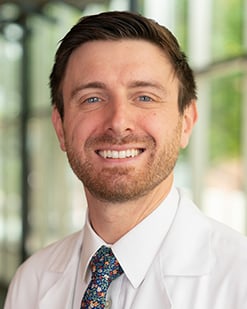
"I undertook this training while also continuing to work full-time in my existing faculty position," he recalled. "The program was able to be scheduled around my existing duties during my existing administrative time." Said Mallozzi.
For Mallozzi, the immediacy and relevance of the material was striking. "The didactics covered foundational concepts in occupational medicine and complemented my on-the-job training well. The topics we covered were immediately applicable to my work and helped me master key concepts."
He appreciated the breadth of knowledge the program provided. "In addition to foundational aspects such as work-relatedness, return to work, and work restrictions, we covered important clinical topics to help me become comfortable with an approach to common occupational medicine presentations."
One particularly valuable experience was Mallozzi's rotation with the Colorado Division of Workers' Compensation. "That gave me valuable insight into the behind-the-scenes work being done at the division," he said. "By the end of the training program I felt well prepared to sit for occupational medicine boards and to grow my practice in occupational medicine."
Why This Matters for Workers
Behind every program, every curriculum, and every board exam is a human imperative: workers need better care.
"If we only remember one thing about this program, it should be that occupational medicine improves the care of workers," Ogden emphasized. The specialty helps physicians distinguish between necessary and unnecessary treatments. It helps them understand causation. It positions them to prioritize prevention, working with employers to prevent injuries and illnesses before they happen.
Occupational medicine also helps workers navigate what is often a complicated and adversarial system. Injured workers need physicians who can advocate for them, who understand the medicolegal landscape, and who are committed to the ethical practice of occupational medicine.
"We're expanding opportunities for physicians to reach outside the world of traditional occupational medicine," Ogden noted. "We're showing that it's possible to do this in non-physician settings as well. Occupational health professionals from diverse backgrounds now have opportunities that were not available before."
The Centers for Health, Work & Environment is also expanding the Colorado School of Public Health's reach across communities outside of Colorado. The OEM-CP Program can be accessed from anywhere, allowing physicians nationwide to develop expertise in occupational medicine and strengthen the workforce.
Building a Movement
The OEM-CP Program is now accepting applications for a cohort starting January 2027, and represents both a practical solution and a philosophical commitment: that occupational medicine training should be accessible to physicians who already serving workers in their communities.
"The American Board of Preventive Medicine recognized that there was a need, and they created space for programs like ours to address it. We are honored to offer this important program", said Ogden.
For physicians considering the program, the pitch is straightforward: deepened knowledge, stronger skills, and the chance to advance worker health in your community. No relocation is required. No leaving your practice. Just a commitment to rigorous, practice-integrated learning and to becoming the kind of occupational medicine physician that every injured worker deserves.
As the shortage of occupational medicine physicians continues to shape the landscape of workplace health, programs like OEM-CP offer hope that training in this vital specialty can finally match the demand.
Interested in Learning More?
The Occupational and Environmental Medicine Complementary Pathway Program is now accepting applications for a cohort beginning in January 2027. Applications close November 1, 2026. For more information, visit the program website or contact OEMCP@cuanschutz.edu.