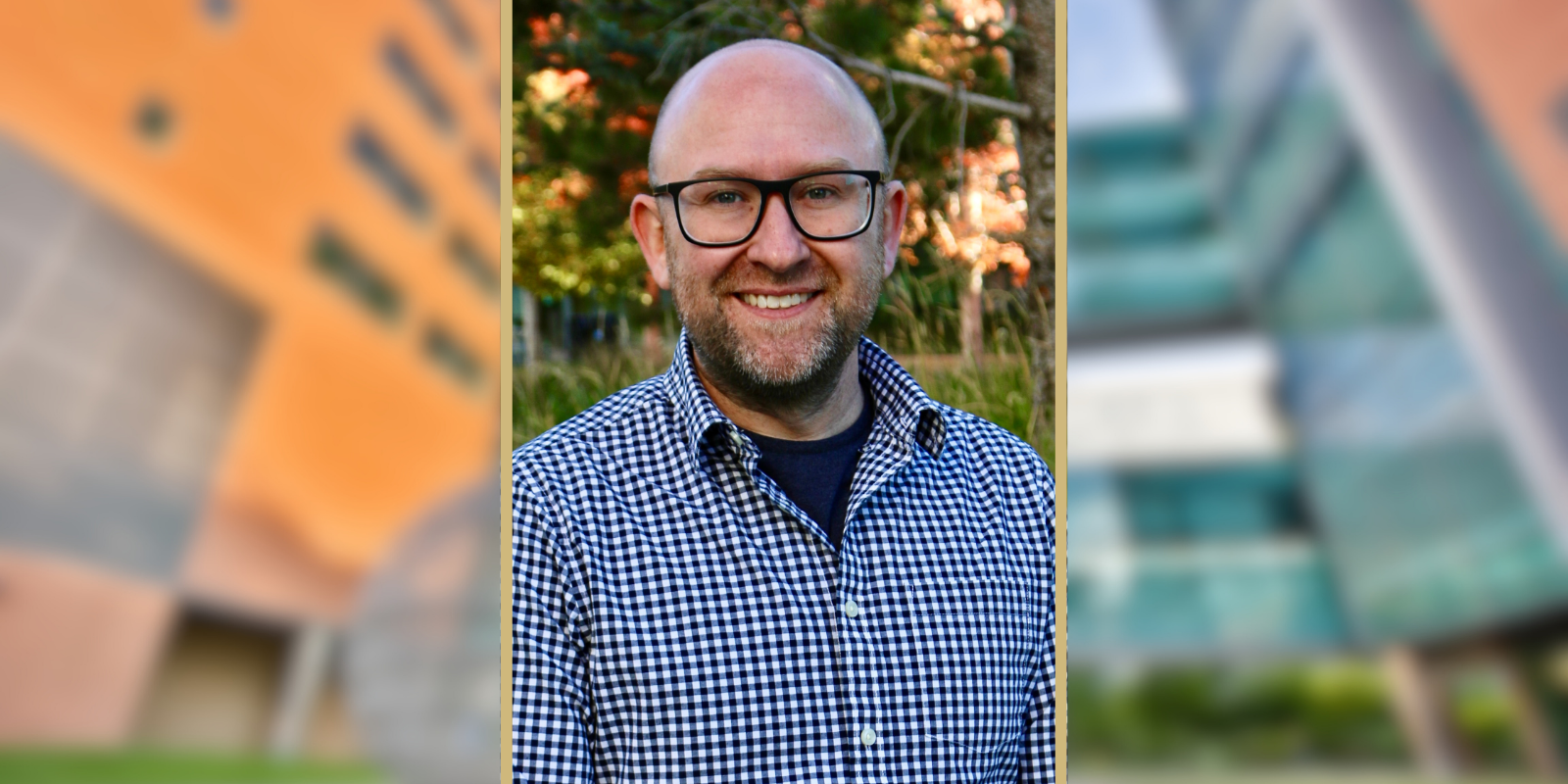
A $300,000 grant from the University of Colorado School of Medicine’s Translational Research Scholars Program (TRSP) will support Richard Tobin, PhD, in his work investigating the roles of unconventional T cells in adoptive cell therapies and how these cells can be harnessed to improve the efficacy of these innovative treatments.
The TRSP aims to facilitate successful early career faculty in pursuing new lines of exploration and to elevate and expand the scope of their translational research. The program is intended to help successful young faculty members who have already demonstrated a high level of achievement advance their careers in translational research.
“I had applied for this award a couple of times previously, and it didn't work out, so it felt good to get it this time,” says Tobin, assistant professor in the Division of Surgical Oncology in the CU Department of Surgery. “It was very rewarding, and it had been a long time coming. The TRSP award can help you move into a new direction and advance what you're doing, so you can try out some new technology or a new technique.”
Adding unconventional T cells to the mix
In Tobin’s case, the TRSP award will help fund his research into unconventional T cells that can work in tandem with tumor-infiltrating lymphocyte (TIL) technology to more effectively target cancer cells during immunotherapy treatment for melanoma.
“Conventional T cells are the regular CD4s and CD8s that are associated with effective antitumor immunity,” says Tobin, also a member of the CU Cancer Center. “Those are the cells that can recognize the mutations that lead to cancer. But many tumors don’t have mutations that can be recognized by your immune system in terms of when they make these new peptides. Unconventional T cells don’t recognize these mutations, but they recognize other things, including riboflavin biosynthesis metabolites and phosphorylated lipids. They have a different mechanism that we think will make them even better at killing tumors.”
In conventional TIL therapy, a portion of the patient’s tumor is removed and sent to a lab, where the T cells that have infiltrated a patient’s tumor after recognizing a mutation are extracted, multiplied, and infused back into the patient’s bloodstream to more effectively attack the tumor cells. By adding unconventional T cells to that mix — cells that can recognize tumors independent of the mutations that are normally recognized by conventional immune cells — Tobin says, patients who don’t respond to traditional TIL therapy may see benefit from the treatment.
“The technology we use to expand the TILs means that they're going to be recognizing those peptide antigens derived from the mutation,” he says. “So if you have very few of those cells, or if they are expanded in a way that they're not actually seeing what you want them to see, it's going to be difficult to have a response. We think that if you expand these unconventional T cells with some new culture techniques that we're going to be trying, you'll be able to treat some of the patients with the low tumor mutational burdens that are associated with poor responses to TIL therapy, as well as conventional immune checkpoint inhibitors.”
Evolving research
Tobin, who has been part of the CU Department of Surgery for 10 years, started this research in 2018 with a focus on a specific type of unconventional T cell called a MAIT cell, but the work has grown since then.
“We just recently started working on other subsets of these cells, so we've been slowly expanding our research endeavor,” he says.
The TRSP award, he says, will help his research expand even more.
“I'm really thankful for the award,” he says. “I'm excited about it, and I'm super-thankful for the support from the CU Cancer Center and my department and all of my collaborators.”