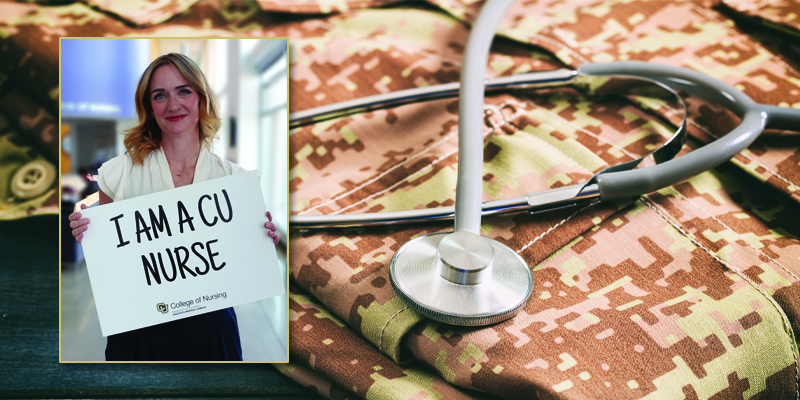
For 15 years, Mollie Christiansen has navigated a demanding duality that thousands of military healthcare professionals face: excelling as both a soldier and a healer. Currently living near Fort Carson in Colorado Springs, she's part of a unique group of nurses who serve in the Army while providing critical patient care.
But Christiansen has discovered something troubling. While the nursing profession has extensively studied burnout among civilian nurses, the unique pressures facing military nurses remain largely invisible in research—despite the potentially devastating consequences.
"We're always told you're a Soldier, Airman, or Sailor first and a nurse second," Christiansen says. "We have to meet the same standards as every other military officer, as well as do our clinical job as nurses. I want to get some foundational evidence as to how these nurses are feeling and how they can manage both of these roles."
Breaking New Ground in Military Nursing Research
Now pursuing her Doctor of Philosophy (PhD) in the Health Care Systems Track at the University of Colorado Anschutz College of Nursing, Christiansen is pioneering research that could transform how the military supports the nurse corps.
"There's so much research about burnout in civilian nurses, but there's not as much on the military side of things," she says. "The implications of being both a nurse and a military officer and how that impacts someone's well-being is something that I think is really understudied."
Experiencing Burnout
Christiansen acknowledges “the burnout was real” when she was working in an Army hospital during the COVID-19 pandemic. She says there’s evidence nurses are feeling anxiety, depression, and in some cases, experiencing physical health symptoms, when they’re burned out.
Research FundingChristiansen received two grants to help her education and research. She was awarded an $8,694 graduate grant from the TriService Nursing Research program (TSNRP). The program sponsors research focused on military nursing-related topics, and Christiansen’s grant will fund her research supplies and other support to conduct her study, including equipment to keep her data secure. “With this grant, it’s wonderful to have this additional support,” she says. Christiansen also received funding through the US Army’s Long Term Health Education and Training (LTHET) program, which pays tuition and a student’s salary while they’re in school. “It’s amazing to have this opportunity to fully focus on school and immerse myself in learning,” she says. “It’s been such a blessing.” |
And Army nurses have another layer: the added pressure of being in the military. Christiansen saw her friends and peers leave the military because they felt like it was too much to balance nursing, the military, and family life.
Starting Her Research
Christiansen will start collecting data soon and analyzing it ahead of her graduation from CU Anschutz Nursing’s PhD program in August 2026. She will use different measurement tools, including one about burnout. She’ll ask questions about how exhausted they are and how disengaged they are with their jobs, both signs of burnout. Other questions include asking about physical or psychological health symptoms, like depression, lack of sleep, or gastrointestinal distress.
“The military is a 24/7 job,” she says. “You have to be ready to be deployed at any given time to support combat, and that can really impact someone’s physical and psychological health.”
Christiansen says another aspect related to burnout is leadership, saying “it plays a role in someone’s health."
“Leadership plays a role in how we feel, and it impacts our well-being,” she says. “I want to get an idea of where military nurses stand on these concepts and hopefully find interventions to support nurse leaders.”
A Mission of Advocacy
Christiansen plans to begin data collection soon, with hopes that her findings will lead to concrete interventions and resources for Army nurses. Her ultimate goal extends beyond academic achievement—she wants to create systemic change that keeps skilled nurses in uniform.
"It takes a special person to be a nurse who's gone the extra step to not only commit to patients, but to join the military. I really want to advocate for military nurses and their well-being so we can help them stay in the workforce."
In a profession where being called to serve takes on double meaning, Christiansen's research may hold the key to ensuring that those who dedicate themselves to healing others don't sacrifice their own well-being in the process.