According to the American Nurses Association, one in four nurses are assaulted by patients. A Vietnam Army Veteran with Frontal-Temporal Dementia had been a patient on the medical-surgical ward at the VA Hospital in Milwaukee for over four months. He was unable to be placed in a long-term care setting due to challenging behaviors, including spitting, hitting staff without warning, frequently urinating and defecating around the room, and recurrent falls. The patient was also non-verbal and aphasic. As a retired boxer, the patient was in good health. But the medical team had no further interventions they could offer nursing.
This is a typical scenario seen in war-era veterans in VA hospitals around the country.
The Reality of Veteran Behavioral Challenges
Kayla Atlija, DNP, RN, AGCNS-BC, APNP, PCCN, noticed a gap in how providers cared for veterans.
“I’m always surprised by how much employees at the VA do not know about military service,” she says. “My goal is to give more information about military culture and things to know when caring for veterans."
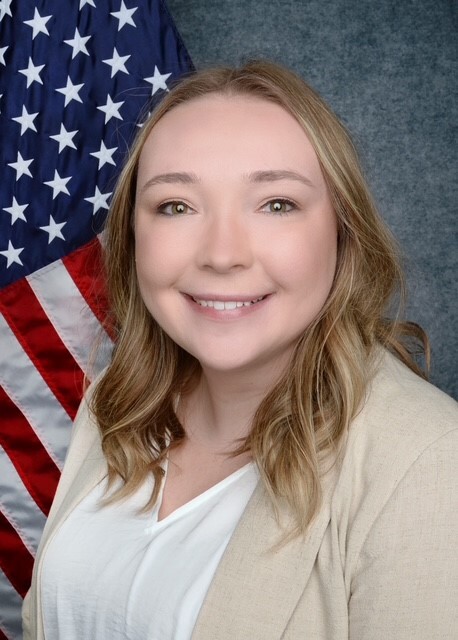
CU Nursing alumna Kayla Atlija, DNP, RN, AGCNS-BC, APNP, PCCN. |
During her Doctorate in Nursing Practice program, Atlija developed an acute care behavioral rounds (ACBR) team to address behavior concerns in veteran patients. The Vietnam Army Veteran was added to Atlija’s ACBR team’s patient list by a bedside nurse.
Atlija created a behavioral action plan for the patient and posted it outside his room. The team used signage and cue cards with the patient. Signs were posted around the patient’s room showing how to get to the bathroom, and visual cards showing ADL needs. Staff were instructed to continue to talk to the patient while also using the visual cues.
That evening, for the first time in four months, the patient made it to the bathroom on his own. Over the next few days, staff reported that he was less aggressive when they used the cue cards. The ACBR team also consulted music therapy, which proved helpful in managing his challenging behaviors. After 90 days of decreased behavioral events, he was transferred to a long-care unit.
Understanding Veteran-Centered Healthcare
During her graduate program at the University of Wisconsin, Atlija noticed a lack of education in veteran care.
“Going through a DNP–typical program, it’s focused on the private sector,” she says. “I knew I was still missing something that I wanted to learn more about to help bridge that gap in veteran care."
She discussed her concerns with a coworker who told her about the post-graduate certificate in veteran and military health care offered at the University of Colorado Anschutz College of Nursing.
The fully remote program focuses on improving the health of veterans and military and Atlija was able to finish the program in one year.
“I tell everyone to go. Anyone that I work with,” Atlija says. “This is the program that you should do if you want to stay within the VA.”
Now, Atlija notes that seven employees at the VA Hospital in Milwaukee are currently enrolled in or have graduated from the program.
“Mona Pearl Treyball is a great resource,” says Atlija. “She knows a lot of people and has a lot of connections to help advance your work.”
Atlija notes that the certificate program has allowed her to make valuable connections to collaborate on research and their shared mission to improve veteran care. “I’ve taken so much out of the program and I’ve been able to help veterans in Colorado and Wisconsin,” she says.
From Reactive to Proactive: Preventing Violence Before it Starts
Atlija noticed throughout her education that nurses are only trained on reactive measures. She noted the need for a more proactive approach to combat workplace violence.
The program that she and her team developed is for the acute care setting. “When we were doing our research, no other place was doing anything in acute care,” says Atlija.
Atlija’s ACBR team helped facilitate over 90 consults to 10 different consult services. The number of falls in the facility decreased, and staff-reported overall satisfaction rose over 35%.
Atlija’s team also implemented intake forms to go on the doors of veterans’ hospital rooms to ensure that all care providers, housekeeping, and nutrition staff know a veteran’s preferences before entering, and knowing what resources are available if things escalate.
The intake forms allow members of the care team to provide valuable information on how to interact with the patient. This allowed nurses to report signs or concerns of challenging behavior before it escalated into violence. This also enabled hospital staff to quantify how many veterans being treated exhibited challenging behaviors.
Leadership of the VA System has made the team’s system the standard of care. She has been invited to present her research findings at various conferences, and recently, she was invited to present during a Nurses Organization of Veterans Affairs (NOVA) webinar.
“Behavioral rounds were an excellent first step to supporting bedside nurses in the face of growing workplace violence and incidences,” said one nurse at the VA Hospital in Milwaukee.
“I like the new signs on the doors of veterans with challenging behaviors that state what works and also what doesn’t work and what triggers they have,” said another nurse on the same floor.
Improving Nursing Education
Atlija hopes to standardize nursing education for treating all veterans, as 70% of veterans receive care in civilian hospitals. Understanding how to better care for veterans will benefit all nurses, not just those working in VA hospitals.
“The Mission Act requires nursing schools to adapt some kind of military health into their curriculum, but they do not give any guidance,” she says. “It’s very open-ended. Standardize what actually needs to be taught and make it a required course. It should not be an hour-long lecture. It needs to be a whole course.”
Working near a medical college, empathy training for working with veterans is offered to medical residents during their rotations at the VA. This training is not yet offered to nurses.
Empowering Healthcare Workers to Provide Exceptional Care for Veterans
While her current focus is on caring for baby boomers and providing dementia care for this veteran population, Atlija is proactive in preparing health care workers to care for younger veterans coming in with chronic traumatic encephalopathy, a condition that has a similar process to dementia but occurs earlier with more behavioral changes. “We can be making changes within our facilities to start to prepare for them,” said Atlija. “We also need to educate the private sector and community on this diagnosis.”
Atlija is hopeful that training will one day be offered to nurses to help them provide better care for veterans. She explains that this starts with implementing training for all members of a veteran’s care team, and by ensuring that all hospital employees are aware of specific triggers and patient preferences before entering the room.
“A lot of people don’t know what veterans went through or what they were exposed to,” she says. “Nursing is such a huge component of health care. I try to plant myself where I can help connect the dots.”