
Susan Calcaterra, MD, MPH, MS, associate professor of hospital medicine at the University of Colorado Anschutz School of Medicine and an investigator with the Adult and Child Center for Outcomes Research and Delivery Science (ACCORDS), is leading a three-hospital study examining how to better connect hospitalized patients with opioid use disorder to methadone treatment after they leave the hospital.
An R01 grant from the National Institutes of Health’s National Institute on Drug Abuse (NIDA) will support the implementation trial, which will examine whether facilitating opioid treatment program intake during hospitalization can improve patients’ connections to treatment after they leave the hospital.
The research grew from Calcaterra’s experience caring for hospitalized patients whose health was affected by untreated substance use disorders.
“I focused on addiction research because you could do a lot of good in a short amount of time,” she says.
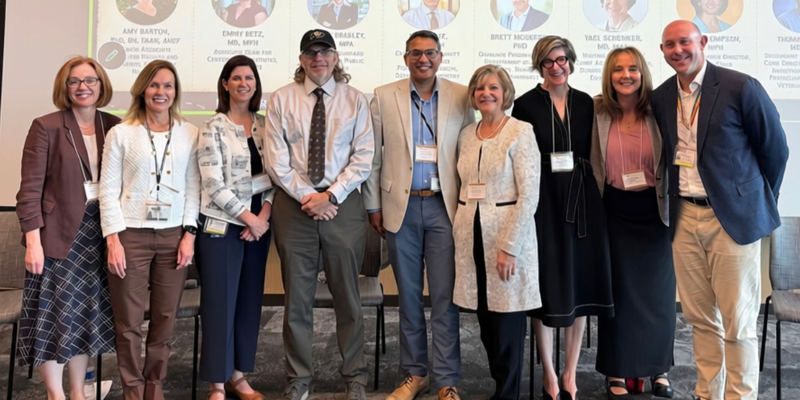
Calcaterra’s focus on patient care also recently earned recognition from the CU Anschutz Department of Medicine, which inducted her into its Clinical Excellence Society.
Improving the link from hospital care to methadone treatment
Methadone is an effective medication for opioid use disorder, but access to it can present unique challenges. Unlike medications available at a local pharmacy, methadone for opioid use disorder is generally provided through federally certified opioid treatment programs.
“A lot of patients don’t have transportation,” Calcaterra says. “Or to be enrolled with a clinic, they have to have ID, and a lot of my patients, especially those who are unhoused, just don’t have those resources.”
Those barriers can become especially consequential when patients begin treatment in the hospital but must connect with a separate opioid treatment program after discharge. That transition after discharge can create a gap in care if patients do not connect with an opioid treatment program quickly, potentially resulting in withdrawal and return to opioid use.
Calcaterra’s study asks whether facilitating the opioid treatment program intake process while patients are still hospitalized can strengthen that connection and help them remain engaged in treatment.
The study builds on a program at CU Anschutz that allowed patients to complete the methadone enrollment process while they were still hospitalized. The research team also worked to address practical barriers before discharge, such as ensuring patients had the identification and transportation needed to connect with an opioid treatment program.
The new trial will test how that approach can be adapted to participating hospitals, including the University of New Mexico Health System in Alburquerque, the University of Utah Health in Salt Lake City, and New York-Presbyterian Well Cornell Medical Center. Using a strategy known as implementation facilitation, researchers will work with hospital addiction consult teams to identify local barriers, review data, and adjust workflows. The study’s primary measure is whether patients connect with an opioid treatment program within seven days of leaving the hospital.
A changing opioid supply raises the stakes
What Calcaterra and her colleagues learn could help inform future approaches to treatment delivery at a time when the illicit opioid supply continues to change. Calcaterra’s research also could contribute to broader discussions about how methadone treatment is delivered and regulated in the U.S, which continues to experience an unprecedented opioid crisis, with more than 100,000 drug overdose deaths annually in recent years.
Calcaterra expects fentanyl to remain a significant part of the illicit drug supply. “Fentanyl isn’t going away anytime soon,” she says. “It’s here to stay.”