


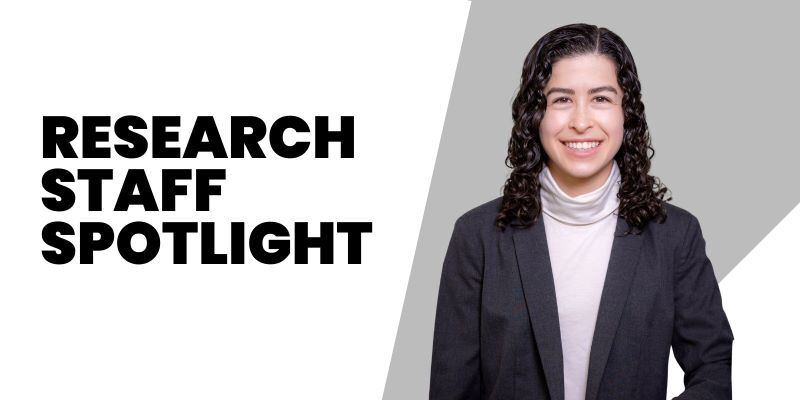
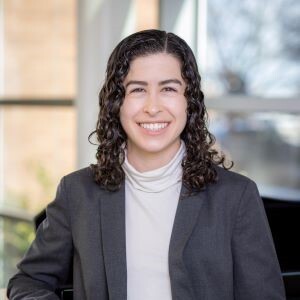
The position of “Professional Research Assistant” (PRA) varies wildly across the University of Colorado system. This could not be more true than with the PRAs at the CU Center of Bioethics (CBH). Before leaving CBH’s team of PRAs, I sat down with Hannah Scotch, BA, to discuss her time at the Center.
Working on a Little Bit of Everything
Before leaving the Center, Hannah was actively working on three different projects. The first focused on an orally consumed medical device to monitor and treat both diabetes and obesity, funded by the Advanced Research Projects Agency for Health. It is a large, collaborative study with Massachusetts Institute of Technology (MIT) multiple study sites. Hannah was part of the team examining the ethical, legal, and social issues of such a device. The second was a collaboration with Christine Baugh PhD, MPH, to examine parental decision making with respect to children playing collision sports. The last is the star of the trio and where Hannah spent most of her time, as it explores the bidirectionality of how trust functions in the relationship between healthcare providers and patients.
Trust Each Other More
It was through “Trusting Each Other: Enhancing Trust in Health Care Relationships” that Hannah became our local expert on trust. Most prior research focused on the relationship between a clinician and patient through the eyes of the patient. This study was a part of the newer wave of post-COVID research looking into this relationship from the clinician’s perspective. Hannah explains that through speaking to pairs of patients and clinicians, the factor both considered to be important was the visit itself, but the concepts of what each constituted as “trust” varied.
Hannah was able to examine and communicate tangible findings to something as abstract as trust because of her multidisciplinary background. But Hannah did not come to CBH as the self-actualizing researcher she is now.
Finding a Place to Grow
Hannah worked in wet labs since she was sixteen and thought lab work would be a key component of her career. After finishing her BA in Neuroscience, she was awarded a Fulbright scholarship to continue doing the same type of basic science research in Spain. But this was not what she wanted. The research raised ethical questions and triggered a disconnect between Hannah, and the project’s purpose. This, combined with exposure to political philosophy during her undergraduate degree and not feeling philosophically fulfilled, led her to change paths.
“I had this philosophical question of is it worth it to do science for the sake of knowledge.”
It was during this transitional period that Hannah found CBH.
Broadening Philosophical Horizons
After being at CBH for 2 years, Hannah has made the decision to leave the Center to further her education with a PhD in Philosophy with a concentration in Bioethics at Michigan State University. While her position as a research assistant was not her end game, being at the Center allowed her the space to explore different facets of research and guided her to what her next step would be.
We wish Hannah well on the next step in her journey into a career in bioethics.
What Was Learned Along the Way
Read up on the research Hannah has facilitated, alongside Dr. Christine Baugh, Dr. Matthew Wynia, and Dr. Matthew DeCamp.
|
Organizational Factors that Impact Trust in Healing Relationships: A Qualitative Study PMID: 40775113 |
J Gen Intern Med. 2025 Aug 7 | Scotch H, Baugh C, Taylor L, Fish L, Wynia M, DeCamp M. |
.png)