




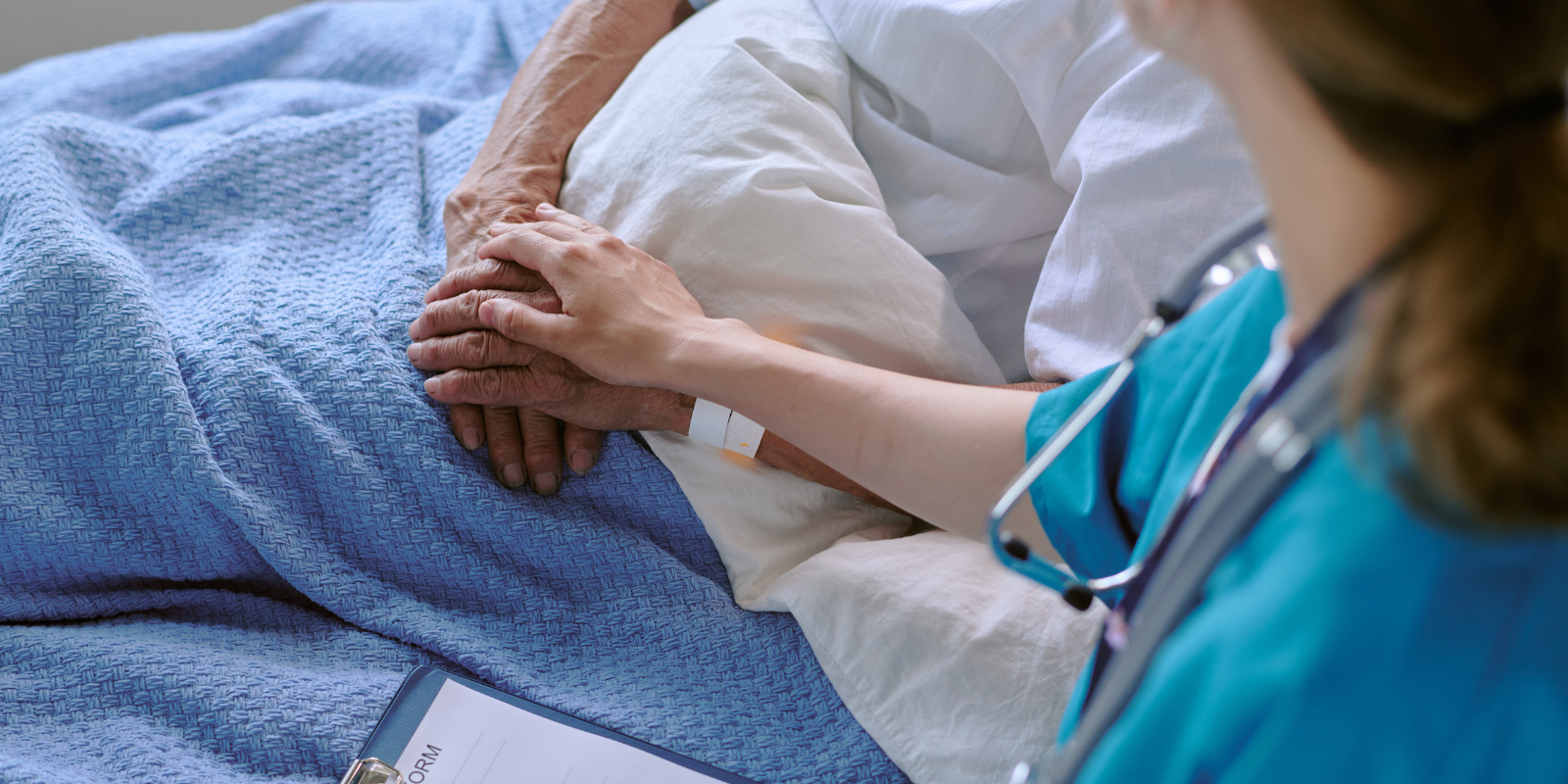
After a cancer diagnosis, a job often becomes one of the few constants a person can hold onto. It provides health insurance, income, community, and a sense of purpose at a time when much of life feels uncertain. Yet the side effects of treatment, from fatigue to chronic pain to anxiety, can make work hard to manage, and many patients are unsure where to turn for help.
That is the gap Well-Being and Cancer at Work (WeCanWork) aims to fill. WeCanWork is a Total Worker Health® intervention that connects working cancer patients with occupational medicine specialists who can help them navigate work during treatment. It is led by principal investigators Cathy Bradley, PhD, Dean of the Colorado School of Public Health and deputy director of the University of Colorado Anschutz Cancer Center, and Lee Newman, MD, MA, director of the Centers for Health, Work & Environment (CHWE), in partnership with the University of Colorado Anschutz Cancer Center and UCHealth. The team has also developed fee-based and no-cost online trainings for oncology and occupational medicine clinicians who care for working patients.
The project builds on years of research by Bradley, Newman, and colleagues on cancer survivorship and employment, including work on employers’ perspectives and on the financial hardship many survivors face. WeCanWork’s own findings have since been published in the Journal of Cancer Survivorship, BMC Public Health, and the Journal of Occupational and Environmental Medicine.
As the project finishes its sixth year, we spoke with Liliana Tenney, DrPH, MPH, co-investigator and CHWE Director of Outreach and Programs, about what the team has learned and what it means for employers, patients, and care teams.
Earlier survivorship research focused largely on breast cancer patients, most of them women, which is part of why WeCanWork centered on men. What did that earlier research teach the field, and what has WeCanWork added?
So much of what we know about working through cancer is thanks to breast cancer survivors and advocates. They have such a strong voice and have done amazing things for breast cancer research. But some populations have been understudied, and men are one of them.
WeCanWork includes a longitudinal study that follows men ages 21 to 72 who are working while receiving cancer treatment. Employed cancer patients usually continue to work, because work provides income, benefits, health insurance, social support, and community. Men are also more likely to be in physically demanding jobs, which shapes how treatment affects their ability to work.
Breast cancer affects people of all genders, including men, who are often overlooked. What lessons from WeCanWork apply to anyone navigating breast cancer while working?
Work conditions and work outcomes are closely connected. Employers have a real opportunity to support worker well-being, especially in physically and cognitively demanding jobs. That takes flexibility, empathy, and understanding.
Access to health insurance is critical. We see job lock, where people feel they can’t leave a job because of their coverage, and we see people who don’t feel comfortable asking for accommodations, so they show up to work in a compromised way. Patients need support across the full continuum of care, from diagnosis through treatment.
Breast cancer treatment often brings side effects coworkers can’t see, like fatigue, cognitive changes, or lymphedema. How do those challenges show up at work?
Patients who keep working can experience all of these. Fatigue affects stamina for carrying out work tasks, and in fields with heavy cognitive demands, like the legal industry, being tired is a huge barrier. Chronic pain makes lifting or standing for long periods difficult. Treatment can also affect the body in other ways, such as lung function.
There are psychological and psychosocial challenges, too: changes in family relationships, caregiving responsibilities, anxiety, and depression. And treatment is very expensive, which makes job security and insurance coverage even more important.
Many patients are balancing treatment, a job, and caregiving at home. How does WeCanWork account for the whole picture of a patient’s life?
Research shows that understanding a patient’s work history is not common practice in oncology. WeCanWork builds workflows into oncology care so care teams have more information about what patients are experiencing at work.
It also gives patients access to a specialist who can help them navigate their workplace as an employee, a kind of patient navigation for work. That includes help with accommodations, work history, workers’ compensation, and more.
For Breast Cancer Awareness Month, what is one concrete thing employers can do to support employees with breast cancer?
Provide flexibility, and create a culture where all employees feel comfortable asking for what they need.
Deciding whether to tell an employer about a diagnosis can be stressful. What guidance would you offer someone weighing that decision?
It’s very personal, and people have different preferences about what they want to share. Privacy matters. Consider the culture of your workplace: Do you feel you can trust them? How have similar situations been handled in the past? Starting with your manager or supervisor can be a good first step.
If side effects are affecting your work or causing concern, that is a sign you should feel able to ask for accommodations, which can create more equitable work conditions for you. It also helps to understand when disclosure may be needed to access medical leave or accommodations.
What kinds of workplace accommodations make the biggest difference for patients?
This is something we’ve been measuring in the study. Accommodations that can be requested include adjusted work schedules or hours; changes to job responsibilities, such as lifting, screen time, or the equipment being used; and, for fatigue or “chemo brain,” schedule adjustments and rest breaks to reset.
What should a patient ask their care team if they want to keep working through treatment?
Two good questions are: “What side effects might affect my work?” and “What guidance can my care team give me if I need to request accommodations at work?”
These are ongoing conversations, and they can be complicated because there are so many types of treatment. Part of our work is helping oncology providers find the right time and place to have them.
How can managers and coworkers be supportive without overstepping?
Lead with empathy and respect for privacy. Be a safe place for the person, and keep what they share confidential unless they give you permission to share it.
Looking beyond breast cancer, what work challenges do you see across all types of cancer, and where do experiences differ?
Findings from the first aim of our study, led by Natalie Schwatka, PhD, MS showed that among male cancer survivors, physically demanding jobs were associated with lost employment hours. We also saw worker well-being change throughout diagnosis and treatment, and job lock came up as well.
How can WeCanWork serve patients across diagnoses, ages, job types, and stages of treatment?
We’re implementing WeCanWork at UCHealth, and there has been great interest across different specialties. So far, 16 patients have been referred for occupational medicine consults, and we’re gathering feedback through interviews. Among patients, 8 out of 9 had concerns about continuing to work, and 9 out of 10 found their occupational medicine consult helpful.
Oncology teams can now begin referring patients to occupational medicine doctors and specialists. Occupational medicine can benefit anyone with a chronic condition, not only cancer, so this could become a helpful service for other diagnoses as well.
As WeCanWork wraps its sixth year, what are you most proud of, and what comes next?
I’m most proud of how much interest oncology teams have shown and the level of collaboration and partnership we’ve built. Next, we want WeCanWork integrated into health systems rather than standing alone, and to bring more oncology teams on board.
What keeps you personally invested in this work?
I’ve learned so much. I had never worked in a healthcare setting before this project. And almost everyone knows someone who has been diagnosed with cancer. Helping people stay purposeful and improving their well-being is what keeps me invested.
What is the one message you hope every working cancer patient hears this October and beyond?
You are amazing. The strength, perseverance, and resiliency these patients show is incredible. We know work is important, but your health is even more important. Tune in to what you need, and trust that there are resources to help.
Training for care teams
WeCanWork also offers self-paced online training to help clinicians support patients who want or need to keep working during treatment and survivorship. The course, WeCanWork: Supporting Patients with Cancer in Navigating Work and Treatment, comes in two versions:
- For oncology care teams: Oncologists, nurses, and oncology care teams learn communication strategies, referral guidance, and clinical frameworks for working patients.
- For occupational medicine teams: Occupational medicine physicians and advanced practice providers learn clinical frameworks, assessment strategies, and referral tools to help patients continue or return to work across the cancer care continuum.
Both versions offer conversation tools clinicians can use right away, simple ways to identify patients who may need support, guidance on accommodations and documentation, and referral pathways to occupational medicine. Each can be taken at no cost as an open-access course, or for a fee with continuing education credit (CNE, CHES, or CME for oncology teams; CNE or CME for occupational medicine teams).
Learn more about the research behind this work in WeCanWork’s published studies.
This program is supported by a cooperative agreement (U19OH011227) with the Centers for Disease Control and Prevention’s National Institute for Occupational Safety and Health as part of one of ten national Centers of Excellence for Total Worker Health®. Opinions do not represent the position of the funding agency.
The WeCanWork training was developed by the Centers for Health, Work & Environment in partnership with a national steering committee and the University of Colorado Anschutz Cancer Center (P30CA046934). Funding supported by the National Institute for Occupational Safety and Health cooperative agreement U19 OH011227 and a corporate contribution from AstraZeneca.