



-1.png)
Spring 2025 IVPC Student Research Awards support innovative approaches in intimate partner violence, EMS workforce well-being, and brain injuries. The interprofessional cohort spans medicine, nursing, and psychology.
Four student researchers from across the CU System have been named recipients of the Spring 2025 IVPC Student Project Award. This year’s cohort represents diverse fields—including medicine, nursing, and clinical trauma psychology.
Now in its fifth year, the award provides funding to support student-led initiatives.
Project Spotlights
Health Professional Students' Exposure to Intimate Partner Violence Education
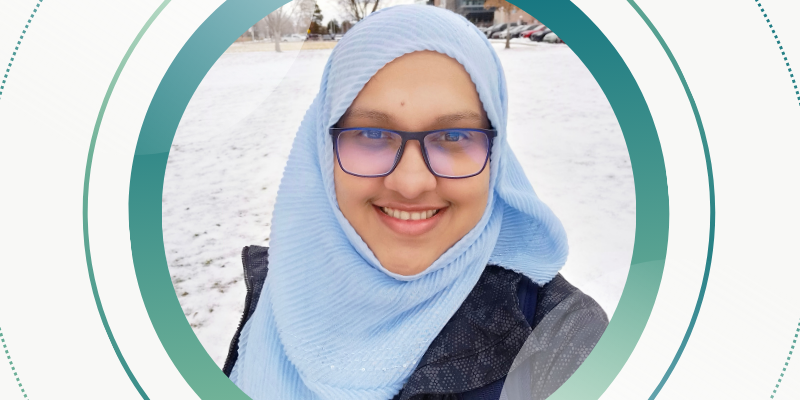
Roopa Bhat, MD Candidate, CU School of Medicine; Rural Program
 Roopa is leading the most comprehensive examination to date of IPV education across a single health campus. She will survey more than 750 graduating students in six CU Anschutz programs, including medicine, nursing, dentistry, pharmacy, physical therapy, and physician assistant studies, to map where IPV training is strong and where gaps remain.
Originally from rural New Hampshire and trained in computer science at Columbia University, Roopa brings analytical skills and hands-on experience from SafeHouse Denver, where she supported survivors with trauma-informed care. Focusing on the Class of 2026, her study assesses exposure, education, experience, and attitudes related to IPV as students prepare to enter clinical practice.
Findings will inform curriculum development through CU Anschutz’s Interprofessional Education program and can serve as a model for other campuses.
“It is imperative that not only emergency clinicians have the knowledge to identify and address IPV, but also dentists, pharmacists, and physical therapists.”
Breaking Cycles of Violence Through Understanding Parental Responses
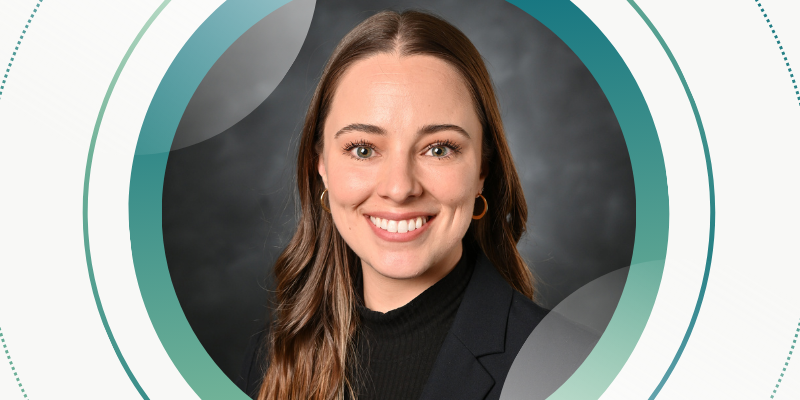
Elisabeth McLane, MS Candidate, Clinical Trauma Psychology, University of Colorado, Colorado Springs
 Elisabeth is investigating a critical factor in preventing the intergenerational transmission of violence, specifically how parents respond to children's emotions after IPV exposure.
Her research investigates whether parental emotional invalidation, specifically minimizing or dismissing a child’s feelings after the child witnesses IPV, is linked to poorer emotion regulation (the ability to manage strong feelings) and weaker psychosocial functioning (well-being in relationships, school, work, and community) in adulthood.
While existing research shows that children exposed to IPV are more likely to experience emotional invalidation compared to their non-exposed peers, the relationship between this invalidation and the risk of later experiencing violence again is not well understood.
This project seeks to identify specific, modifiable risk factors in parental responses that contribute to revictimization patterns, with the goal of informing clinical practice and parent-focused interventions. By treating emotional invalidation as a changeable target, the study aims to guide practical strategies that lower revictimization risk and support family healing after trauma.
Detecting Brain Injury in Intimate Partner Violence Survivors
Loretta Tsu, PhD Candidate, College of Nursing, CU Anschutz
 Loretta is conducting dissertation research that could change how we understand and detect brain injuries among survivors of brain trauma. With extensive experience as a victim advocate, neurocognitive research specialist, and forensic nurse, she brings unique expertise to this scientifically innovative project.
Loretta’s research may change how brain injuries among survivors of IPV are identified. The study uses central nervous system-derived extracellular vesicles, which are small particles released by brain cells that carry biological signals, to measure brain-specific inflammation in survivors who have experienced head trauma or strangulation.
This study will apply these biomarkers to IPV-related brain injury, offering a potential noninvasive way to detect injuries that often go undiagnosed. The IRB-approved study will enroll 60 participants in three groups: 1) survivors with brain injury, 2) survivors without brain injury, and 3) healthy controls. To date, 37 participants have enrolled.
The team will investigate the relationship between systemic inflammation and neuroinflammation, as well as their impact on physical, mental, and cognitive symptoms, and how social determinants of health influence these relationships. As Loretta notes, the work aims to fill a critical knowledge gap in this vulnerable population and could inform screening protocols and targeted care, leading to early identification protocols and interventions for IPV survivors at risk of adverse health outcomes.
Identifying Effective Strategies for EMS Provider Well-being
Mackenzie Davis, MD Candidate, CU School of Medicine; Rural Program
.jpeg?width=223&height=297&name=Mackenzie%20Davis%20(1).jpeg) Mackenzie Davis, a fourth-year medical student in CU's rural medicine track, is tackling one of the workforce retention rates facing emergency medical service providers.
Mackenzie Davis, a fourth-year medical student in CU's rural medicine track, is tackling one of the workforce retention rates facing emergency medical service providers.
She will examine which psychological stress injury prevention strategies are associated with lower turnover intention among EMTs and paramedics, with targeted recruitment in the specific underserved areas of the Denver metro region.
With annual turnover rates for EMTs and paramedics reaching 27 to 36% nationally in 2022, identifying interventions that improve retention is a key factor in maintaining emergency response capacity, particularly in rural and resource-limited communities.
The study links specific organizational interventions to turnover intention and will generate recommendations for EMS agencies and policymakers. Mackenzie plans a career in emergency medicine with a focus on rural health systems, bringing firsthand experience as a former EMT.
Looking Ahead & Community Impact
All projects are underway or have begun data collection in summer 2025, with completion expected by spring 2026.
Join the next cohort
Applications for the Fall 2025 Student Research Awards will open in October! The submission deadline is November 30, 2025.
The program supports students across the Rocky Mountain region, including Colorado, Arizona, Idaho, Montana, Nevada, New Mexico, Utah, and Wyoming, who are pursuing research or evaluation projects on topics related to injury and violence prevention.
Awards provide the students with funding and a connection to the broader IVPC research community. Since 2021, the program has supported over 40 student-led projects, with alumni going on to publish findings, present at national conferences, and pursue careers in violence prevention research and practice.
Learn more: Visit the IVPC student opportunities page or contact ivpc@cuanschutz.edu for application details and eligibility requirements.
Explore past research: Browse completed student projects on the IVPC website.
The Injury and Violence Prevention Center is a collaboration between the Colorado School of Public Health and the University of Colorado School of Medicine at CU Anschutz Medical Campus.
Through bold research, inventive education, and strong community partnerships, we turn science into safety and work toward a future where everyone is healthy, safe, and free from injury and violence.