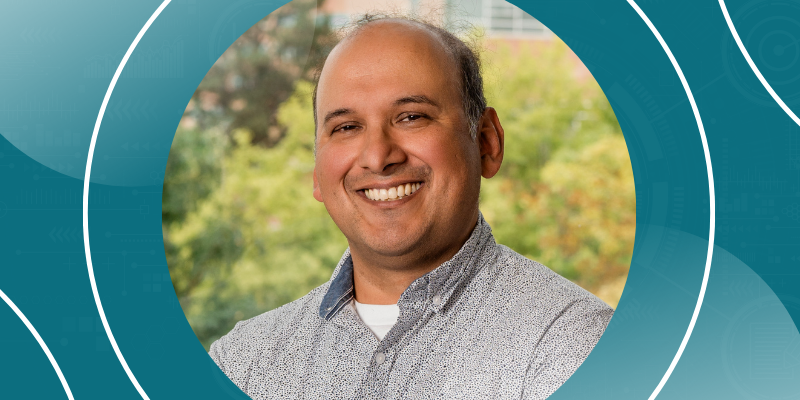





Dr. Elizabeth Juarez-Colunga is an associate professor in the Department of Biostatistics & Informatics at the Colorado School of Public Health, University of Colorado Anschutz Medical Campus.
She develops methodological work in recurrent event and point process modeling, longitudinal data analysis, and joint models to collaborate with clinical and health-services researchers.
Can you describe a research project where you applied biostatistical methods to address a real-world public health issue?
One example of a research project is a study examining hospitalizations due to vaccine‑preventable infections among children following solid organ transplantation, published in JAMA (Feldman et al., 2019). Using data from a large network of pediatric hospitals across the United States, we assessed the incidence of hospitalizations for vaccine‑preventable infections during the first five years post‑transplant and evaluated associated morbidity, mortality, and costs. We used recurrent event models to account for multiple hospitalizations over time within individuals and to identify risk factors for increased hospitalization burden. We found that younger age at transplant (under two years) and receipt of lung, heart, intestine, or multivisceral transplants were associated with a higher risk of vaccine‑preventable infection–related hospitalizations. This work demonstrates how advanced biostatistical methods for recurrent events can improve understanding of preventable hospitalizations after solid organ transplant, and inform strategies to reduce adverse outcomes.
How do you engage students in biostatistics to ensure they grasp complex concepts?
In my teaching, I try to ground complex concepts in applied examples that clearly motivate why the methods are needed to address real scientific problems. I strive to set very clear learning goals and present material in a stepwise manner, beginning with simple, intuitive ideas and progressively building toward more complex concepts and applications. Because I teach applied courses such as time‑to‑event analysis, I am able to demonstrate how theory directly informs practice. I emphasize why a solid theoretical foundation is essential for correct application and for understanding when and why methods may fail. In my research mentoring, I also encourage students to be patient with themselves as they learn challenging material, sharing strategies for approaching complex methodological papers in stages—first focusing on the motivation and big picture, and then gradually working through technical details once the high-level ideas are clear.
How do you stay updated with the latest advancements in biostatistics?
I subscribe to alerts from Google Scholar, PubMed, and key journals in my areas of interest. I regularly attend conferences and aim to attend one to two sessions outside my immediate expertise, as this often exposes me to new ideas and methodological developments. In addition, I periodically enroll in conference workshops to gain hands‑on exposure to emerging methods, sometimes in areas adjacent to my own work and other times in more distantly related topics, which helps broaden my perspective and inform future research directions.
What has been one of the biggest lessons you've learned in your academic or research career?
Being willing to make mistakes and remaining flexible in listening to new perspectives. I believe science is an iterative process in which progress often comes from questioning assumptions, learning from missteps, and adapting to new ideas and frameworks.
Why did you choose biostatistics (or informatics/data science) as a field, and what keeps you passionate about your work?
I love mathematics and statistics applied to real‑world problems, and I am particularly passionate about improving human health. Biostatistics has allowed me to combine these interests by applying quantitative methods to important medical and public health questions. What keeps me passionate about my work is the opportunity to engage with challenging, applied problems—whether addressing a specific health concern or improving our understanding of processes, such as the occurrence of epileptic seizures. I find it especially rewarding to contribute from a biostatistics perspective as part of collaborative, multidisciplinary teams working toward meaningful scientific and health‑related solutions.
Learn More
To read more about Dr. Elizabeth Juarez-Colunga work, visit her faculty profile on the Colorado School of Public Health website.
Stay tuned for more features in our Get to Know Your B&I Faculty series!