



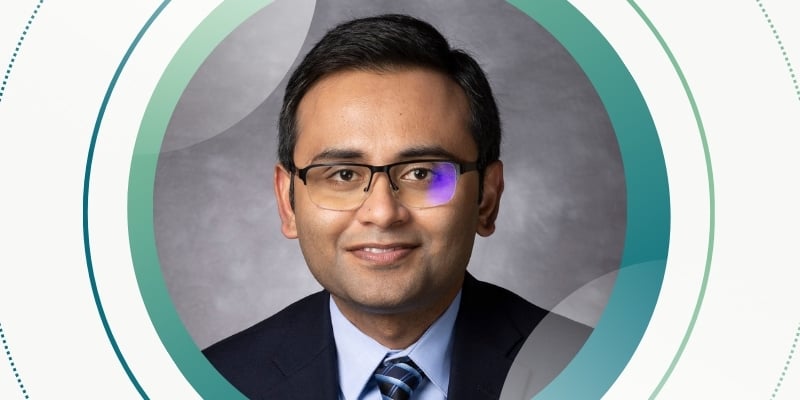
Arunangshu Sarkar is a PhD student in the Department of Biostatistics & Informatics at the Colorado School of Public Health, University of Colorado Anschutz Medical Campus.
-
- MS in Biostatistics with Data Science Certificate from UTHealth School of Public Health, Houston
- BDS (Bachelor of Dental Surgery) from West Bengal University of Health Sciences, Kolkata, India
- Thesis adviser: Katerina Kechris, PhD
- Thesis title: “Stationary and Dynamic Gaussian Graphical Model Estimation in Longitudinal Multi-Omics COPD Cohorts”
- Research interests: Gaussian Graphical Models, Networks, Convex and Non-convex Optimization, Omics, Chronic Obstructive Pulmonary Disease
What led you to choose the ColoradoSPH Biostatistics & Informatics Department for your PhD studies?
As one of the top programs in the country, the program offers an excellent balance of theoretical and applied statistical training. The department has outstanding faculty with expertise across a range of methodological and collaborative research areas. Receiving full funding for my PhD upon admission was another decisive factor. During my visit day, the faculty and the students were warm and welcoming. I also appreciated that it is a small department, which helps promote a close-knit community. Colorado was another major draw for me; it is an incredible place to live. Since PhD studies are demanding, there is no better place to relax and recharge than the Rocky Mountains.
Why did you choose to study biostatistics?
My background was primarily clinical. After completing my undergraduate studies, I practiced dentistry in my own clinic and also worked as a resident medical officer in oral and maxillofacial surgery at a tertiary care hospital for nearly seven years. However, my strong interest in science and academics drew me toward research. I initially planned to pursue a Master of Public Health in Epidemiology, as I believed it would be the best way to bridge the gap between health and research. But after being introduced to biostatistics, I realized it would be the ideal field for me because it connects math and computer science with medicine and biology, all of which I loved. That is why I changed my program to an MS in Biostatistics. If you ask me, it’s the best subject. Ever!
What has been your favorite class so far?
It’s quite difficult for me to choose just one. If I had to name a few, they would be Dr. Fosdick’s Theory I, Dr. Wrobel’s Methods II, and Dr. Wang’s PhD Theory. Dr. Fosdick’s Theory I laid the foundations for theoretical statistics exceptionally well for me. Dr. Wrobel covered a wide range of applied topics in Methods II while also addressing the theoretical aspects where needed. Dr. Wang taught us how to become comfortable with the more challenging parts of statistical theory without making them seem intimidating.
How would you describe the student community in the department?
A PhD is a big commitment, and I think your cohort plays a very important role in encouraging and supporting one another as the program continues to challenge you. I have been blessed with the best cohort ever. We have supported one another throughout. I have also taken classes with other cohorts, and frequent departmental socials, seminars, and workshops make it easy to connect with students from other cohorts.
Tell us about a project you are currently working on that you are excited about.
I am currently involved in several exciting and innovative research projects. One of my dissertation projects focuses on developing an analytical pipeline to estimate and validate stationary protein and metabolite Gaussian graphical models in longitudinal Chronic Obstructive Pulmonary Disease (COPD) cohorts. I won the prestigious and competitive Trans-Omics for Precision Medicine (TOPMed) Fellowship award in 2025, which funded a year of this research project. I am looking forward to completing this work and publishing what I believe are very exciting findings.
I am also particularly excited about another dissertation project, where we are developing a novel statistical method for estimating dynamic Gaussian graphical models in longitudinal cohorts. This work addresses important methodological challenges in longitudinal network analysis and has the potential to advance our understanding of disease incidence and progression through multi-omics data.
What advice would you give to prospective students applying to this program?
Although I am still pursuing my PhD, it has already taught me invaluable lessons. In my experience, a PhD is not just a degree to be completed. A PhD teaches you far more outside of the classroom than it teaches you inside of it. A PhD student becomes comfortable being uncomfortable. Everyone’s PhD journey and experiences are unique. Overall, it’s not just a degree but a journey that shapes you into an independent and confident academician.
What do you like to do outside of research? Or What do you like about living in Colorado?
My wife and I love the mountains! We love hiking, car-camping, and spending time together in the mountain towns. We love taking road trips, both short and long. Colorado always mesmerizes us and it’s the best place to live.