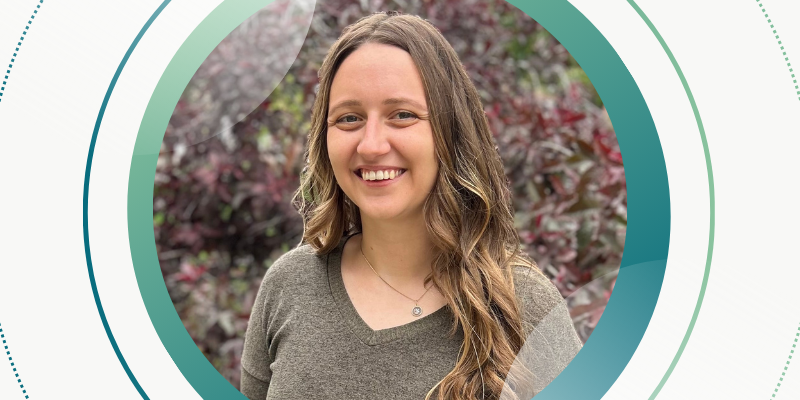




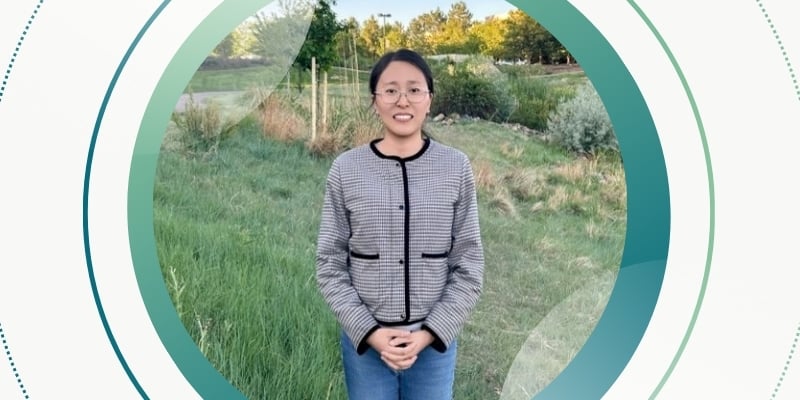
Yanyan Xu is a PhD student in the Department of Biostatistics & Informatics at the Colorado School of Public Health, University of Colorado Anschutz.
- PhD in Genomic Medicine, Medical College of Georgia, Augusta University
- Masters from Fudan University, Shanghai, China
- BA from Anhui Medical University, Anhui, China
- Thesis Adviser: Yue Wang, PhD
- Research Interests: High-dimensional multi-view data integration and dimensionality reduction.
What led you to choose the ColoradoSPH Biostatistics & Informatics Department for your PhD studies?
I chose ColoradoSPH Biostatistics & Informatics because it aligns very well with my interests in applying statistical methods to real-world health problems. I was especially interested in the department’s collaborative environment and the opportunity to work on diverse biomedical datasets. The balance between theory and application, along with strong faculty mentorship, made it an ideal place for me to develop my skills and pursue my research interests.
Why did you choose to study biostatistics?
I chose to study biostatistics because I am interested in how data can be used to answer health-related questions. Through my previous experiences, I realized that many biomedical problems require strong statistical methods to produce reliable conclusions. Biostatistics allows me to apply quantitative skills to real-world health data, and I find it especially rewarding to work on problems that can directly impact patient outcomes and public health.
What has been your favorite class so far?
My favorite class has been Statistical Consulting because it included real examples of how statisticians communicate with collaborators. I found it especially valuable to learn how to bridge the gap between statistical terminology and language that biological scientists can understand. This experience helped me develop both my applied skills and my ability to communicate complex ideas clearly, which I think is essential in biostatistics.
How would you describe the student community in the department?
I would describe the student community as collaborative and supportive. From my experience, students are very willing to share ideas and help each other with coursework and research. I especially appreciate how approachable everyone is—it makes it easier to ask questions and learn from each other, creating a very positive and encouraging environment. For example, we often form study groups for different courses, such as genomics or theory-based classes, and students are always very helpful in working through challenging material together.
Tell us about a project you are currently working on that you are excited about.
I’m currently working on a multi-omics data integration project with Dr. Yue Wang, where we are developing and evaluating a joint-angle–based method to identify shared patterns across different biological data types, such as microbiome and metabolomics data. What excites me most about this work is its ability to separate joint and individual sources of variation, which improves interpretability and helps uncover meaningful biological relationships that may not be apparent when analyzing each data type separately.
I find this project especially rewarding because it combines methodological development with real-world biomedical applications. Working with Dr. Wang has been a great learning experience—he consistently brings creative ideas to the project and provides thoughtful guidance, which has helped me grow as both a statistician and a researcher.
What advice would you give to prospective students applying to this program?
I would encourage prospective students to build a solid foundation in mathematics, and statistics, but just as importantly, to stay curious and be willing to think deeply about problems. Success in this program is not only about learning methods, but also about understanding why they work and how they can be applied to answer meaningful scientific questions. I would also recommend being open to collaboration and seeking out research opportunities early. Working with faculty and fellow students can provide valuable learning experiences and help you discover the areas that excite you most. Keeping an open mind, exploring different research topics, and maintaining a genuine interest in learning will help you get the most out of the program.
What do you like to do outside of research? Or What do you like about living in Colorado?
Outside of research, I like to cook and go to the gym. I also enjoy going for walks and light hikes, and I really appreciate how accessible nature is here in Colorado. I like spending time with friends as well.