



The Sabin Community Scholars connect Colorado School of Public Health (ColoradoSPH) students with smaller, community-based organizations to apply their public health training to real-world challenges. Inspired by the legacy of Dr. Florence Sabin, the pioneering Colorado physician and public health reformer, the initiative helps carry her commitment to improving the health and well-being of communities forward through the next generation of public health leaders. Scholars work alongside community partners to strengthen programs, address local needs, and develop solutions that can have lasting impact. Khin Sandar Win and Dania Furuya were selected as the Summer 2026 Sabin Community Scholars—bringing their expertise in applied biostatistics and epidemiology to organizations serving communities most in need.
Khin Sandar Win: Turning Data Into Tools for Community Impact
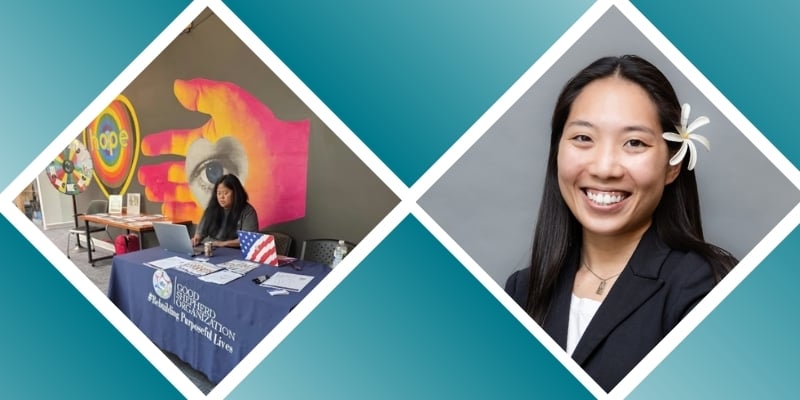
For Khin Sandar Win, public health data is most valuable when it helps organizations better understand and respond to the people they serve. A Master of Public Health student in Applied Biostatistics, Win spent her summer practicum with Good Shepherd Organization (GSO), a community-based organization serving immigrant, refugee, and New American communities. Her work brought together her training in data analysis and evaluation with the practical needs of a community organization.
During her practicum, Win developed a Community Resource and Referral Management System to help GSO organize and track the resources, services, referrals, and follow-up activities it provides to community members. The system includes a resource directory, service and referral tracking, follow-up tools, and a dashboard of key performance indicators. Win also compiled information on approximately 90 community organizations and resources, using everything from SAS to Google Sheets to better organize, analyze, and summarize the data. She developed a codebook, variable definitions, and other documentation to help GSO maintain and use the system beyond her practicum experience.
Her experience extended beyond data analysis. Win participated in community outreach, partnership development, and events to gain a deeper understanding of how data and community engagement work together to strengthen nonprofit organizations and the public health sector.
“I learned that data are most meaningful when they are connected to the people and communities they represent,” Win said. “The Sabin Community Scholar initiative encouraged me to continue using my training in biostatistics to support community organizations, advance health equity, and turn data into information that can create meaningful public health impact.”
Dania Furuya: Connecting Public Health Evidence with Community Action
For Dania Furuya, effective public health communication is about more than sharing information—it is about helping people understand evidence and turn it into action. An MPH student concentrating in Epidemiology, Furuya spent her summer practicum with Colorado Families for Vaccines, supporting the organization’s work to advance vaccine education and access across Colorado. With an interest in veterinary medicine, she also brought a One Health perspective to her work, exploring connections between vaccine confidence and prevention across human and animal health.
Furuya developed educational and social media content, advocacy resources, and outreach materials designed to make complex vaccine and public health information more accessible to community audiences. She also participated in community events, speaking directly with Coloradans about immunization and vaccine effectiveness. One project she is particularly proud of was a county-level map of MMR vaccination rates among Colorado kindergarteners, illustrating gaps in vaccination coverage across the state. The map showed that only seven Colorado counties had at least 95% of kindergarteners vaccinated against MMR, providing a clear visual tool for understanding the importance of vaccine coverage.
“I am incredibly grateful for the opportunity to contribute to vaccine education and advocacy while connecting public health evidence with meaningful community action,” Furuya said. “This experience reinforced the importance of making public health information accessible and relevant to the communities we serve.”
Through her practicum, Furuya strengthened her ability to translate epidemiologic evidence into communication that is understandable, relevant, and actionable. Her work also allowed her to explore how a One Health approach can broaden conversations about vaccination and prevention.
Together, Win and Furuya demonstrate the breadth and impact of community-engaged public health leadership made possible by ColoradoSPH. From developing a data system that GSO can use for years to come to translating vaccine science into accessible tools for Colorado Families for Vaccines, their work reflects the school’s commitment to turning knowledge into action and strengthening the organizations and communities that advance public health every day. That impact also carries forward the legacy of Dr. Florence Sabin: equipping the next generation of public health leaders to learn, engage and serve— help build a healthier and more vibrant Colorado for generations to come.