-1.jpg)
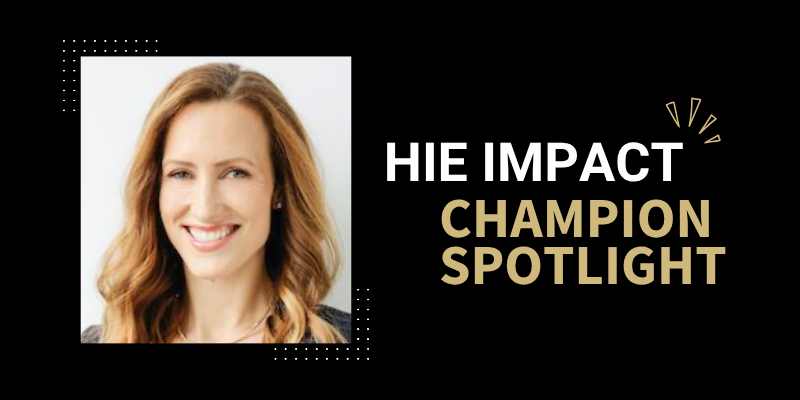
A Q&A with Richard Wang, Professor and Vice Chair of Research, Department of Dermatology, CU Anschutz School of Medicine
HIE Impact Innovation Champions are CU Anschutz faculty and staff embedded across campus who are helping shape a culture where ideas become impact. Through this spotlight series, we’ll introduce you to the Champions driving change from within, the connectors, catalysts, and collaborators who are making innovation more visible, accessible, and actionable for all. Get to know what motivates them, the discoveries they’re championing, and how they’re helping move bold ideas toward patient and societal benefit.

Why are you passionate about advancing healthcare innovation at CU Anschutz?
I am passionate about advancing healthcare innovation at CU Anschutz because it allows me to bridge new scientific discoveries directly to improve patient care, which has always been my core motivation for pursuing both basic science and clinical training. Being on a campus where world‑class clinicians, scientists, and translational resources are tightly integrated makes it possible to see ideas move from the lab to the bedside and back again in real time, and contributing to that continuum is deeply rewarding.
What was your first exposure to innovation?
I was inspired early on by researchers who used patient samples to uncover key mechanisms in cancer biology and EGFR signaling, which then enabled the development of improved EGFR inhibitors that transformed the treatment of lung cancer. Seeing true “bedside‑to‑bench‑to‑bedside” translation in action made a lasting impression on me.
"My first direct exposure to innovation came from collaborating with a small biotechnology company to develop a phospho‑specific antibody against the GLUT1 glucose transporter: the company funded the antibody’s development, it was ultimately commercialized, and both the company and our lab benefited. Even though it was a relatively small project, it showed me that thoughtful partnerships with industry can create mutual value and accelerate useful tools for research and clinical care."
What innovation work are you currently involved in (or have supported), and what impact are you hoping it will create?
Our group is currently focused on two main innovation areas:
- First, we are extending our work on circular RNAs (circRNAs) produced by both humans and viruses; because circRNAs are more stable than linear RNAs, they have significant diagnostic and therapeutic potential. We are investigating whether HPV16‑derived circular E7 RNA (circE7) can serve as a biomarker in HPV‑driven cancers and whether engineered circRNAs could be developed as a novel class of RNA therapeutics for genetic diseases.
- Second, we are studying the contribution of low‑variant‑allele‑frequency mutations to cancer development, with the hypothesis that some subclonal mutations can meaningfully promote tumorigenesis. By better understanding these events, we hope to identify existing drugs or small molecules that could be repurposed to benefit a broader range of cancers than currently recognized.
Is there anyone in your department doing particularly interesting innovation work?
Several colleagues are doing exceptionally interesting innovation work:
- Jason Klein, MD, PhD, is working to better define dermal sarcomas—uncommon, non‑melanoma skin cancers that are poorly characterized and often difficult to treat—and his group has identified novel proteins that may serve as diagnostic and prognostic biomarkers for these challenging tumors.
- Yiqun Shellman, PhD, has shown that BH3 mimetic drugs, already approved for hematologic malignancies, may also be effective in melanoma, and she has partnered with CU Anschutz Innovations to patent their broader use in additional diseases.
- A team at the Gates Institute, including Drs. Anya Bilousova, Igor Kogut, Dennis Roop, and Xiying Fan, has a long‑standing focus on epidermolysis bullosa and has developed a suite of innovative therapeutic approaches—ranging from protein replacement to gene therapy—several of which are now advancing toward clinical testing.
If you could wave a magic wand, what is the most important thing you would be able to accomplish as a HIE Impact Innovation Champion?
If I could wave a magic wand, I would gain a deep, real‑time understanding of the proprietary research pipelines of biotechnology and pharmaceutical companies. With that knowledge, I could readily connect CU Anschutz investigators with industry partners whose interests and capabilities closely align with their ideas. Creating those highly tailored matches would dramatically accelerate our ability to fund and advance basic, translational, and clinical research across the campus.
What excites you most about the future of innovation on this campus?
What excites me most is that CU Anschutz combines outstanding clinicians and scientists with a rapidly maturing ecosystem for translating ideas into real‑world impact. The campus already has a strong track record in technology transfer and is poised to push discoveries even further toward clinical application. Unique resources here include:
- On‑campus GMP biomanufacturing capabilities at the Gates Institute for Regenerative Medicine, which can support cell and gene therapy development;
- the Colorado Clinical and Translational Sciences Institute, which provides robust infrastructure for trial design, implementation, and community engagement;
- And CU Anschutz Innovations, which can act as the catalyst that brings together researchers, clinicians, specialized cores, and industry partners—lowering the “activation energy” needed to move promising biomedical technologies forward.
"One of the most pleasant surprises has been how positive and collaborative my interactions with industry scientists and executives have been. Many of them previously worked in academic or research settings, so they genuinely understand the constraints and incentives of academic science. When there is alignment around a disease area or therapeutic modality, they are often enthusiastic about partnering with academic investigators and see these collaborations as critical to their own innovation pipelines."
What advice would you give a colleague who has an idea but isn’t sure where to begin?
My main advice is: do not try to navigate the process alone—reach out early. A great first step is to visit the CU Anschutz Innovations website, review the available resources, and contact your department’s Innovations representative (including HIE Impact Champions like me!) to discuss your idea. They can help you think through IP, market fit, potential partners, and funding mechanisms, and can connect you with the broader network of resources on campus that can turn an initial concept into a viable translational project.