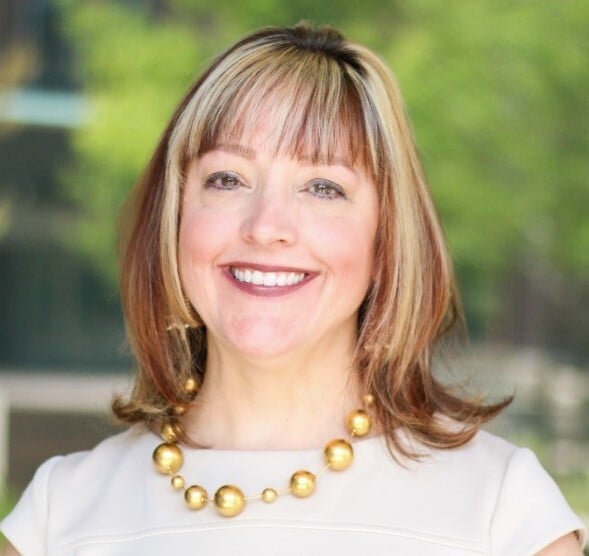
A Q&A with Melanie S. Joy, PharmD, PhD, FASN, FCCP
Professor, Director of Innovation & Commercialization
Skaggs School of Pharmacy and Pharmaceutical Science
HIE Impact Innovation Champions are CU Anschutz faculty and staff embedded across campus who are helping shape a culture where ideas become impact. Through this spotlight series, we’ll introduce you to the Champions driving change from within — the connectors, catalysts, and collaborators who are making innovation more visible, accessible, and actionable for all. Get to know what motivates them, the discoveries they’re championing, and how they’re helping move bold ideas toward patient and societal benefit.

Why are you passionate about advancing healthcare innovation at CU Anschutz?
CU Anschutz is a unique place that facilitates healthcare innovation. As a translational scientist in nephrology, I have witnessed many instances where there are absences of treatments, limited treatments or only highly toxic treatments available for patients. This frustration, along with the limited use of precision treatments in nephrology, has fueled my passion for healthcare innovation. My combined training in clinical and basic science has contributed to my passion for translating healthcare technologies.
"While perhaps not surprising, to be a good innovator, one must be open to learning and being critiqued, and then incorporating that information, as appropriate, into the development and commercialization of the technology. To be a great innovator, one must understand where their technology fits – who needs it, how will they use it, etc. – and how to communicate effectively with anticipated users and funders to have champions in your corner.
I had the experience recently of walking through the exhibitor section of a large national meeting and deliberately having a dialogue with the vendors of new technologies – only to find that most of them really had not done their homework to understand where their technology could be used. This was interesting to me because our own previous and current innovation training programs on campus (REACH, SPARK) have done a great job in working with faculty to drill into the areas where technologies fit."
How did you catch the innovation bug and/or what was your first exposure to innovation?
I first became interested in innovation back in 1997 when I became Director of Drug Development at the University of North Carolina Kidney Center. I partnered with the pharmaceutical (and medical device) industries to study new therapies for patients with kidney diseases. Several of these drugs became FDA approved and are used clinically today.
What innovation work are you currently involved in (or have supported), and what impact are you hoping it will create?
The most advanced technology I am developing is a new medical device to augment the clearance of retained compounds in patients with end-stage kidney disease. I received new funding through NIH STTR and the CO Office of Economic Development Advanced Industries to advance my technology into clinical studies in canines. The anticipated impacts of this technology for kidney disease patients are better outcomes related to morbidity and mortality and a simpler management approach.
Is there anyone in your department doing particularly interesting innovation work? Tell us about them and their work.
Absolutely! I serve as Director of Innovation and Commercialization for the Skaggs School of Pharmacy, so I am excited that our faculty are becoming more engaged with innovation. As a Pharmacy School, we have a tremendous source of expertise in formulation design, pharmacokinetic/pharmacodynamics, pharmacogenetics, nanomedicine, metabolism/transport, protein characterization and toxicology, not to mention clinical science, and hence, we have the components of a mini pharmaceutical company. My colleagues are developing new compounds and approaches for cancer, immune diseases, diabetes, neonatal patients, protein therapeutics and point of care technologies.
If you could wave a magic wand, what is the most important thing you would be able to accomplish as an Innovation Champion?
The greatest impact I could imagine as an Innovation Champion is to facilitate the discovery, development and commercialization of new technologies for patients.
What excites you most about the future of innovation on this campus (why should people pay attention to Anschutz)?
I have witnessed and been engaged with the evolution of innovation efforts at CU Anschutz over the last 13 years since my arrival to the campus. The HIE Impact Initiative is the culmination of what we have learned from the SPARK and REACH programs with an added dose of steroids. The anticipated side effects of the steroids (sorry – this is the pharmacy background!) will be the achievement of high-impact healthcare technologies beyond what we and other institutions have experienced to-date.
What advice would you give a colleague who has an idea but isn’t sure where to begin?
The first thing I tell colleagues is don’t accidentally disclose your invention through an abstract, poster, presentation or publication. I also ask my colleagues many questions about their ideas and we brainstorm about where the technology may fit and what technologies are currently filling the gap. We also discuss what is better or improved about the new technology. The next advice I give is “Go talk to CU Innovations about your invention” so that patenting and other needs can be discussed.