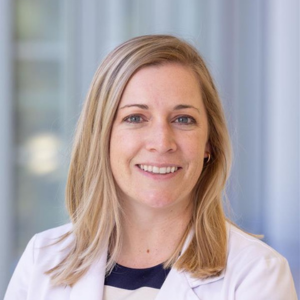

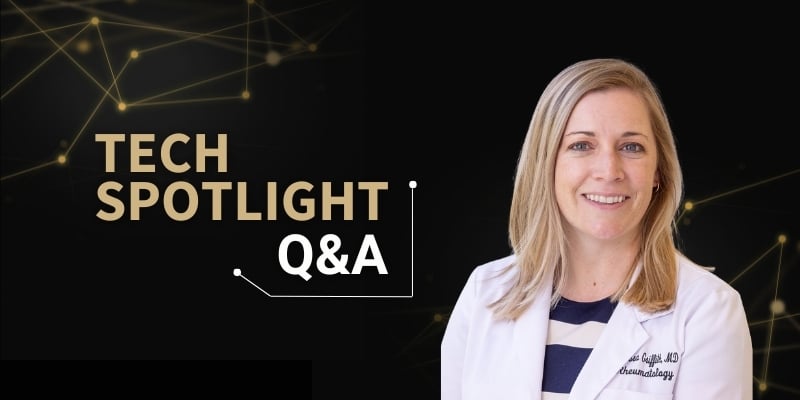
A Q&A with Melissa Griffith, Associate Professor, Rheumatology, CU Anschutz School of Medicine

In a sentence or two, what's your discovery?
I am conducting clinical trial-based research to evaluate the role of chimeric antigen receptor T cells (CAR T cells) in the treatment of autoimmune diseases (systemic sclerosis, systemic lupus erythematosus, rheumatoid arthritis, idiopathic inflammatory myopathies, and granulomatosis with polyangiitis). CAR-T therapies employ either a patient’s own T cells (autologous) or donor-derived T cells (allogeneic), which are genetically engineered to target B cells or plasma cells. These approaches were first developed, tested, and approved in the treatment of leukemia and lymphoma.
What motivated you to do this research?
Through my clinical practice, I identified a clear need to improve therapeutic options for patients with interstitial lung disease, idiopathic inflammatory myositis, and systemic sclerosis, which motivated my involvement in clinical trial research.
"There are currently no curative therapies for autoimmune diseases, and most patients require long-term or lifelong immunosuppressive treatment, often associated with substantial adverse effects. My hope is that cellular therapies such as CAR-T cells will provide durable disease control, allow patients periods free from chronic medication use, and ultimately lead to curative approaches for autoimmune disease."
What near-term milestones are you most excited about?
I look forward to publishing the Phase 1 study results and continuing enrollment in the Phase 2/3 portions of these clinical trials. In parallel, we are initiating an allogeneic CAR-T trial, which I anticipate will shorten time to treatment relative to autologous approach.
Any shout outs you'd like to give?
Drs. Kristi Kuhn, Larry Moreland, Kristen Demoruelle and Jonathan Gutman, along with Mario Farag and Prakriti Joshee.
What future directions do you wish to expand this discovery?
Future directions for CAR-T and other cellular therapies may broaden to encompass additional autoimmune diseases, with my particular focus on autoimmune interstitial lung diseases and fibrotic lung disorders. Bispecific T-cell engagers have shown promise in preclinical studies as readily available, off-the-shelf options with potential efficacy comparable to CAR-T therapies in autoimmune diseases.
Learn more about Dr. Griffith's work here.