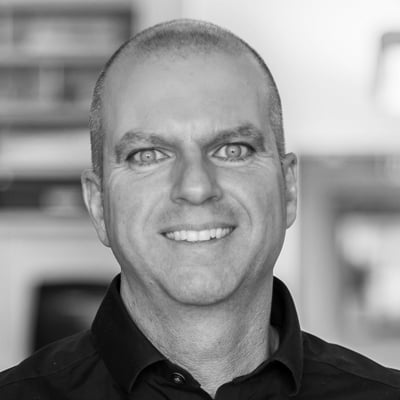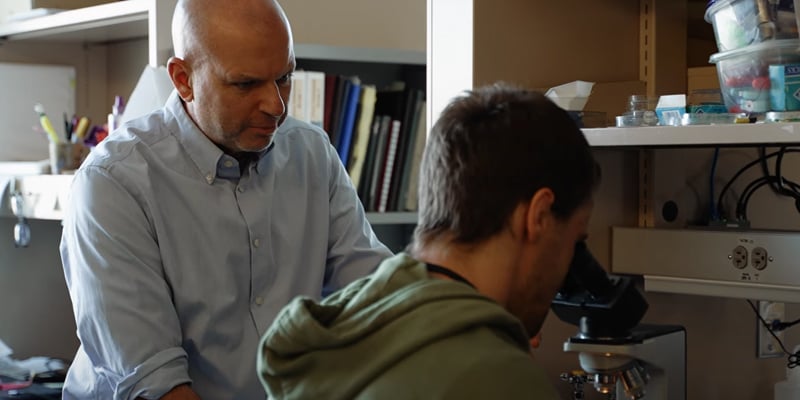
A Q&A with Achim Klug, PhD, Professor of Physiology & Biophysics, CU Anschutz

What is your invention?
A treatment for age-related central hearing loss.
"My motivation comes from numerous conversations with affected listeners who all tell me to ‘work faster’ because they want this treatment "
What's your discovery? What can it be used for?
We discovered a combination treatment for one very common form of age-related hearing loss which affects the brain not the ears. Affected listeners have trouble isolating a sound of interest from background noises, such as the voice of their friend in a crowded restaurant. Hearing aids will not help for this condition because they treat a deficit at the level of the ears, not the brain. We are developing a one-month only treatment that pairs a drug with engineered sound, designed to deliver lasting, long-term benefits.
What motivated you to do this research?
I have studied the affected brain circuit for my entire career, initially in echolocating bats because I found it fascinating and useful as a ticket to travel to exotic places. But then I realized the immense medical importance of this brain circuit in humans and decided to find out what exactly changes in aging - and how we can change it back.
What's the potential impact of your discovery?
This discovery would be the first treatment to treat any form of hearing loss that is caused by the brain not the ears. The underlying medical condition affects about 1/3 of the population between ages 40 and 65, and about 1/2 of the population 65 and older, so the number of patients who could benefit from this is staggering. The exciting part is that the treatment is simple, non-invasive and benign.
What near-term milestones are you most excited about?
We just received FDA approval for Phase 2 clinical trials last week and want to enroll the first participants during the month of October. We are also looking for VC investors to develop this technology and bring it to market asap.
What future directions do you wish to expand this discovery?
We are focusing on aging right now. However, we have reason to believe the same treatment might also help patients 1) with autism, 2) who have had a lot of noise exposure in their lifetime (factory workers, military and veterans), and 3) people with tinnitus. These are exciting future directions.
Any shout outs you'd like to give?
This project started as an NIH multi-PI R01 with Dan Tollin from our campus. The clinical trial is led by a team of four including: Dr. Yuri Agrawal, Dr. Enrique Alvarez, Dr. Vinaya Manchaiah and myself. The technology was just licensed to our startup company, Parley Neurotech Inc. with Dr. Sam Budoff as CEO.