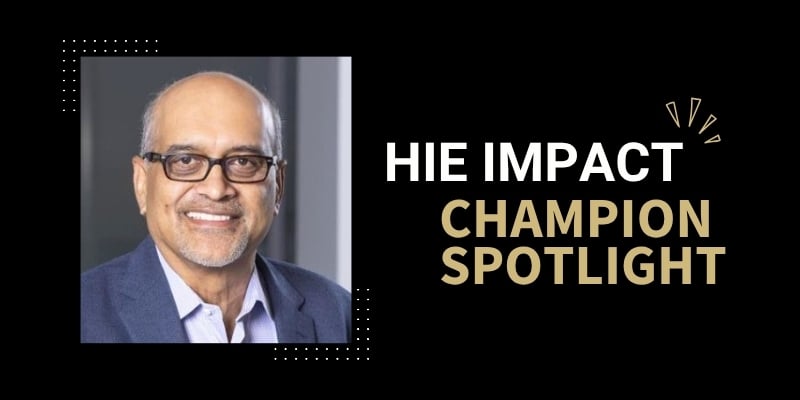
A Q&A with Dr. Ram Nagaraj, Professor, Department of Ophthalmology, CU Anschutz School of Medicine
HIE Impact Innovation Champions are CU Anschutz faculty and staff embedded across campus who are helping shape a culture where ideas become impact. Through this spotlight series, we’ll introduce you to the Champions driving change from within, the connectors, catalysts, and collaborators who are making innovation more visible, accessible, and actionable for all. Get to know what motivates them, the discoveries they’re championing, and how they’re helping move bold ideas toward patient and societal benefit.

“Over the years, I have seen many exciting scientific discoveries fail to make it beyond publication. I am passionate about helping move ideas from the lab toward therapies or technologies that can genuinely improve patients’ lives, especially for people affected by vision loss.”
How did you catch the innovation bug/ what was your first exposure to innovation?
Carl Asseff, MD, an ophthalmologist specializing in glaucoma treatment who established the Carl Asseff Endowed Chair in Ophthalmology at Case Western Reserve University in Cleveland, which I held for many years before joining CU Anschutz School of Medicine, had asked me to conduct research that could prevent vision loss in glaucoma. I began to consider how my research on small heat shock proteins could be applied to save vision in glaucoma. The shift, from understanding basic biology to thinking about solutions, was what truly sparked my interest in innovation.
What innovation work are you currently involved in (or have supported), and what impact are you hoping it will create?
My lab has been working on small molecules that may help reverse age-related lens stiffening associated with presbyopia, as well as on projects involving retinal neuroprotection in glaucoma and fibrosis in age-related macular degeneration. My greatest joy and most satisfying moment will be seeing at least one of the potential therapies we are developing translated into an actual treatment for patients.
Is there anyone in your department doing particularly interesting innovation work? Tell us about them and their work.
There is a tremendous amount of exciting work happening across our department, so I cannot single out any one individual. My colleagues are conducting cutting-edge research on stem cell and gene therapies for blinding diseases such as age-related macular degeneration, diabetic retinopathy, and glaucoma, as well as AI-driven approaches to eye disease. It is exciting to see younger investigators bringing fresh ideas and interdisciplinary approaches to vision research. Our Chair, Dr. Naresh Mandava, is a driving force who combines strategic vision with unwavering support to accelerate innovation.
If you could wave a magic wand, what is the most important thing you would be able to accomplish as a HIE Impact Innovation Champion?
I would make it easier for faculty to move discoveries from proof-of-concept to real-world applications. Many academic researchers have excellent ideas but struggle with early translational steps, funding, regulatory guidance, industry connections, and commercialization pathways. Helping them navigate these barriers could accelerate the translation of bench-to-bedside research, and I see the HIE team playing a significant role in this effort.
What excites you most about the future of innovation on this campus?
What excites me most is the culture of collaboration. The integration of biomedical science, AI, and clinical medicine creates tremendous opportunities for innovation. I believe CU Anschutz is a place where truly transformative ideas can thrive.
Any particularly interesting or surprising learnings along the innovation journey to share?
Innovation is not just about conducting laboratory science; it is a culture you develop from within, fueled by thinking outside the box, generating bold ideas, and discussing them with your colleagues to get their input. More importantly, it means being prepared to fail; it happens more often than you might expect.
What advice would you give a colleague who has an idea but isn’t sure where to begin?
Do not keep the idea to yourself. Talk to colleagues, clinicians, mentors and the CU Anschutz Innovations team early. Getting feedback helps refine the idea and often opens doors you did not know existed.