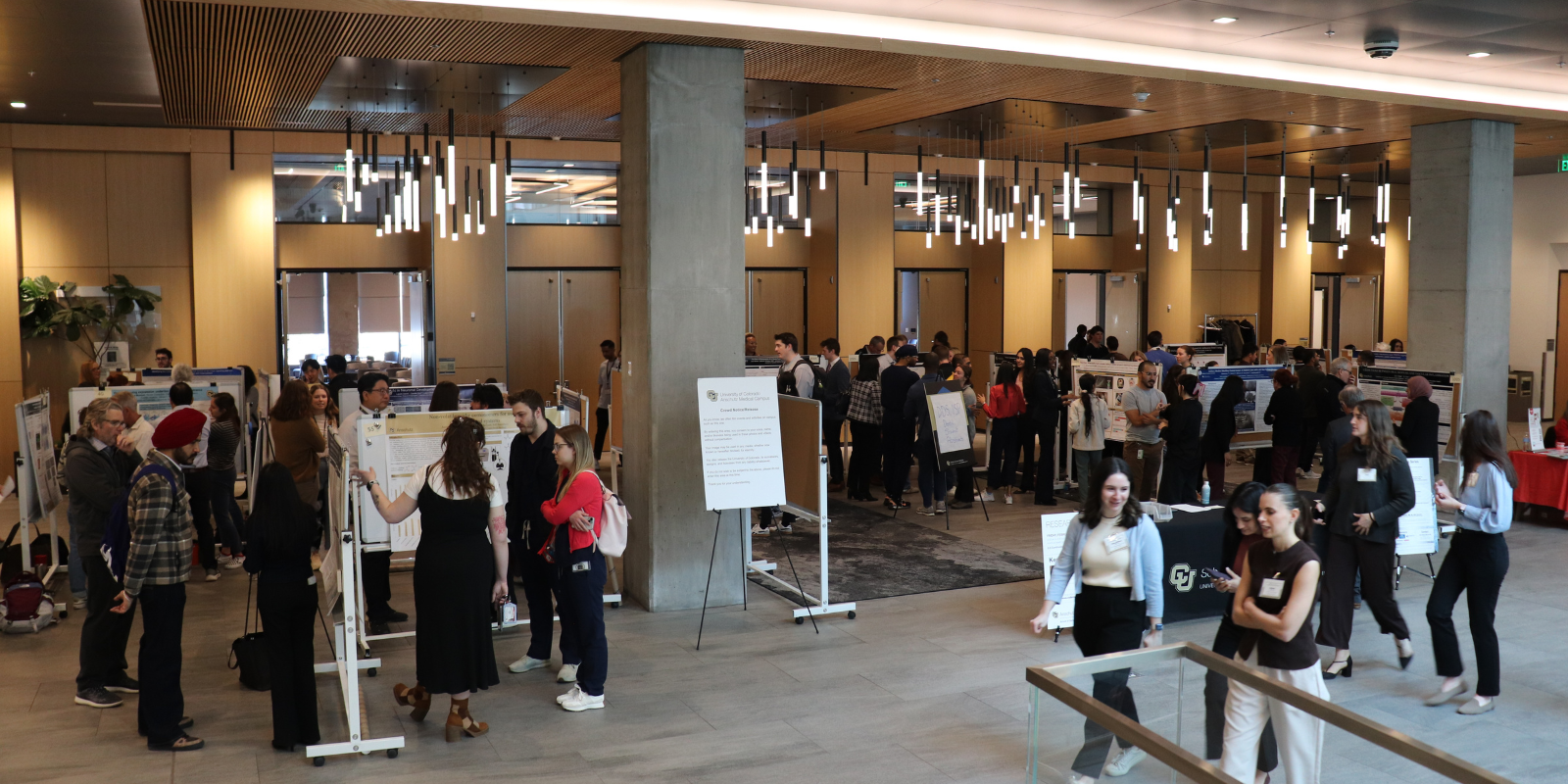
The CU Anschutz School of Dental Medicine’s 41st Annual Research Day showcased a powerful range of scientific innovation, from artificial intelligence to developmental biology. The event reflected the school’s deep commitment to advancing oral and systemic health through rigorous research, interdisciplinary partnership and a shared spirit of inquiry.
This year’s poster competition and oral presentations highlighted how rapidly these fields are evolving, and how CU Anschutz Dental researchers are helping shape what comes next.
Artificial Intelligence in Dentistry: Building Trust, Improving Diagnostics
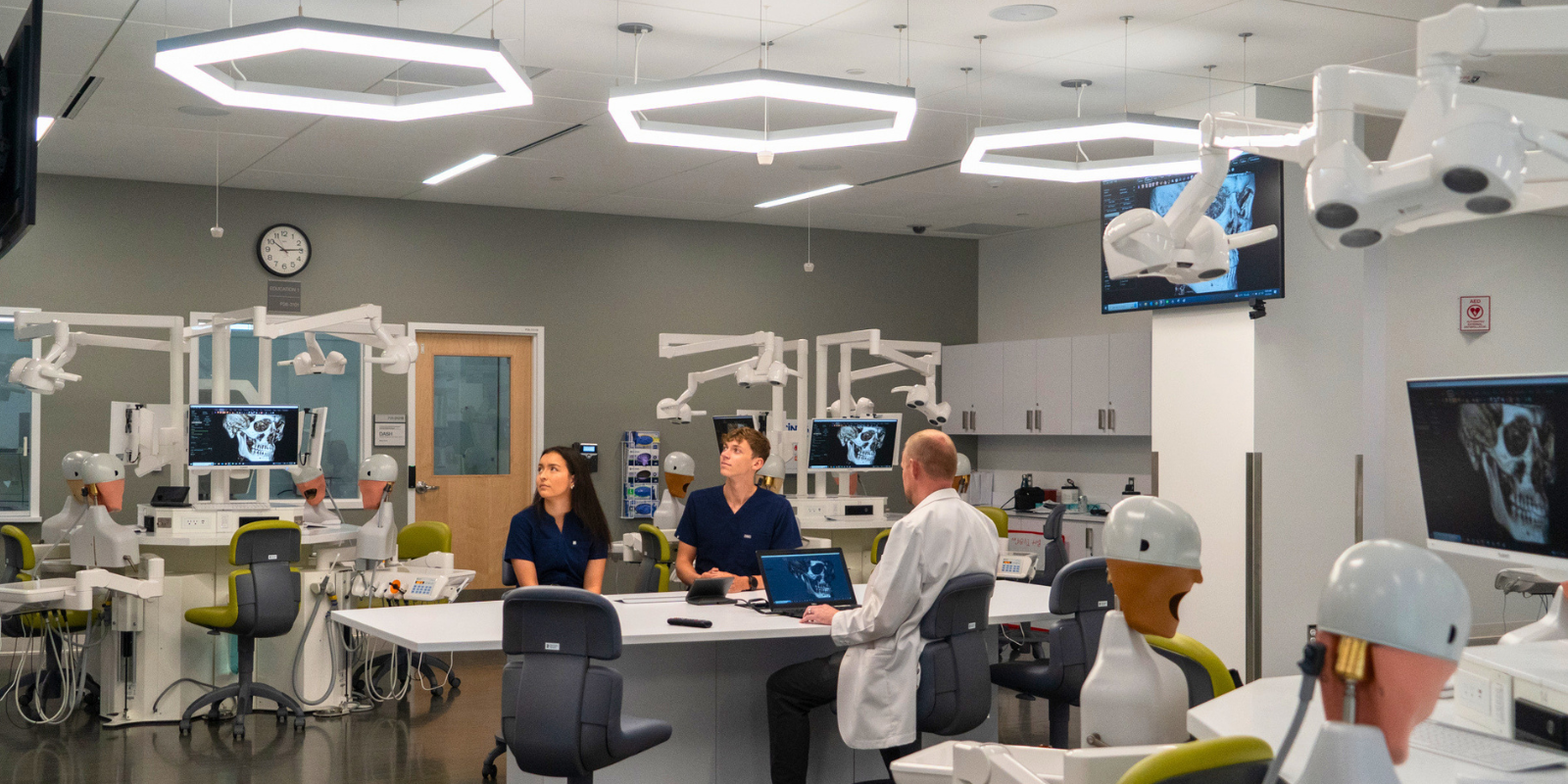
There is a growing body of research exploring artificial intelligence (AI) and its role in improving diagnostics, patient communication and clinical decision‑making. Under the leadership of Benjamin Crockett, DMD, MS, chair of the Division of Maxillofacial Radiology and AI Innovations, two posters explored a range of questions shaping the future of the field.
DDS students Jack Nielsen (Class of 2028) and Mackenzie Korbel (Class of 2026) presented research exploring how artificial intelligence is being adopted in dental education and clinical care.
Nielsen’s poster, “The Role of Radiographic AI in Dental Education and Patient Communication,” showed that an AI platform can boost diagnostic confidence and improve patient understanding. He plans to investigate workflow and training barriers to increase consistent use.
Korbel’s project, “User Trust, Ethical Considerations, and Technical Barriers of AI in Dentistry,” highlighted the need for broader data collection to better understand user trust and behavior. Her goal is to improve AI training so clinicians can use these tools responsibly and confidently as applications expand across diagnostics, planning and administrative tasks.
Together, these projects position CU Anschutz Dental at the forefront of developing AI‑ready clinicians who can leverage technology thoughtfully and effectively.
Breakthroughs in Dental Materials and Manufacturing
In the realm of materials science, research is pushing dental technology toward a more durable, efficient and accessible future.
Sean Keyser, Ph.D., a postdoctoral researcher in the Stansbury laboratory, won the postdoctoral poster competition category with his research, “Balancing Strength and Toughness in Glassy Photopolymers via Acid–Urethane Covalent‑Noncovalent Network Design.” The project centers on creating a new class of photopolymers that are both durable and highly printable. The next phase involves moving from the laboratory into clinical 3D printing applications. With industry partners, Keyser and the Stansbury team are refining the process so these materials can enable faster, more affordable dental prosthetics.
Sean Norris, a postdoctoral fellow in the Nair laboratory, shared “Cost Reduction in Research for Antibacterial Dental Coating.” By modifying the acrylated hydroxyazobenzene (AHA) molecule, Norris aims to expand its use for antimicrobial denture coatings. Scaling production and advancing toward commercialization remain key goals, with the hope that these materials will become standard in coatings and other dental applications.
Advancing Craniofacial Developmental Biology
Many research projects delved into the genetics and early development of the craniofacial skeleton.
Grace Gustafson, a graduate researcher in the Nichols laboratory, gave an oral presentation on “A Developmental Buffering Mechanism of Initiation Codon Mutations.” Her next experiments aim to pinpoint which alternate start site produces a partially functional protein in mutant forms of the mef2ca gene, which is a key determinant of mandibular development. She is also exploring how changes in mRNA might trigger a feedback loop that reduces severity in some patients. Understanding these modifiers is crucial to inform how clinicians across the country assess and manage variability in craniofacial conditions.
Lauren Sands, professional research assistant in the Watt laboratory and winner in the laboratory research staff poster category, presented “RNA Polymerase I and III Subunit Polr1c in Neuronal Development and Disease.” Her team is preparing a manuscript while continuing to study rare cases involving both Treacher Collins Syndrome and hypomyelinating leukodystrophy. By investigating how mutations in Polr1c affect bone, cartilage and now neuronal development, the team aims to inform future treatments and reduce the need for multiple surgeries in affected patients.
Reimagining Dental Education and Expanding the Dental Provider Pipeline
Briana Davis (DDS Class of 2029) is helping reshape how nerve blocks are taught in dental school with her project, “Block Party! A Mixed‑Reality Haptic Simulator for Inferior Alveolar Nerve Blocks.” Improvements underway include sensor‑based feedback to guide correct needle positioning and the integration of mixed‑reality devices to allow students to practice complex anesthesia techniques before treating patients.
The project aims to reduce the high failure rate of inferior alveolar nerve blocks. Enhanced simulation could reduce errors, strengthen confidence and improve patient comfort and safety while opening the door for simulators designed for other anesthetic blocks.
Nisali Piyasena (DDS Class of 2027), won the poster competition in the DDS/ISP student category for her project, “Addressing Oral Health Disparities in New Mexico.” After identifying persistent barriers for pre‑dental students in her home state of New Mexico, Piyasena’s ultimate goal is to increase the number of dental providers by establishing dental pathway programs. By offering mentorship and structured support beginning in high school, such programs could meaningfully improve access to dental education and help alleviate the state’s chronic provider shortage.
Piyasena has already seen encouraging interest among the students she’s reached and hopes her research will inform policy changes that strengthen the future dental workforce.
A Research Community Building What Comes Next
The 41st Annual Research Day not only showcased exceptional science; it reaffirmed the CU Anschutz School of Dental Medicine’s position as a national leader in oral health research and its dedication to advancing knowledge that improves lives. Ongoing research in the newly renamed Department of Craniofacial, Oral and Materials Sciences will undoubtedly pave the way for new innovations.
> View all 2026 Research Day event photos.
> Learn more about research at the CU Anschutz School of Dental Medicine.