.png)
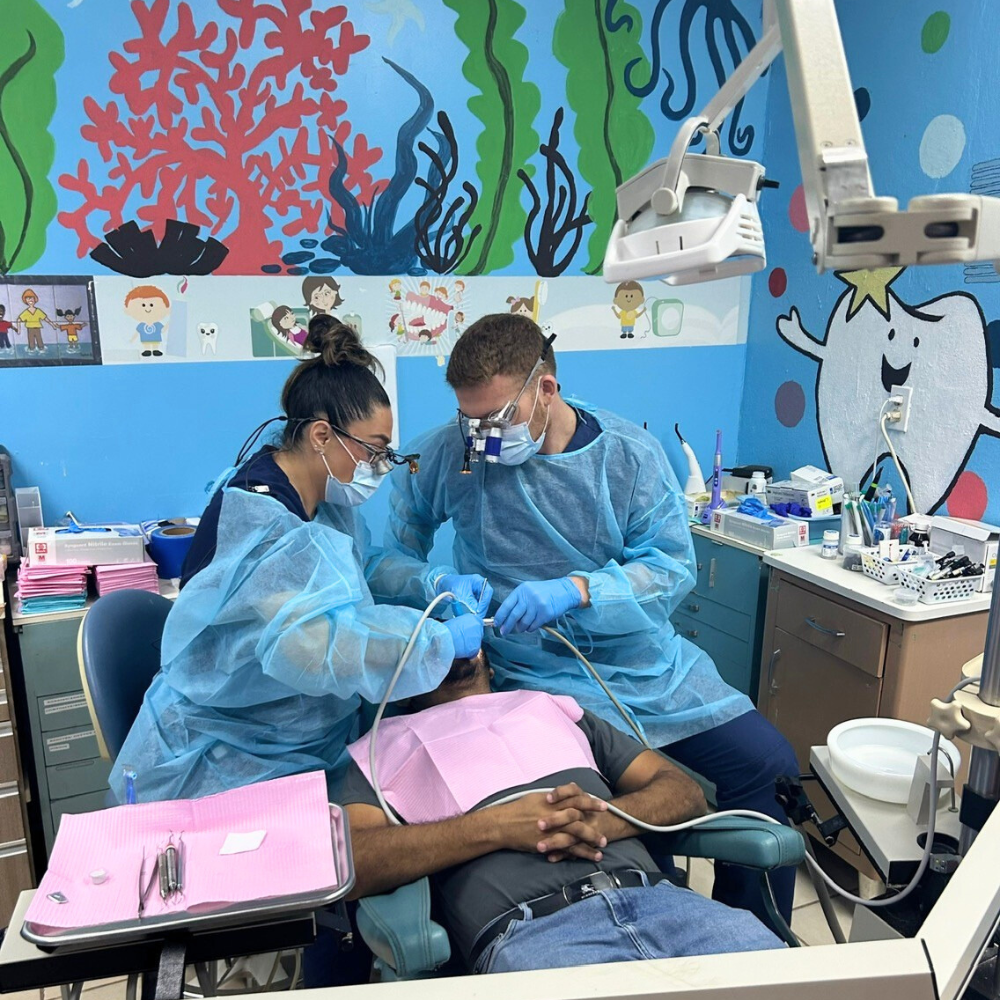
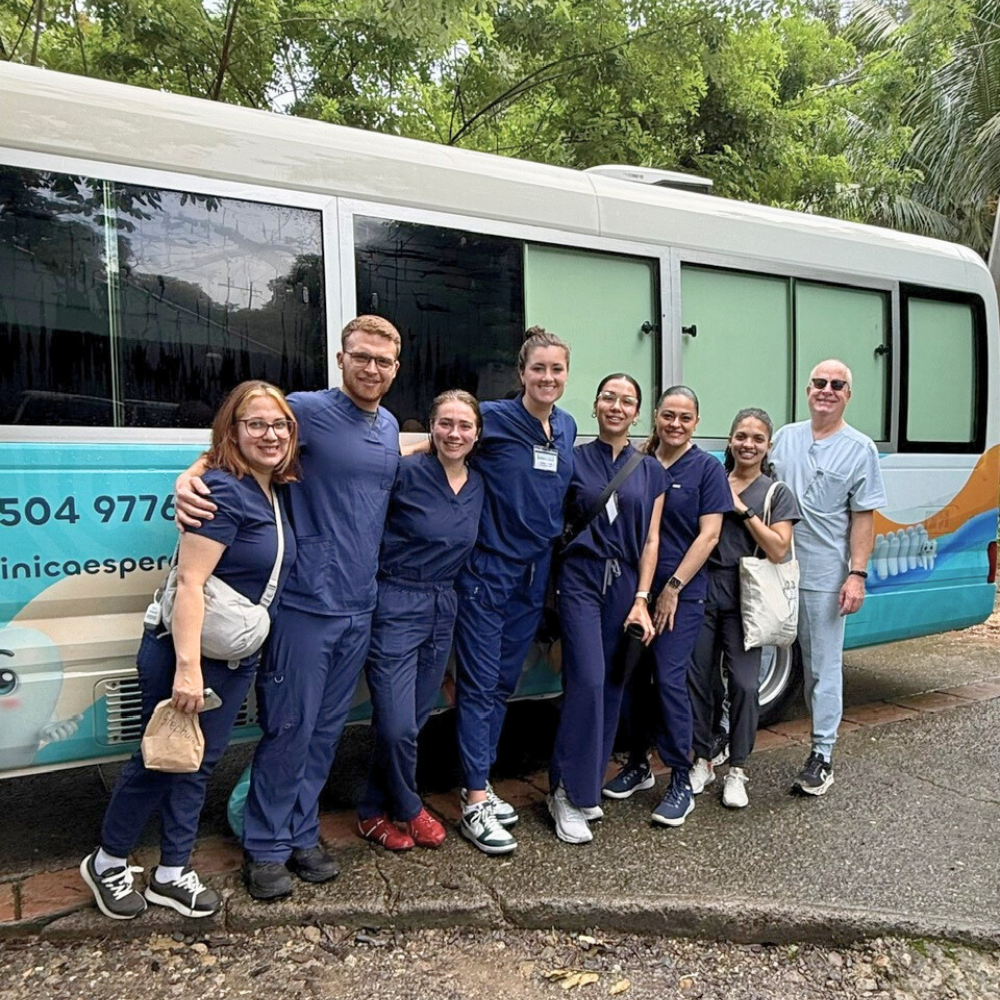
A group of CU Anschutz School of Dental Medicine students spent eight days in Roatán, Honduras, providing essential dental care in resource-limited settings, partnering with local community organizations and gaining firsthand experience in how setting and circumstance can shape oral health needs and care. The trip is part of CU Anschutz Dental’s growing global health efforts, which gives students opportunities to work with new patient populations and build confidence outside the traditional classroom and clinic environment.
The students stayed at a local housing complex where a host family prepared meals each day, highlighting the importance of community partnership from the start. The week blended clinical care, school-based outreach, community engagement and reflection.
Clinical care and community outreach
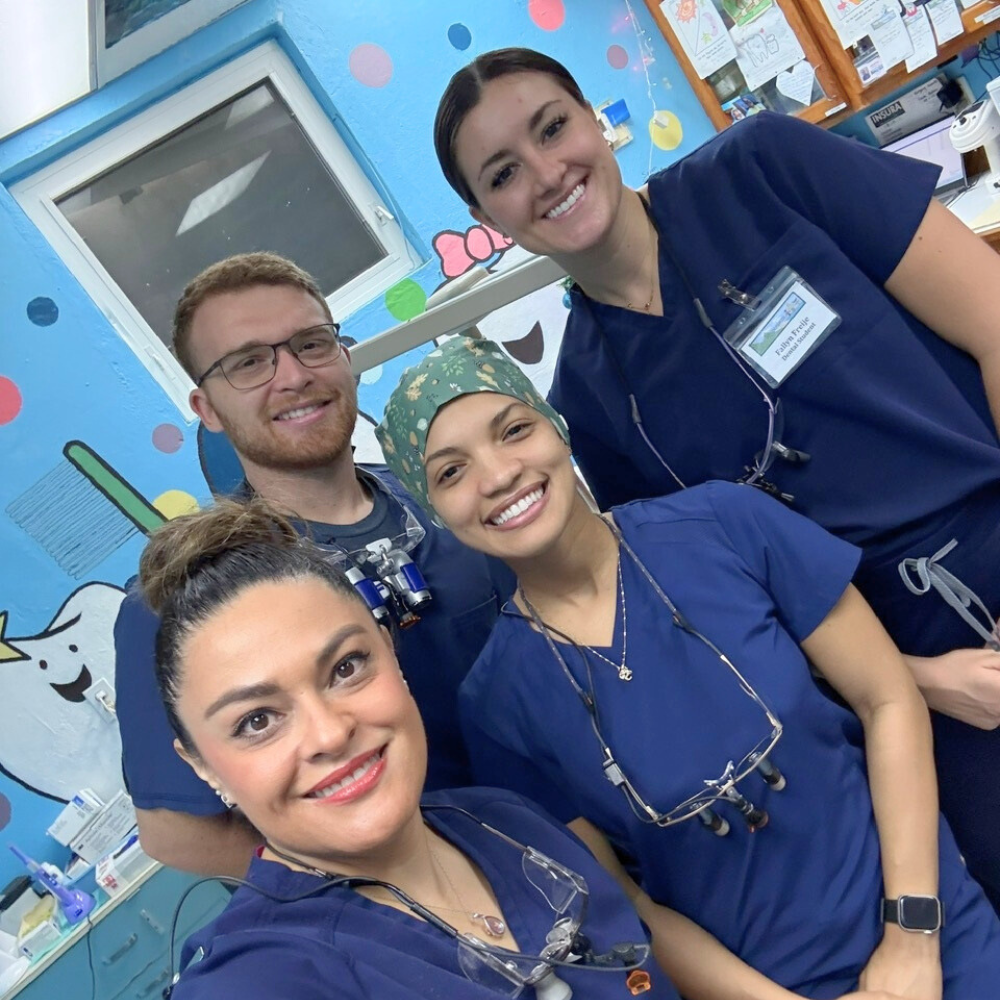
Monday through Friday, students rotated between a local clinic and a mobile dental bus that visited nearby schools. Mornings began with breakfast together before half the group staffed the clinic and the others boarded the bus to deliver preventive care. This included exams, cleanings, fluoride applications and oral hygiene instruction for children who often had little or no previous experience with a dental provider.
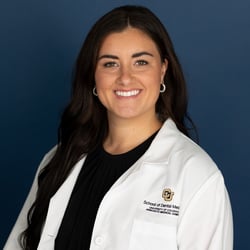
“Many of the kids we saw were having their very first dental visit,” said dental student Fallyn Freije (pictured). “Being able to help build trust early felt incredibly meaningful.”
 Students quickly learned to adapt. Limited equipment meant relying more heavily on clinical fundamentals, careful judgment and flexibility.
Freije recalled applying silver diamine fluoride (SDF) to every tooth of a frightened 3-year-old with extensive decay. “It was emotional, but mom trusted us completely,” she said. “It showed how even small steps can make a real difference in a child’s comfort and health.”
Patients often arrived well before sunrise and waited patiently. Some traveled from distant parts of the island or from surrounding islands by boat. The combination of travel effort and gratitude left a strong impression on the students.
“Seeing how far people traveled and how appreciative they were made me think differently about what meaningful care looks like,” Freije said. “It reinforced the responsibility we have to approach every patient with humility and respect.”
Communication Across Languages and Settings
With translators frequently assisting, students relied on nonverbal communication, visual demonstrations and adjusted pacing to build rapport. For Freije, who values strong patient relationships, this was one of the most challenging parts of the experience.
“Not being able to communicate directly with every patient was hard for me,” she said. “It made me realize how important communication is in dentistry, and how much trust you can still build without many words.”
Evening discussions often centered on these lessons, as students reflected on how communication styles and expectations can differ across settings.
The week also included community-focused activities. These experiences helped students understand the broader context in which their patients live and the role communities play in health.
A Meaningful Experience with Lasting Impact
As the trip wrapped up, students shared how quickly the week passed and how much they learned.
“This trip affirmed that dentistry can change lives in simple, meaningful ways,” Freije said. “It taught me that being a provider is about service, compassion and using your skills to help someone, no matter how big or small the intervention.”
From diagnosing and treating patients in improvised conditions to helping children feel comfortable at their first dental visit, students returned home with strengthened confidence, broader perspective and practical lessons they will carry into their future careers.
With upcoming trips to Brazil, Honduras and Guatemala, CU Anschutz dental students have opportunities to continue building their skills while learning from and contributing to global communities.
Get Involved
Students interested in future global health experiences can email sdm-globalhealth@cuanschutz.edu for eligibility requirements and upcoming opportunities.
Faculty and alumni can support these initiatives through the CU Anschutz Dental Global Health Giving Fund, which helps offset student travel and lodging expenses. (Under "gift designation" select "write in" and type "Dental Global Health Fund.")
Top photo: A group of CU Anschutz Dental students, along with faculty member and alumnus John Rabe, DDS ’90, arrive in Roatán, Honduras, to provide care and learn about global oral health.