<img height="1" width="1" style="display:none" src="https://www.facebook.com/tr?id=799546403794687&amp;ev=PageView&amp;noscript=1">

Surgery Resident Advocates for Improved Hernia Mesh Procedures in JAMA Surgery Viewpoint Article

Ahmad Hider, MD, says mesh products need to be more easily traceable in case problems arise.

minute read

by Greg Glasgow | October 22, 2025
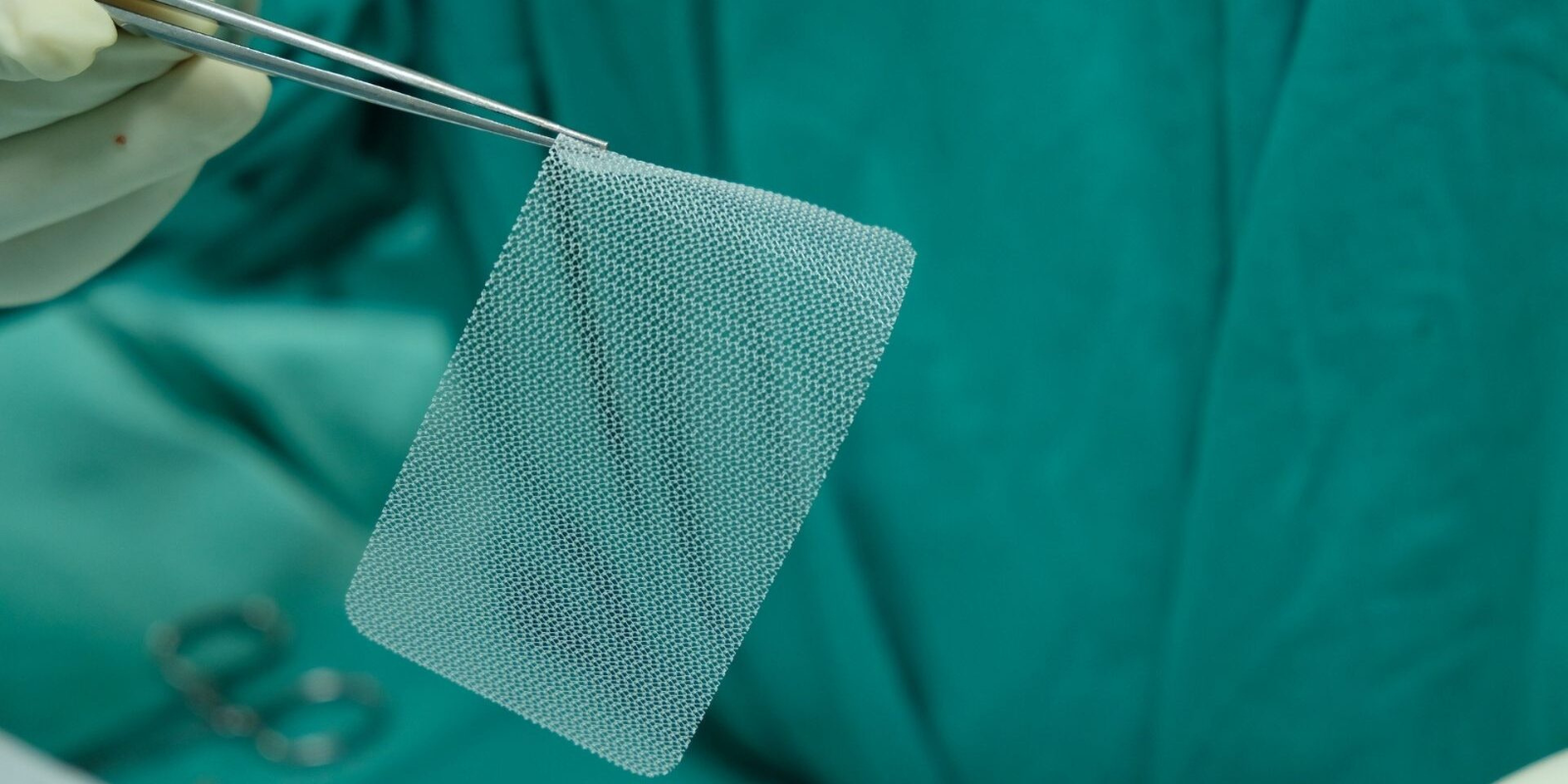
Surgeon using tweezers to hold a piece of surgical mesh

The mesh used for hernia repair surgery typically presents no issues for a patient post-surgery, but some mesh products are later found to be defective or unsafe, leading to symptoms such as pain, infection, and inflammation. Additionally, there are multiple mesh products available to surgeons, and not every product is appropriate for every patient in every situation.

In a recent “Viewpoint” article published in the journal JAMA Surgery, Ahmad Hider, MD, a general surgery resident in the University of Colorado Anschutz Department of Surgery, offers his take on draft guidance for surgical mesh labeling recently issued by the U.S. Food and Drug Administration. The guidelines are aimed at supporting safer, more consistent use, but Hider argues that more needs to be done to protect patients from mesh issues that arise post-surgery.

We sat down with Hider to talk about the article.

Q&A Header

How did this Viewpoint article come about? What was the message you wanted to convey?

This Viewpoint grew out practical challenges observed in the operating room. As a resident, I’ve repeatedly seen how difficult it is to trace mesh products later if safety alerts arise. The piece is a policy and practice reflection, pulling together the FDA’s draft labeling guidance, the current state of mesh labeling/UDI capture, and lessons from other device areas to offer a surgeon’s perspective on how to make transparency meaningful.

When and why did the FDA issue this guidance?

The FDA issued draft recommendations in June 2025 to standardize hernia mesh labeling — clear device classification, indications, mechanical properties, and summaries of clinical data — to support safer, more consistent use. It’s voluntary draft guidance (not a binding rule) and its real-world impact hinges on uptake by manufacturers and health systems. The underlying problem is poor transparency and traceability. Mesh details often aren’t documented with unique device identifiers (UDIs), which limits informed consent, device comparison, outcomes tracking, and recall efficiency.

Have you seen these problems in practice? How do you handle them now?

Yes. Post-op, patients (and clinicians) may not know exactly which mesh was implanted for those who underwent hernia repairs at different institutions. If a safety notice appears later, locating affected patients is hard without UDIs in the chart. Practically, we push for: (1) scanning barcodes/QR codes in the OR to capture UDIs into the electronic health record (EHR), (2) adding device fields to operative notes and supply chain systems, and (3) giving patients an implant ID card or equivalent documentation. These are simple steps that dramatically improve traceability.

In the article, you write, “transparency is a start, but it must be coupled with accountability, infrastructure, and policy.” What are the next steps, and how are you involved?

The next steps we outline are: (1) build a national hernia implant registry with routine UDI capture; (2) integrate mesh labeling fields into EHR and procurement; (3) tie registry participation/UDI capture to reimbursement and accreditation; and (4) standardize patient-facing materials and implant cards. I’m actively advocating these changes through professional society policy channels and working locally on EHR/device-capture workflows — moving from “recommended” to “routinely done.”

Do you hope this paper moves the needle by raising awareness?

Absolutely. Awareness is step one; the bigger goal is to convert awareness into systems change so surgeons can pick the right device, patients know what’s in their bodies, and health systems can track performance and respond rapidly to safety issues.

Topics: Publications

Featured Experts
Staff Mention

Ahmad Hider, MD