When young people in Denver suffer traumatic injuries from community violence incidents including shootings, stabbings, and assaults, a hospital program run in part by faculty members at the University of Colorado Anschutz Department of Surgery is there to get them connected with the resources they need once they leave the hospital.
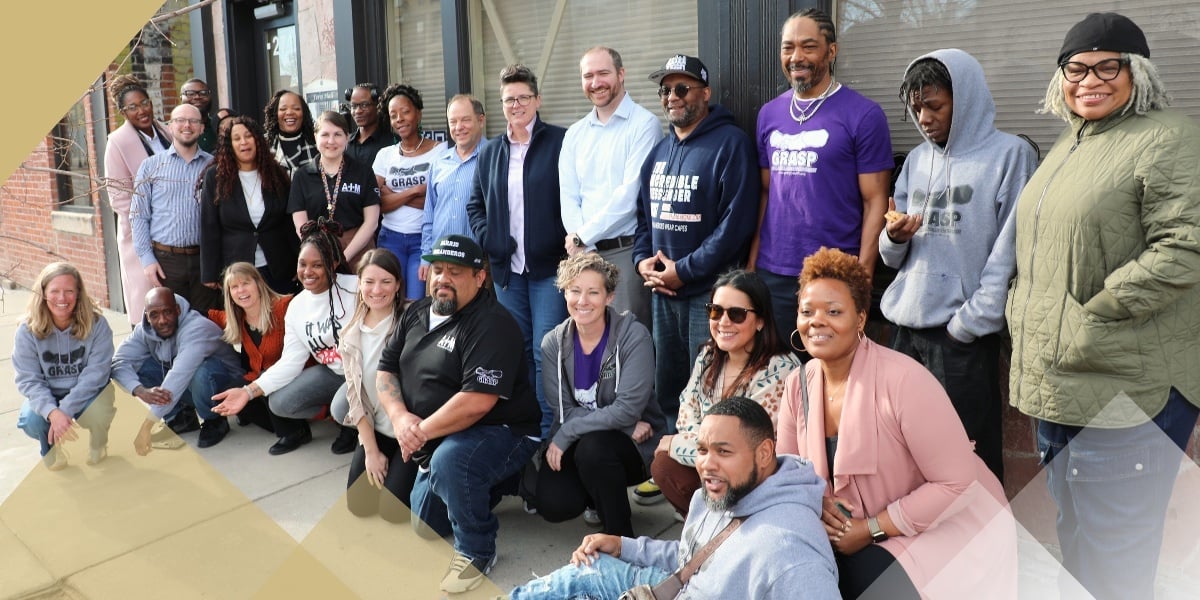
Known as the At-risk Intervention and Mentoring (AIM) program, the initiative was created in 2010 at Denver Health to respond to youth and young adults, generally between the ages of 14 and 45, who come to the emergency department after a traumatic injury. AIM was established as part of Denver Youth Program (DYP)’s Gang Rescue and Support Project (GRASP), first in partnership with Denver Health (2010) and now with UCHealth University of Colorado Hospital (2020) and Children’s Hospital Colorado (2023).
“A tremendous asset of the AIM hospital-based violence intervention program is that it has oversight over five different locations in four different health systems,” says Catherine Velopulos, MD, professor of GI, trauma, and endocrine surgery and AIM’s medical director at UCHealth. “The mission of the university is to work with the community, and this is a good way for the Department of Surgery to provide community benefit.”
At bedside and beyond
AIM’s flow of care starts at the scene of the incident with a “violence interrupter” from the prevention team at DYP, who lets the AIM hospital team know if someone is being transported from the scene to the hospital. From there, AIM violence prevention professionals meet with the patient at the bedside and link them with hospital and community-based resources aimed at addressing underlying risk factors for violence.
“Even with the best possible care, it's still the worst day of someone's life when they end up in the hospital with an injury due to violence,” says Ginny McCarthy, DrPH,MDiv, MPH, assistant research professor in the Division of GI, Trauma, and Endocrine Surgery. “Even very proficient medical care can’t help all the way in terms of healing the whole person.”
Care within REACH
AIM helps to connect patients with mental health, educational, and legal support; when it comes to follow-up medical care, patients can, as of November 2023, go to the REACH Clinic, a recently launched DYP initiative that offers multidisciplinary, wraparound care to survivors of community violence, including those with bullet-related injuries.
“We want to make sure their pain is being managed, follow up on prescriptions they might have received at discharge, and answer any questions they have,” says McCarthy, director of the REACH Clinic. “They come to us for wound care and pain management, but they often go on to receive mental health services and physical therapy through our clinic as well. We partner with the Therapist of Color Collaborative to provide culturally and linguistically congruent mental health care.”
Johnnie Williams, executive director of DYP, notes that the resource also is designed to address the lifestyle factors that led to the injury-causing incident and assist with changing their circumstances when possible.
“We want to find out what's going on in their lifestyle that's causing them to be in a place where they're being shot, stabbed, or assaulted, and then we provide services around whatever those circumstances are, whatever the root causes might be, whether that's the social connections they have, lack of education or lack of job opportunity or housing, whatever they might be facing,” he says. “We have case managers and violence prevention professionals that are there to not only see if they're OK in the moment, but what do they need for the trajectory of their path in the future to change so that they're not reinjured?”
Into the future
Through the GRASP program, the REACH clinic recently received a $100,000 grant from the Everytown Community Safety Fund. The fund will be used to ensure program sustainability for the AIM program and for training and technical assistance, as well as an ultrasound to use for bullet extractions, a procedure the clinic is working to add to its services.
“I'm starting the process of getting REACH approved as a site of practice for the Department of Surgery so that we can start doing things like bullet removal and more invasive procedures,” Velopulos says. “That will also allow our residents and medical students to work in the clinic as part of their training.”
The team also is working to open a second REACH clinic on East Colfax Avenue, in Aurora, near CU Anschutz, in early 2026. In both locations, they say, the clinic is a valuable resource for addressing barriers that might prevent some survivors of community violence from seeking follow-up care.
“The hospital can be an intimidating environment for people — it's hard to come and park and figure out where to go, and they can be reluctant to talk about the circumstances that led to their injury,” Velopulos says. “Having that space in the community to be seen and to get these wraparound services is just something you can't do in the clinic environment on campus.”