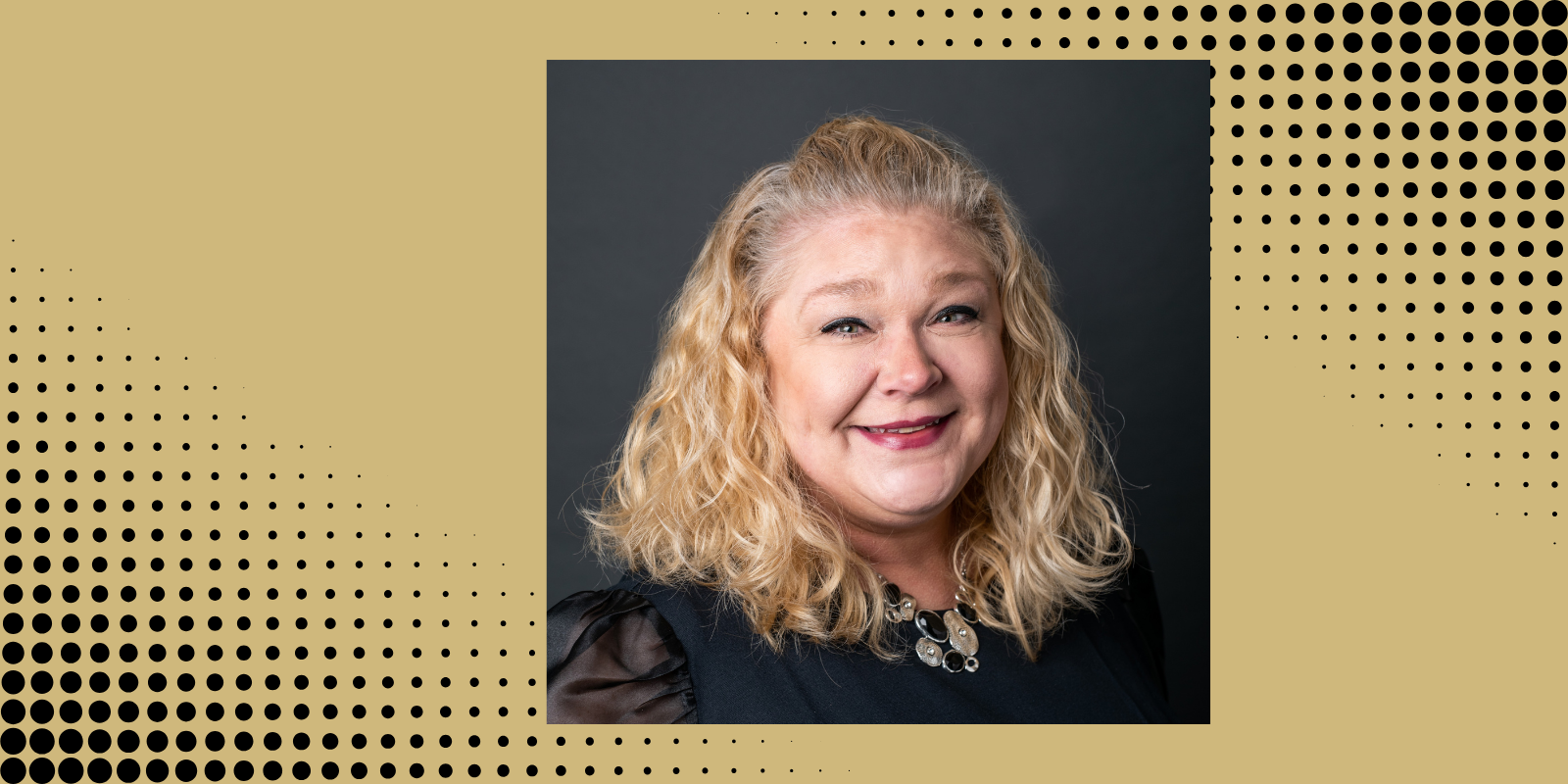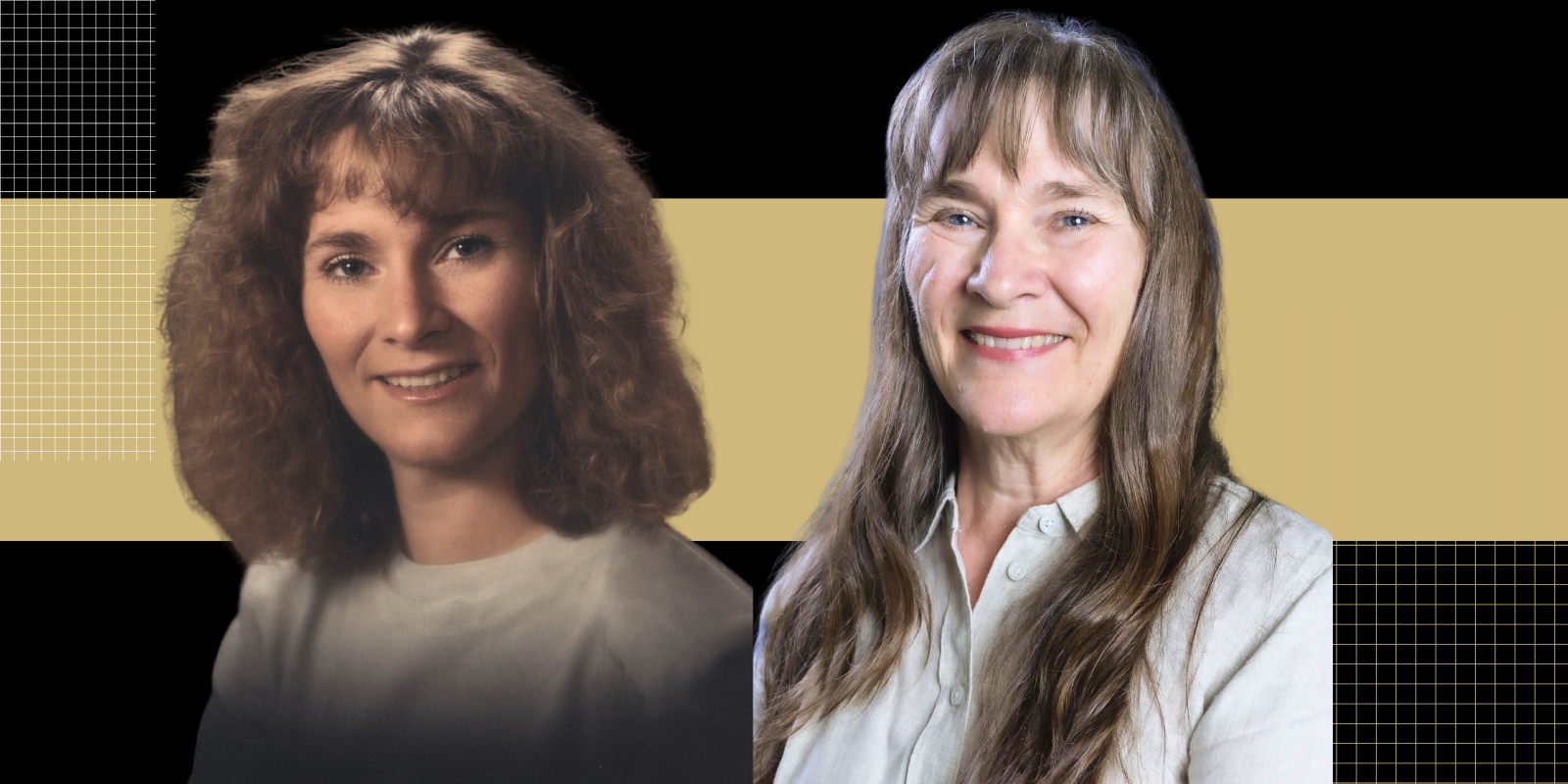
Christina Finlayson, MD, showed up for her residency interview at the University of Colorado Department of Surgery in a paisley skirt and a sweater she had crocheted herself.
“I hadn’t had time to get a suit yet,” she recalls. CU, which would eventually become CU Anschutz, was the best program on her match list, and when she learned she had matched, a wave of excitement and apprehension washed over her.
In 1989, the year Finlayson started her residency, five of the seven categorical residents in the Department of Surgery were women. Having so many female residents in one year was unheard of. Finlayson recalls that some weren’t thrilled about the progress that was unfolding, but it didn’t stop her or her fellow female residents.
Looking back at her medical career now, Finlayson sees the silver linings in her experience as one of the first, and early few, female faculty members in Surgery.
Finlayson is proud to report she and her female peers from that class — Elizabeth Brew, MD, Joyce Moore, MD, and Denise Norton, MD — all went on to have long, impactful careers in medicine — proving their inclusion was not the worst thing but arguably one of the better things to happen to the department. Overall, she found the department faculty and particularly the senior male residents were very supportive. One of these colleagues, Robert McIntyre, MD, professor of surgery and current interim chair of the department, was on the faculty when she returned to the department after her fellowship.
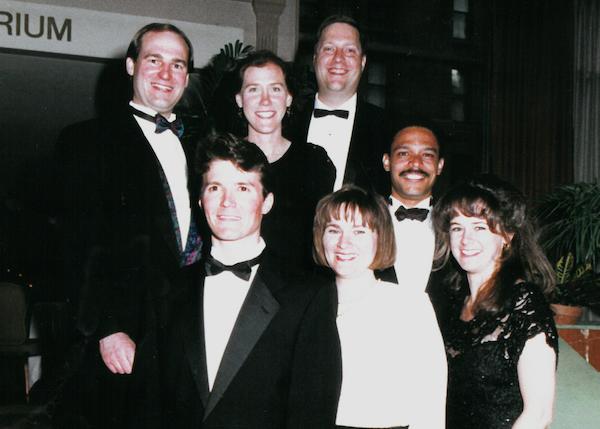
Finlayson with other surgery residents at the 1994 graduation celebration at the University of Colorado
Finlayson’s ‘nontraditional’ path to medicine
Finlayson knew she wanted to be a doctor from the time she was 7. Growing up in Idaho in the 60s and 70s, she had an uncle who was an academic urologist, but she didn’t meet a female doctor until she graduated college. Unlike other kids who might have looked forward to reading comic strips, Finlayson recalls eagerly anticipating the Reader’s Digest’s monthly “News of Medicine” feature.
“I had a lot of peers whose parents weren’t as supportive of what would be considered a nontraditional career path for a girl,” Finlayson says. But when she told her parents of her interest in medicine, her father’s response was, “You can do it. There’s no reason you can’t.”
Her mother had her own interest in science, having earned a bachelor’s degree in microbiology, which was then called bacteriology. Finlayson got a taste of medicine as a teenager and young college student when she staffed the front desk at a family medicine clinic in her small town.
Finlayson followed in her mother’s footsteps by earning a bachelor’s degree in microbiology from Idaho State University. Idaho didn’t have a medical school, so Finlayson had a difficult path applying to out-of-state medical programs.
The first time she attempted to get into a medical school, she was rejected, so she pivoted by doing a brief stint in a research lab in Boston and then went to Stanford University to earn a master’s degree in education. She eventually ended up in Salt Lake City teaching math and science to junior high and high schoolers.
In 1985, Finlayson got her shot at medical school at the University of Utah. When she started, the one thing she knew was that she didn’t want to be a surgeon. That changed the fourth night of her first clinical rotation after she observed a heart transplant.
“I thought, how can I not do this for the rest of my life?” she says. Then, after observing an abdominal surgery and witnessing the intestines performing peristalsis, Finlayson was hooked on surgery.
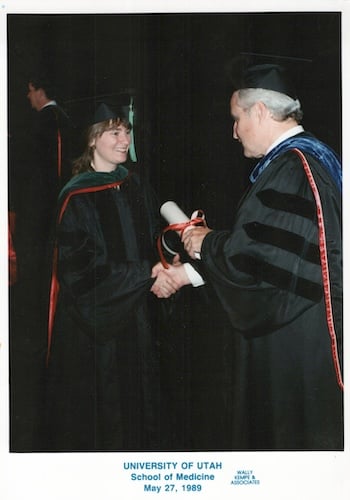 Finlayson receiving her diploma at the University of Utah School of Medicine graduation in May 1989
While she knew matching with CU’s Department of Surgery was a step in the right direction for her career, Finlayson also knew the program had a “grueling” schedule. Residents were pulling 120+ hour weeks due to being on call at the hospital every other night. It was so demanding, she and her peers would sleep at the hospital to eke out any rest they could. Finlayson recalls allowing herself a meager four hours a month to pursue personal hobbies and otherwise staying focused on learning the craft.
Finlayson credits Alden Harkin, MD, the chair of the Department of Surgery at the time of her residency, with recommending her for a surgical oncology fellowship at Fox Chase Cancer Center in Philadelphia. There, Finlayson gained experience in treating complex, multiorgan disease, experience she would bring back to Colorado.
In 1996, Finlayson was hired as a surgical oncology faculty member at the CU School of Medicine, performing a full range of surgical oncology, general surgery, and trauma care at the University of Colorado and VA hospitals.
Finding her love for clinical program building
Finlayson credits Lawrence Norton, MD, and Nathan Pearlman, MD, professor emeritus of Surgery, with mentoring her during her early days as a surgical oncologist. In 1997, after Norton stepped down as the director of the University of Colorado Hospital's breast center (since named the Diane O’Connor Thompson Breast Center), Finlayson took over.
One of Finlayson’s fondest memories is working with the multidisciplinary team she established as director of the center: radiologist John Lewin, MD, medical oncologist Doug Rovera, MD, and radiation oncologist Rachel Rabinovitch, MD. At that time, the center was “the only place in Colorado — the only place west of the Mississippi — where a patient could come in and see all of their specialists in one visit,” she says.
"She felt multidisciplinary care was paramount and solicited strong input from breast pathology and imaging, in addition to medical and radiation oncology," recalls medical oncologist Anthony Elias, MD. The interaction between all these specialties facilitated clinical research, Elias explains. The unique multidisciplinary clinic approach soon gained the attention of other hospitals in the state and was eventually replicated, setting the bar for patient-centered care.
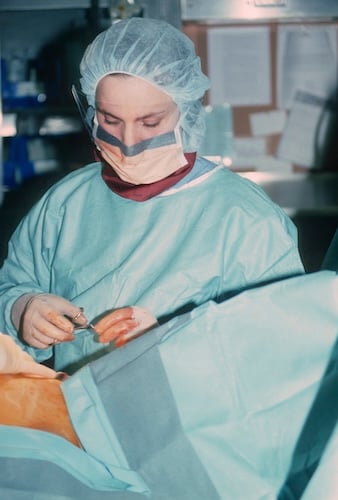
Finlayson in the operating room.
Another differentiator for the center was the presence of Janet K. Stephens, MD, who was a trailblazer in cytopathology. She would come to the clinic to biopsy lumps and give patients information about their condition, usually in less than 30 minutes. Being able to offer same day diagnosis was a huge boon to anxious patients.
Under her 20 years of leadership, the center grew in reputation and scope, even drawing international patients to be seen by the multidisciplinary team. When Finlayson started at the center, they were a team of “ones”, most working there part-time: One surgeon, one medical oncologist, one radiation oncologist, one breast imaging radiologist. There are now multiple providers with dedicated breast cancer training and expertise in each of the disciplines practicing at multiple locations in the Denver metro area. Due to her being "particularly concerned with the quality of care for breast cancer patients," Elias explains, Finlayson also worked to get the clinic accredited by the American College of Breast Surgeons.
Finlayson was a mentor to Virginia Borges, MD, MMSc, who joined CU Anschutz in 2003. Now the co-director of the Diane O’Connor Thompson Breast Center alongside Sarah Tevis, MD, Borges reflects, "it was Dr. Finlayson's support that allowed the Young Women's Breast Cancer Translational Program to move forward. Back then the idea of a dedicated program focused on young onset breast cancer was unheard of. But Dr. Finlayson leaned in, providing both the guidance and academic and clinical freedom that allowed me to create something unique. Those are rare gifts. With her support, the program launched, endured, and is now a model for other academic institutions seeking to design tailored care to young breast cancer patients."
Finlayson was also involved in clinical research that helped advance the treatment of breast and other kinds of cancers. She and her team were involved in validating the efficacy of sentinel node biopsy testing, which shifted the standard practice away from removing all a patient’s lymph nodes around the affected areas to only having to remove some, thereby eliminating a lot of the post-surgery complications patients were experiencing.
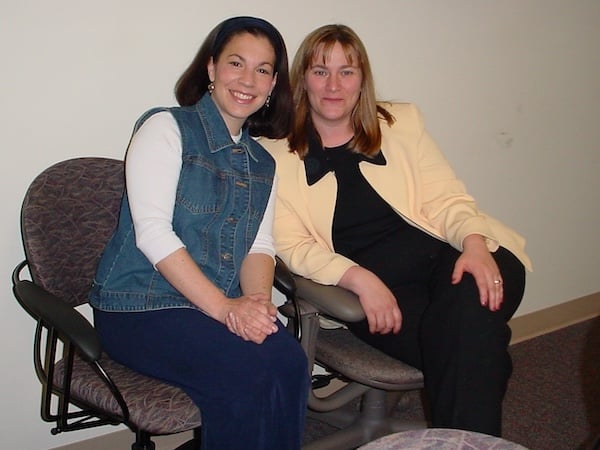
Finlayson with Rachel Rabinovitch, MD.
She also worked with Elias and Borges, building a breast tissue bank and expanding drug therapy; John Lewin, MD, advancing breast imaging research; and Rachel Rabinovitch, MD, individualizing the delivery of radiation therapy.
In 2009, Finlayson was named a full professor of Surgery, a hard-won achievement. She deeply impacted the early career faculty and residents she trained, such as Nicole Christian, MD. Now a faculty member and director of the breast surgical oncology fellowship at CU Anschutz, Christian says, "learning from Dr. Finlayson is one of the reasons why I am a breast surgical oncologist." Christian even cares for some of Finlayson's former patients and sees "how her clinical and professional legacy continues through those of us she trained and mentored; I see the impact of her patient-centered approach and continue to aspire to make a similar impact on my patients."
Finlayson's interest in clinical program building extended beyond the breast center as she served on the Fitzsimmons Cancer Center; the planning committee overseeing the university's move to the Anschutz campus; and as medical director of the University of Colorado Hospital’s Women’s Health Program steering committee, Women’s Integrated Services in Health clinic, and the Wound Center.
The move to CU Medicine
In 2016, Finlayson scrubbed out of surgery a final time and made the move to full-time clinical program building at CU Medicine and the CU Anschutz School of Medicine. As the associate medical director at CU Medicine and the associate dean of clinical affairs at the school, Finlayson worked with UCH leadership to standardize processes across the clinics so that when a patient arrived through any door, they would have a similar, quality experience regardless of the clinic where they were seen.
It was a lot of behind-the-scenes work that had her speaking with insurance companies, streamlining operations for clinic staff members and providers, and collaborating between the university and the hospital system. The success of this work was recognized in 2018 when CU Medicine and UCH were jointly awarded first place by Vizient for Ambulatory Quality & Accountability.
Finlayson worked with Reenie Zaccardi from UCH to establish the Office of Advanced Practice, which supports nurse practitioners (NP), physician assistants (PA) and other advanced practice providers (APPs). Finlayson credits her experience all those years ago working with a PA in the family practice clinic in Idaho with giving her the idea to utilize APPs more substantially in the Diane O’Connor Thompson Breast Center. Working alongside Zaccardi, she was able to standardize the work experience and professional development opportunities for APPs across both organizations. Their combined effort was recognized in 2019 when the School of Medicine received the American Association of Physicians Assistants' Employer of Excellence award.
A parting gift
Finlayson is in a phased retirement, with the goal of being fully retired by 2027.
As someone who has devoted their life and countless hours to treating patients, teaching, and standardizing clinical care, it’s a big transition. Before she fully retires, though, she’s working with the CU Anschutz Office of Advancement to establish the Christina A. Finlayson Breast Surgery Innovation Fund to support residents and fellows training to become breast surgeons.
“CU Anschutz is a unique place in the country as an academic institution, in terms of the collaborative nature of the people who work there,” Finlayson says. In other settings, research and academic work can be stymied by competition among faculty members.
“Maybe because we're in the ‘wild west’ and everybody needs each other to be able to do what they want to do, the collaborative nature of this campus is what has allowed it to grow and become the organization that it is now.
“I thought CU was going to be my first job, but it became my only job. CU Anschutz was a good place to work,” she says with a smile.
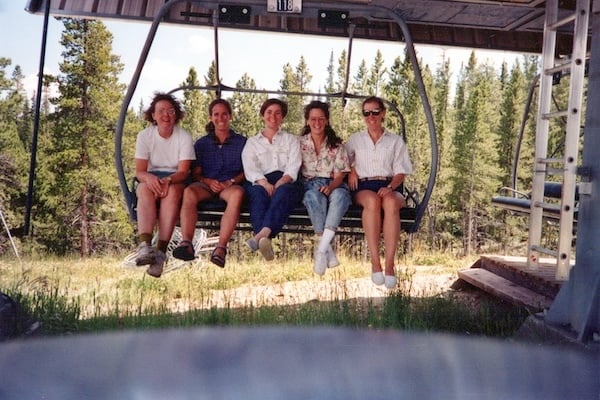
Finlayson (middle) in the Colorado mountains with colleagues Rebecca Wiebe, MD, Elizabeth Brew, MD, Denise Norton, MD, and Joyce Moore, MD.