
Most thyroid conditions can be treated with surgery and/or medication, but thyroid conditions can’t be treated until they are accurately diagnosed.
That’s why it’s important to know the symptoms of common thyroid conditions, says Maria Albuja-Cruz, MD, associate professor of GI, trauma, and endocrine surgery at the University of Colorado Anschutz Department of Surgery, and discuss them with your primary care doctor if and when they arise.
“For thyroid diseases in general, we classify conditions as either benign or malignant,” Albuja-Cruz says. “The two most common benign conditions are hyperthyroidism, in which the thyroid is producing an excess amount of hormones, and hypothyroidism, where the thyroid is not producing enough hormone.”
Hyperthyroidism symptoms
Thyroid hormone controls metabolism, energy, growth, and organ function. Symptoms of hyperthyroidism include fast or irregular heartbeat, heart palpitations, increased hunger, sweating, anxiety, diarrhea, heat intolerance, trouble sleeping, and unexplained weight loss. Some people may also have a goiter — enlargement of the thyroid gland, causing swelling in the neck.
“The autoimmune disorder Graves’ disease is one of the causes of hyperthyroidism, and it can sometimes affect the eyes, leading to bulging eyes, double vision, and eyelid retraction,” Albuja-Cruz says. “In severe cases, thyroid eye disease can even cause vision loss.”
Hyperthyroidism can be treated with medication, radioactive iodine treatment, which destroys thyroid cells and decreases hormone production, or surgery to remove the thyroid gland.
“Surgery is a great option for the management of hyperthyroidism,” Albuja-Cruz says. “It will cure the condition, but you will need to take thyroid hormone for the rest of your life. In our practice, most people stay overnight after the surgery because we want to make sure they don't develop thyroid storm. In rare cases, surgery can precipitate the thyroid to release a significant amount of hormone, which can cause heart failure.”
Hypothyroidism symptoms
Hypothyroidism, on the other hand, causes nearly opposite symptoms, Albuja-Cruz says, including fatigue, weight gain, constipation, depression, slowed heart rate, sensitivity to cold, dry skin, hair loss or thinning hair, and brittle fingernails.
“We rarely do surgery for hypothyroidism, since it can be treated with medicine that is essentially synthetic thyroid hormone,” she says. “There are some quality-of-life studies on patients with severe hypothyroidism that show that with surgery, their quality of life might improve compared to just repleting with thyroid hormone.”
Diagnosing the conditions
Hyperthyroidism and hypothyroidism are both diagnosed by testing the blood for levels of thyroid-stimulating hormone (TSH), the hormone the brain uses to stimulate thyroid production. TSH is different from the actual hormones produced by the thyroid to regulate metabolism and other bodily functions.
“It's counterintuitive, but if the TSH is low, that points to hyperthyroidism, and vice versa for hypothyroidism,” Albuja-Cruz says. “That’s because if you have a lot of active thyroid hormone in your body, your brain senses that and will stimulate the thyroid as little as possible. The opposite holds true for hypothyroidism — the brain needs to send a lot of TSH to keep the thyroid working.”
Thyroid nodules
Another common thyroid condition is thyroid nodules — solid or fluid-filled lumps on the thyroid that can be malignant (cancerous) or benign.
“Thyroid nodules are very common in women,” Albuja-Cruz says. “Around 40% of women will have a thyroid nodule, and about 5% of those nodules will be malignant and require surgery.”
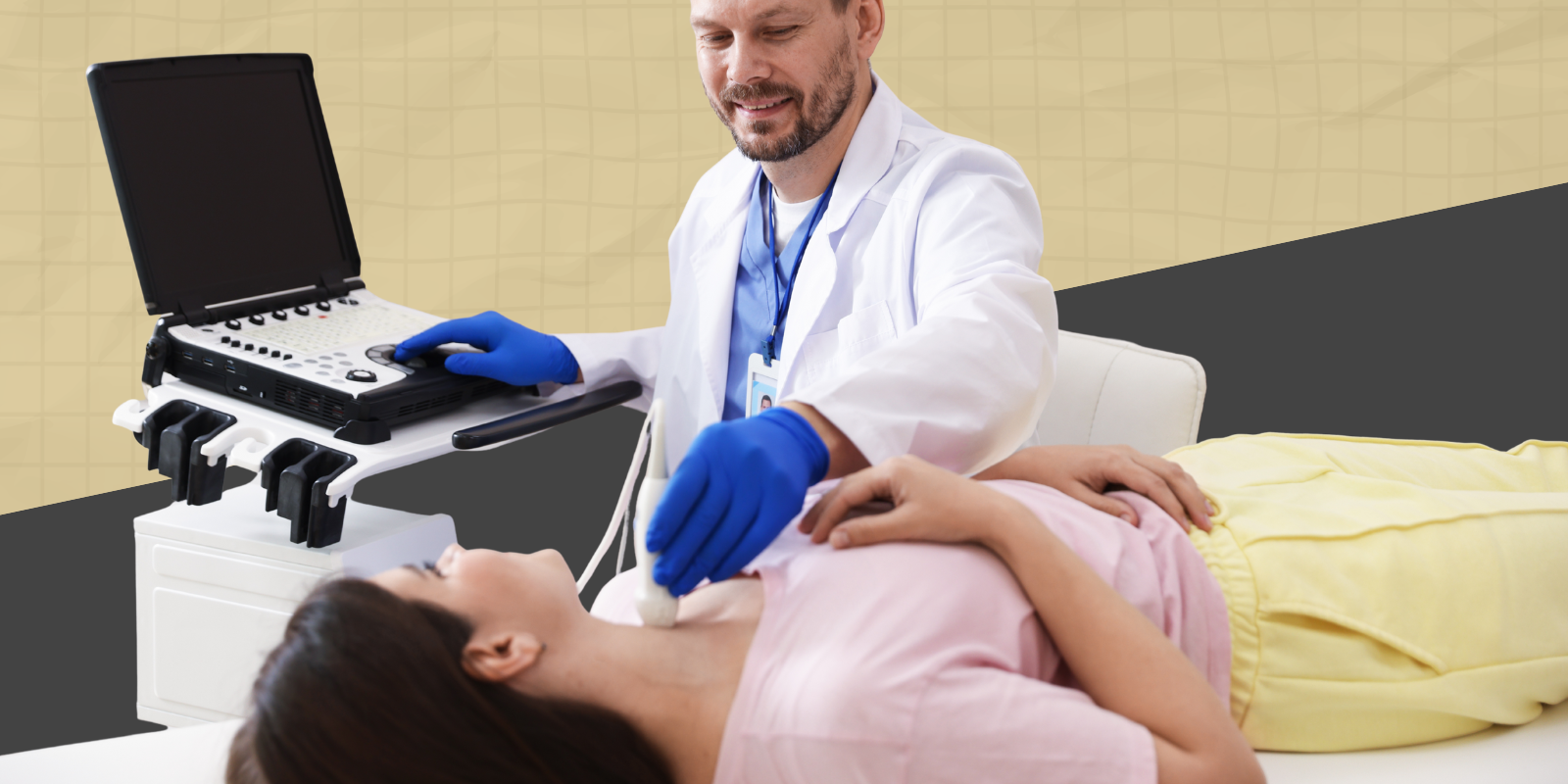
The majority of thyroid nodules are discovered incidentally on ultrasound or imaging done for some other reason. Sometimes a dentist or PCP will check for masses in the neck, and sometimes the patient will feel an unusual mass.
“Nodules can also cause compressive symptoms like trouble swallowing,” Albuja-Cruz says. “They can cause hoarseness of voice and shortness of breath.”
Treating nodules
Once a nodule is detected, an ultrasound determines how big it is and whether it needs to be biopsied.
“Different findings on the ultrasound make a nodule more suspicious or less suspicious,” Albuja-Cruz says. “We stratify the nodules in different categories. Some of those categories are more consistent with benign, and they don't even need to be biopsied, but some of those categories are more concerning for risk of malignancy, so it needs to be biopsied”
Surgery to remove all or part of the thyroid is recommended for cancerous nodules; benign nodules can be monitored or, if they are causing symptoms or hyperthyroidism, be treated with surgery or noninvasive approaches such as radiofrequency ablation, a technique that uses heat from radio waves to shrink nodules.
“They basically burn the nodule out,” Albuja-Cruz says. “It's not that the nodule disappears, but it reduces in size enough to for those compressive symptoms to relieve.”
‘Be vigilant’
Whatever the thyroid condition, many diagnoses begin at a primary care doctor’s office after a patient notices symptoms, Albuja-Cruz says.
“It’s important to know the symptoms and be vigilant,” she says. “If you don’t feel right, or you notice an unusual lump in your neck, go to your doctor immediately.”