When Jean Hoffman, MD, was growing up, she watched ER, the long-running NBC series about an urban hospital’s often-chaotic emergency department. The experience steered her toward a career in emergency medicine.
“I can’t believe my parents let me watch that show,” Hoffman says with a laugh. “I loved that show, and it was motivating to me. That was my world, and I knew I was meant for it.”
ER featured young actor Noah Wyle, who, at the start of the series, was a medical student who almost vomited at the sight of severe trauma. Now, in his mid-50s, Wyle stars as a senior attending physician in The Pitt, HBO Max’s hit streaming series about an urban hospital’s often-chaotic emergency department. In the show’s premiere episode, a medical student faints at the sight of severe trauma. (A cynical resident starts calling her “Crash.”)
Hoffman – an associate professor in the University of Colorado Anschutz Department of Emergency Medicine, and medical director of the ED at UCHealth University of Colorado Hospital (UCH) – sees a lot to like in the show, which kicks off its second season on January 8. But she would like to have a word with Noah Wyle.
“I would like to invite Noah Wyle to come tour here. Or anybody on the show. My door is always open,” she says.
Hoffman wants to show Wyle – who also serves as executive producer of The Pitt – that there are big differences between her ED and the one in the show, with a waiting room filled with sick and injured patients waiting hours to see a doctor.
Big differences
“Our emergency department does not look like that, even though we see an extraordinary number of patients,” Hoffman says. “The Pitt shows an antiquated way of how you operate an ED. We have done highly innovative things to get care to patients quickly, so we don’t have a waiting room full of people and total chaos.”
First and foremost, she says, “We eliminated nurse triage” – a system in which a nurse sets a care priority for incoming patients after asking questions to assess the severity of their condition.
This change was part of a broader, nurse-driven redesign of the department’s front-end intake process, with ED nurses identifying that their expertise had the greatest impact at the bedside while earlier team-based assessments supported more timely evaluation and care. Several recent studies have shown that traditional triage models can result in incorrect triage decisions and treatment delays.
“We have medics and doctors see you immediately,” Hoffman says. “We don’t have someone going through first and asking, ‘What did you have for lunch? Do you have any allergies?’ We’re going to ask, ‘Why are you here?’ And you say, “Chest pain,’ and we say, ‘That’s an emergency. We’re going to get you seen by a doctor.’
"That’s probably the biggest difference here from the show," she adds. "We’re getting people what they came for, which is getting their medical emergency treated quickly. If you get people in front of a physician quickly and get them what they need, they don’t need to sit in the waiting room for 12 hours to get their asthma inhaler refilled.”
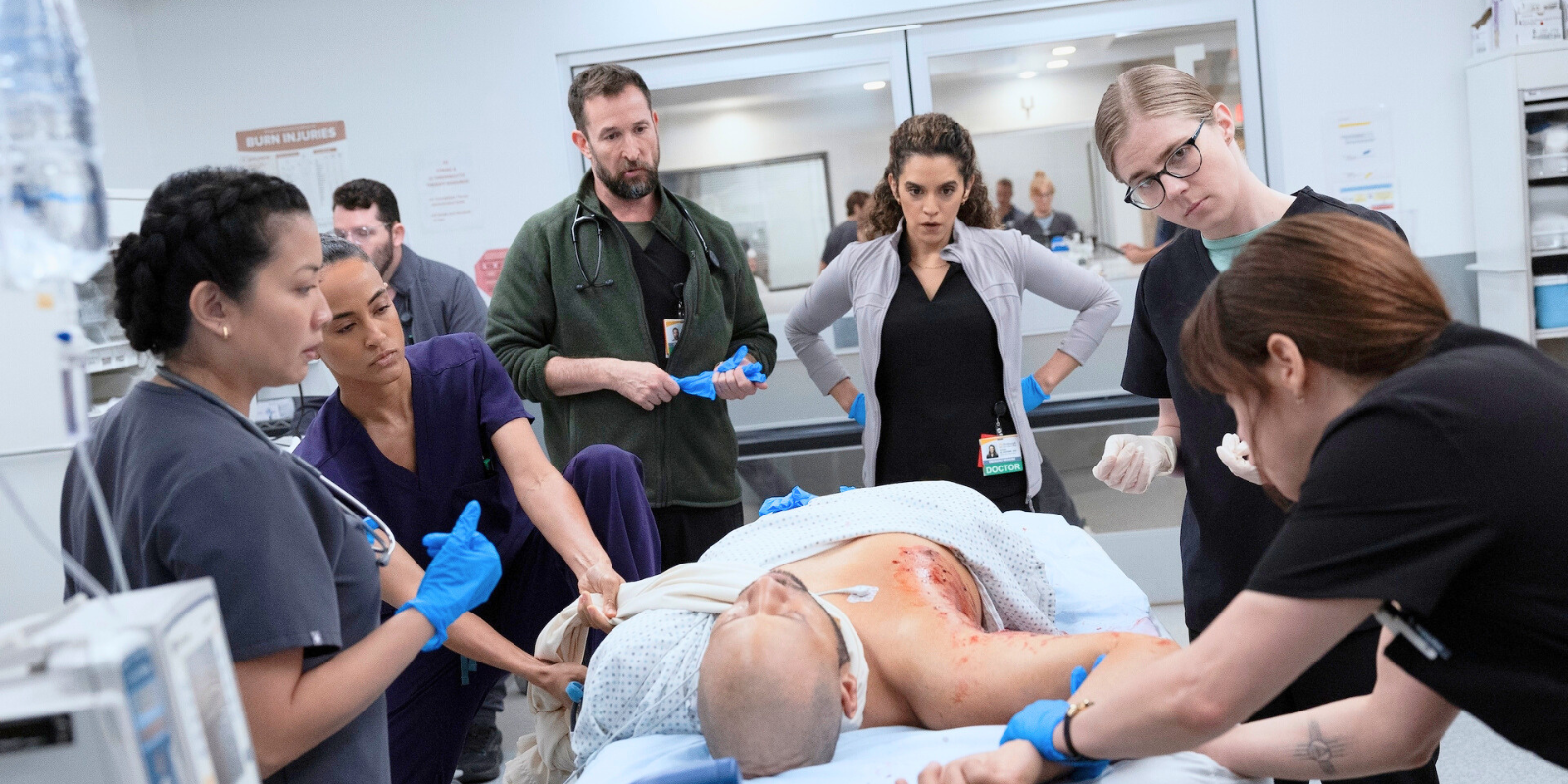
Photo at top: Noah Wyle (center left) in a scene from the HBO Max series The Pitt. Photo: Warrick Page/HBO Max.
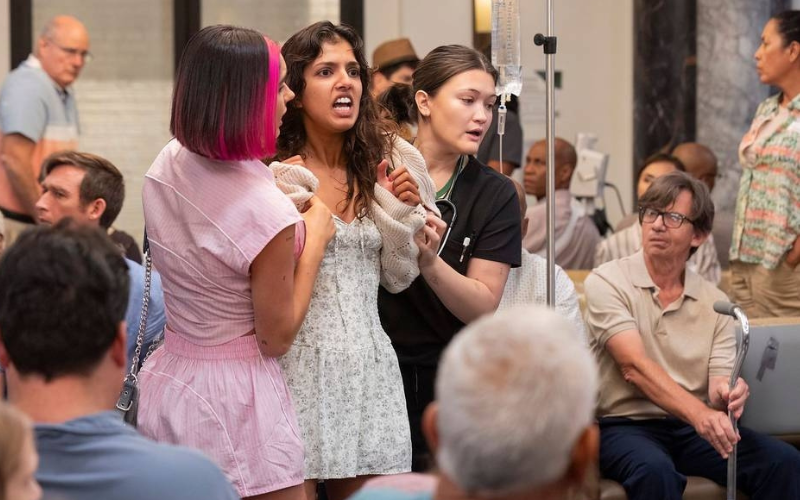
A chaotic scene in the crowded ED waiting area in a scene from the HBO Max series The Pitt. Photo: Warrick Page/HBO Max
A focus on boarding
Characters in The Pitt complain about “boarding” – admitted patients who must wait in the ED for long periods because no inpatient beds are available in the hospital.
“We have boarding sometimes, and I do love that the show brings that issue to the forefront as a problem in hospitals,” Hoffman says. “No one is immune to it because the number of hospital beds per patient is decreasing in this country. But we do not experience that to the extent they show in The Pitt because we have excellent hospital throughput,” meaning that UCH focuses on moving patients efficiently through their care journey by optimizing staffing, bed management, communication, and other factors.
Hoffman hopes the series’ scenes of a packed waiting room don’t scare people who need to come to an ED. “I’m not saying we’re perfect. Sometimes you’re going to wait. But I think we do a really good job at all levels of personnel and processes to make sure we take care of people as soon as possible.”
In The Pitt, the ED staff seems resigned to the chaos and dysfunction that surrounds them. Not so at UCH’s ED, says Hoffman, where her colleagues feel they have agency to identify problems and find ways to improve processes. “I don’t want people to think that we are victims who are doing nothing about any problems that come up,” she says.
Also, as an ED administrator, Hoffman doesn’t relish the show’s depiction of hospital managers “as the source of all evil, when all of us are just trying to make things better. We’re not trying to inflict misery; we’re trying to get the patients the care they need.”
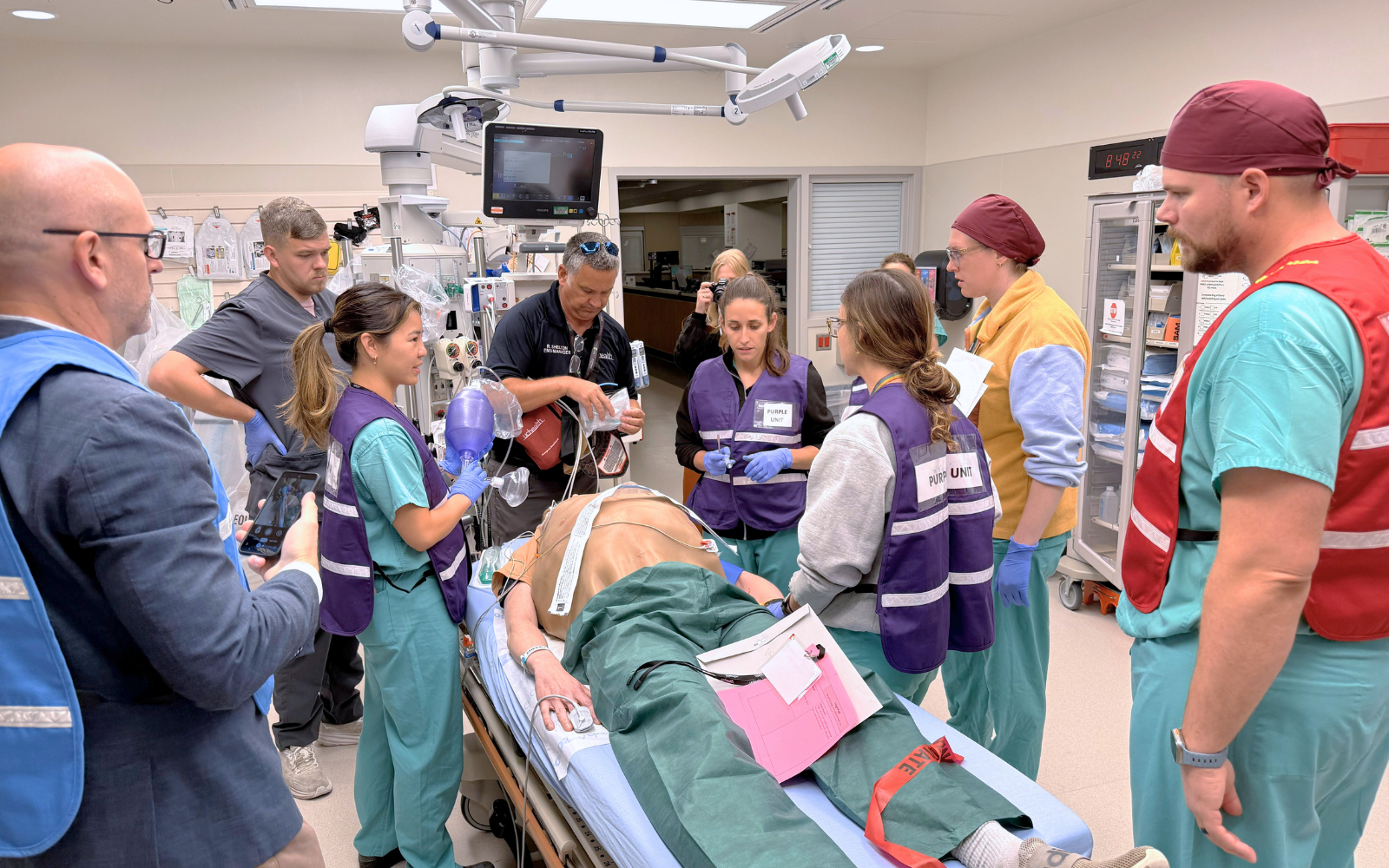
The emergency department at UCHealth University of Colorado Hospital during a simulated mass-casualty training exercise on October 1, 2025. Photo: Mark Harden | CU Anschutz Department of Emergency Medicine.
‘Giving us a platform’
One of the things The Pitt gets right, Hoffman says, is the medicine, including the jargon used and how providers treat patients. She notes that Joe Sachs, MD, FACEP, one of the series’ executive producers and writers, is also an emergency physician, lending authenticity to its scripts.
The series is valuable in focusing on provider stress and burnout under trying conditions, she says.
“During COVID, we were heroes. People were thanking us, and it felt good. After COVID, it’s been a beat down. I can’t put my finger on why, but it’s hard. We see a lot of death, destruction, and darkness every single day. That can take a toll, and we work to ensure that all our medical providers feel supported. The show does an excellent job of bringing the providers’ stories to light and showing how hard it can be.”
Hoffman also credits The Pitt and its popularity for “giving us a platform to have this discussion about how we can do things better in EDs, about things we’ve been saying for a long time. Emergency departments are the canary in the coal mine of health care.”
Hoffman says she has worked before in EDs that were more like the one in The Pitt. “A lot of the operational things we do here, if they were implemented elsewhere, would help mitigate some of those issues,” she says. “I love that The Pitt has highlighted problems in emergency medicine. What I don’t love is that it doesn’t highlight places that are doing a good job and have found solutions to some of these systemic issues.”
What do Hoffman’s emergency-medicine colleagues think of the show? “Most of them don’t watch it,” she says with a grin. “There are two camps. One is people who don’t want to go home and watch it because that’s what they did all day. The other is people who share some of my criticisms of the show. I don’t know any ED doctors who have watched the whole thing.”