Since 2017, a team of specially trained nurses – known as forensic nurse examiners – have provided 24-hour specialized care at UCHealth University of Colorado Hospital (UCH) to thousands of patients facing the health effects of interpersonal violence and victimization, including sexual assault and partner assaults.
“We’ve recognized that these cases are really complex, often multigenerational, and we need specialized care in this field,” says Christina Yannetsos, MD, an assistant professor of emergency medicine and medical director of the forensic nurse examiner program at UCH. “These are important patients and we want to take really great care of them.”
Now, through a new Forensic Nurse Enhancement (FNE) project led by University of Colorado Anschutz Department of Emergency Medicine faculty, the program is extending its mission to help patients with shelter, transportation, and other support needs after they leave the hospital.
The project is funded through a two-year, $1.2 million grant from Adams County, Colorado, which includes the CU Anschutz campus. The funds came from the federal American Rescue Plan Act of 2021, a massive stimulus package enacted to address public health and economic impacts of the COVID-19 pandemic.
Yannetsos, who is principal investigator on the new project, says Adams County’s goal with the grant program “is to reduce housing instability in patients who've been affected by domestic violence.”
Estimates vary widely, but a 2023 report said family and domestic violence impacts about 10 million people in the United States each year, including one in three adult women and one in 10 men. And all too often, violence that sends a patient to the emergency department can be followed by more harm when the patient returns home.
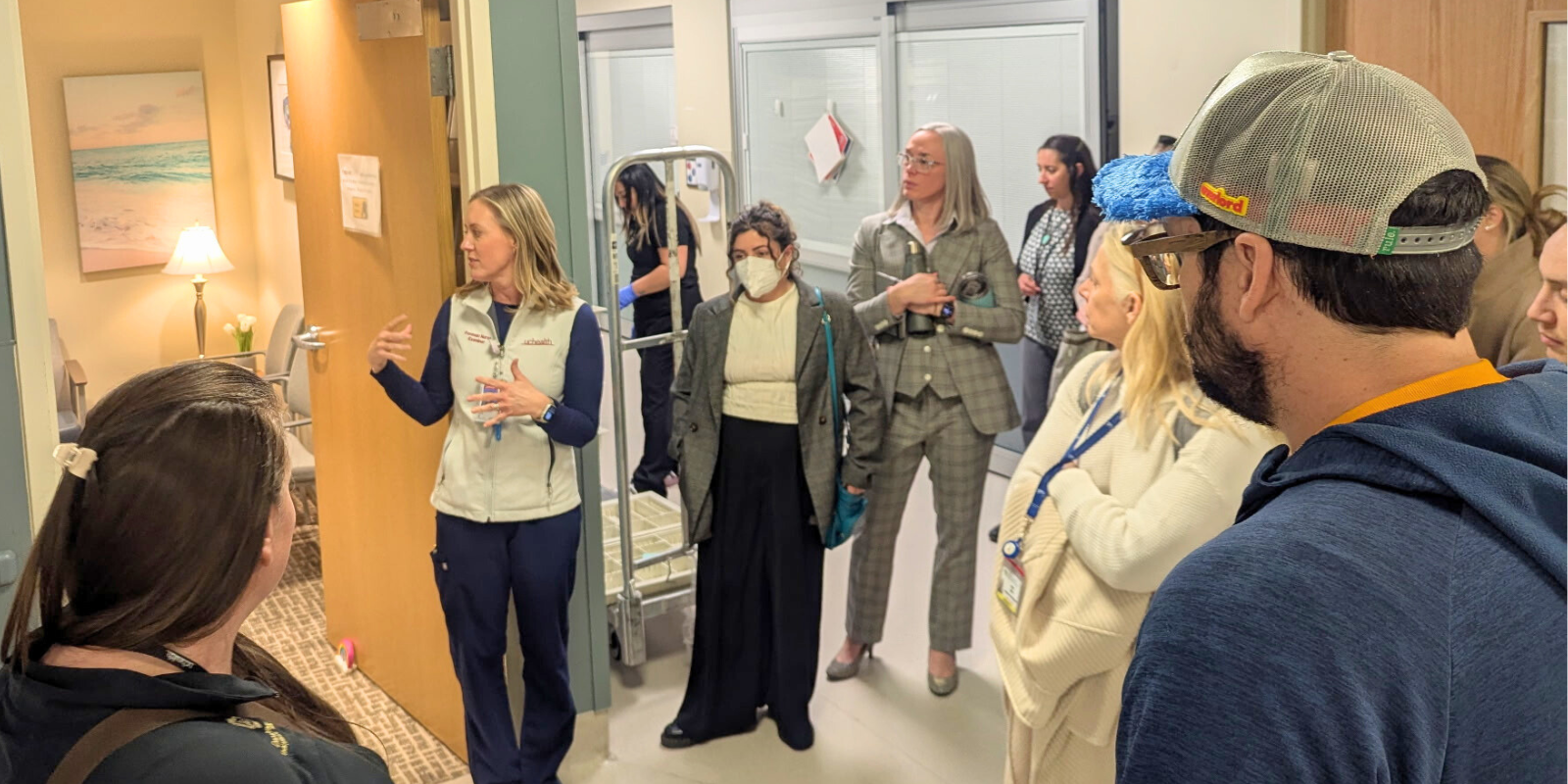
Photo at top: Alexis Clendenin, RN, CCRN, associate manager of the forensic nurse examiner program at UCH, leads a tour of the FNE suite in the UCH emergency department. Photo courtesy of Rachel Kennedy, PhD.
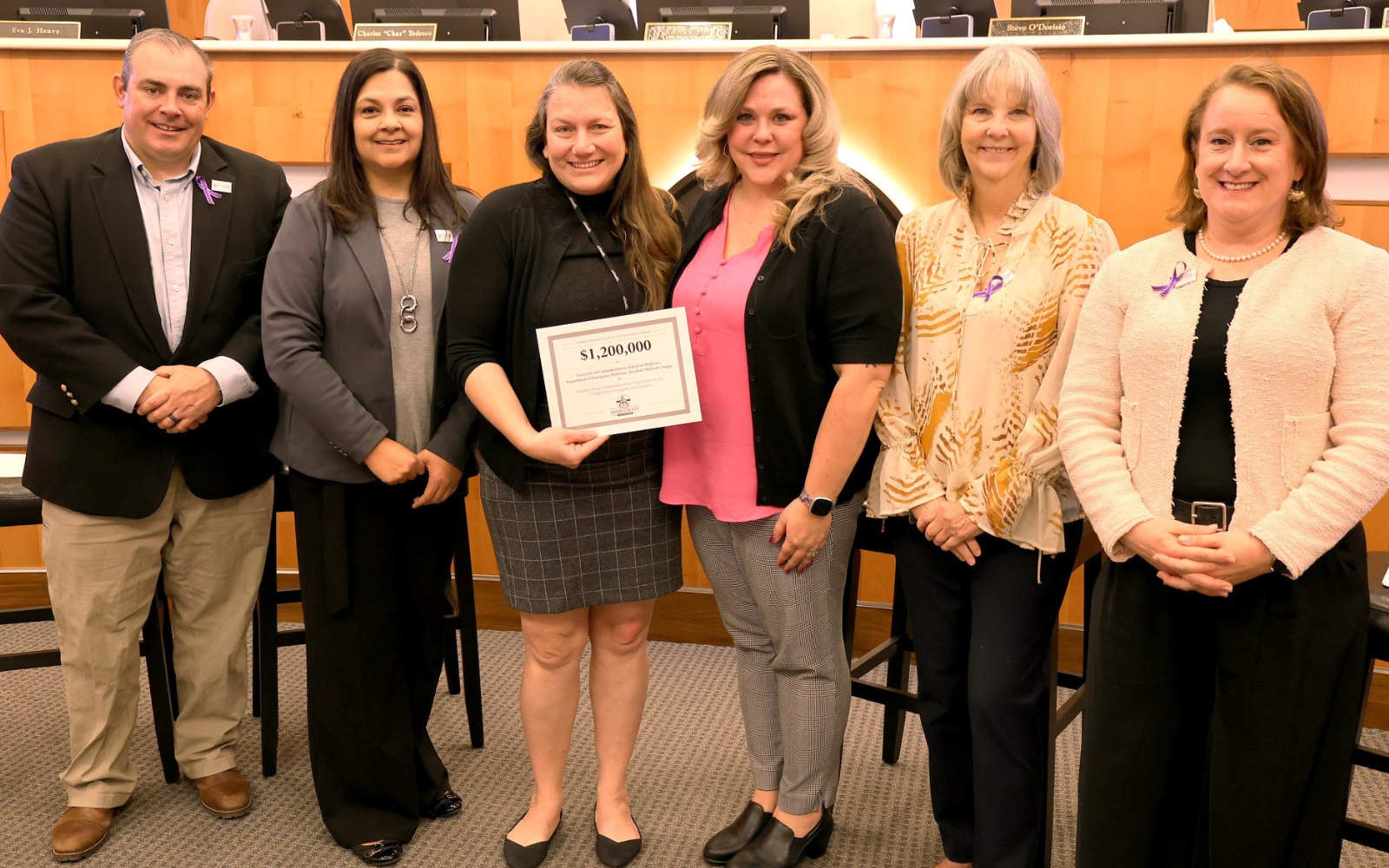
Christina Yannetsos, MD (third from left) and members of the Adams County Board of County Commissioners at an April 2024 ceremony marking the grant award for the CU Anschutz Department of Emergency Medicine's Forensic Nurse Enhancement project.
Doubling down
Under the FNE project, two nurse navigators steer patients toward needed services. Also, short-term housing in hotels is provided for patients who need a safe place to stay, and Lyft rides are provided for those who lack reliable transportation to follow-up appointments and safe discharge locations.
The project team has also worked to create a secure online dashboard called SheltersConnect Colorado, which helps providers and advocates quickly find temporary shelter options for patients. Advocates, health care professionals, and shelter organizations are now able to sign up and use this interactive platform for free.
“We’re working with people who are experiencing violence or abuse. It’s very stressful if you’re that patient in the hospital, waiting to figure out where you’re going to go. We want to do anything we can to make that process more efficient and safe for everyone,” says Rachel Kennedy, PhD, MSN/MPH, RN, an assistant emergency medicine professor. Kennedy practiced as a forensic nurse examiner with the UCH program and is now the research director of the UCH forensic nursing program, and is Yannetsos’ partner in the FNE project.
As of early 2026, the FNE project has served an estimated 2,650 patients, provided 200 to 300 patients with hotel stays, offered 163 Lyft rides, and logged 72 active users on the SheltersConnect Colorado dashboard. And 100% of patients involved in the project have been discharged to safe and stable locations.
Yannetsos says that while other centers providing forensic nursing care around Colorado have closed down for various reasons, UCH and UCHealth’s network “have doubled down on caring for this patient population.”
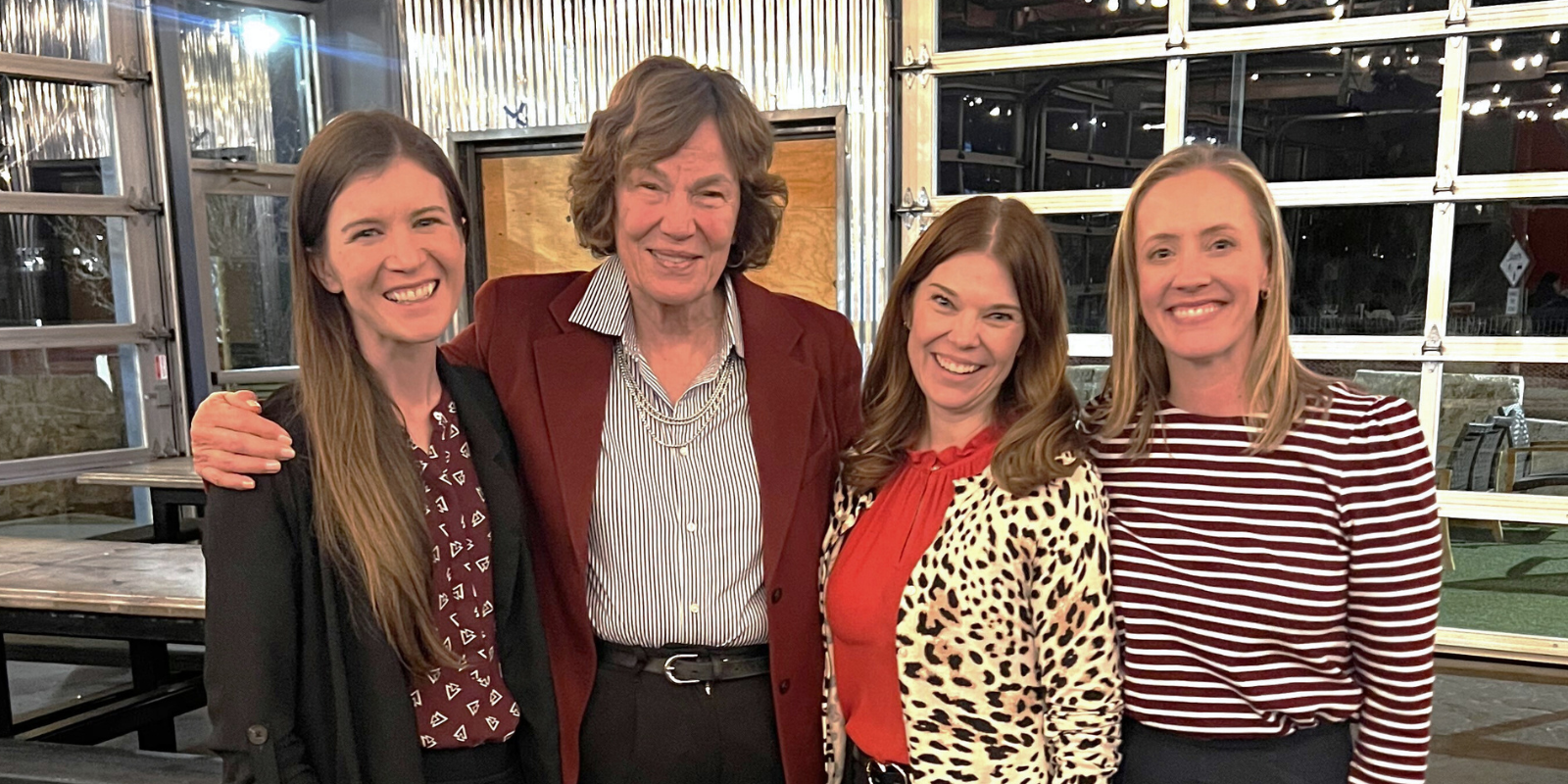
Members of the forensic nurse examiner team at UCH meet with Jacquelyn Campbell, PhD, RN, of the Johns Hopkins University School of Nursing, a leading expert on intimate partner violence. From left: Rachel Kennedy, PhD, MSN/MPH, RN; Campbell; Erin Ashman, BSN, RN, associate nurse manager at the UCH ED; and Alexis Clendenin, RN, CCRN. Photo courtesy of Kennedy.
Trauma-informed care
Forensic nurse examiners operate at the intersection of the health care and legal systems. They provide specialized care for patients experiencing health consequences associated with victimization or violence, and also assist in gathering information and evidence that can be used in the prosecution of those who commit violence, with a patient’s permission.
Forensic nursing is still relatively new, first emerging in the United States in the 1970s and gaining recognition as a specialty in the 1980s. Its initial focus was on people subject to sexual abuse, but over time it has evolved to encompass other forms of interpersonal harm, including relationship violence, human trafficking, elder abuse, vehicular assault, and weapons violence.
The work of forensic nurse examiners is informed by the concept of “trauma-informed care,” which looks beyond the immediate injuries presented by a patient and takes into account a patient’s circumstances, including patterns of abuse, neglect, discrimination, and violence, and how that trauma can impact that patient’s long-term health, safety, and security.
At UCH, forensic nurse examiners “are registered nurses who are largely housed in the emergency department, but we see patients throughout the hospital,” Kennedy says.
Forensic nurse examiners “conduct what we call a medical forensic exam,” she says. “We do a head-to-toe physical to assess all of their injuries. We get a very thorough history of what happened, including any violence and abuse. We also provide resources and connections to the community – places they can reach out to if they would like additional support.”
Forensic nurse examiners can also “collect evidence – perhaps swabs or photos – if the patient chooses to report violence to law enforcement, and we help with the transfer of that evidence to the authorities,” Kennedy says. “We do what the patient needs of us. The goal of our care is not to make people report. It's to take care of whatever it was that brought them to the hospital and ensure that safety resources are in place.”
At UCH, at least two forensic nurse examiners are on site at all times. The hospital also has a private forensic suite where patients can be cared for in a safe, secure, and quiet location.
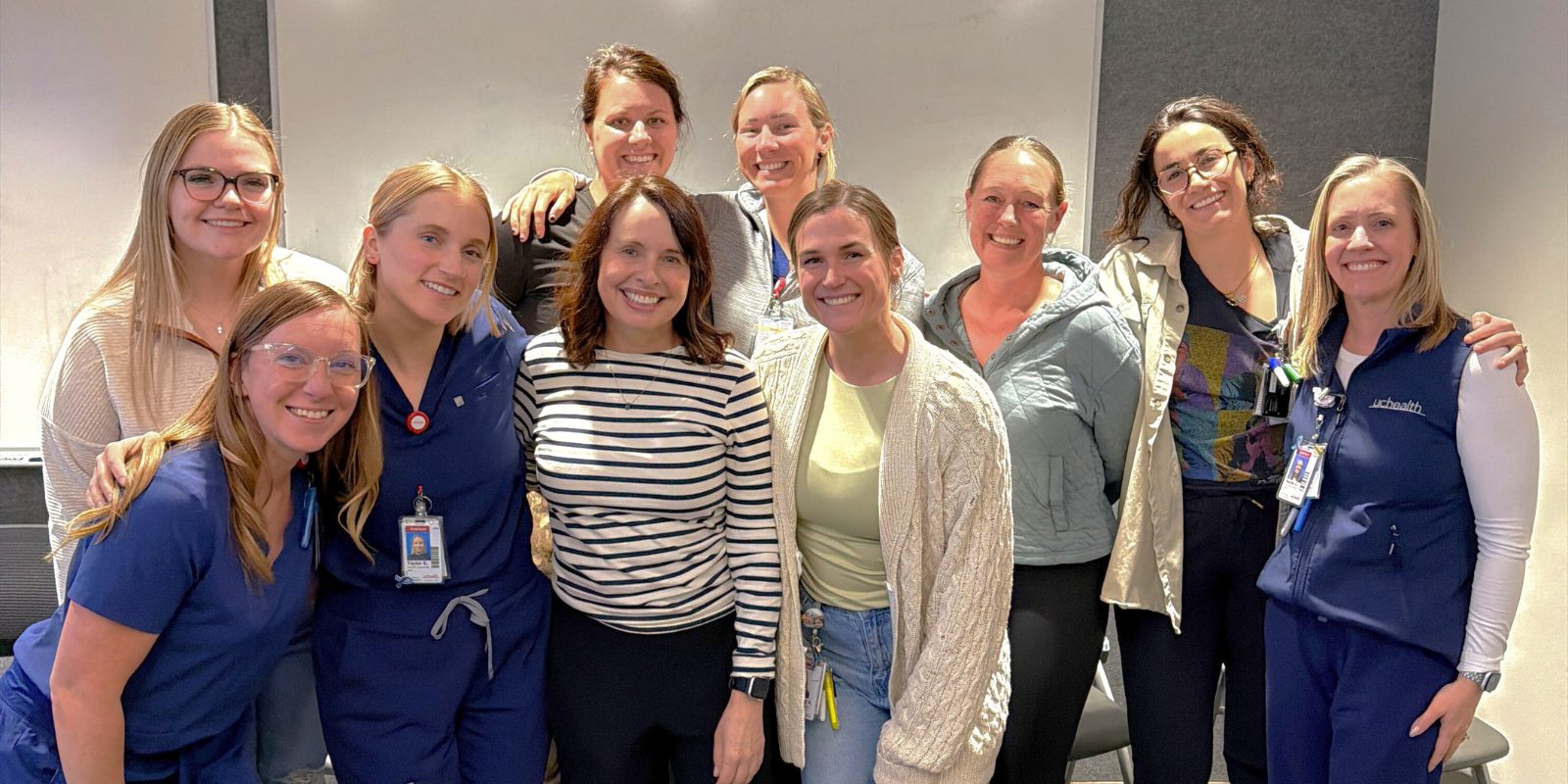
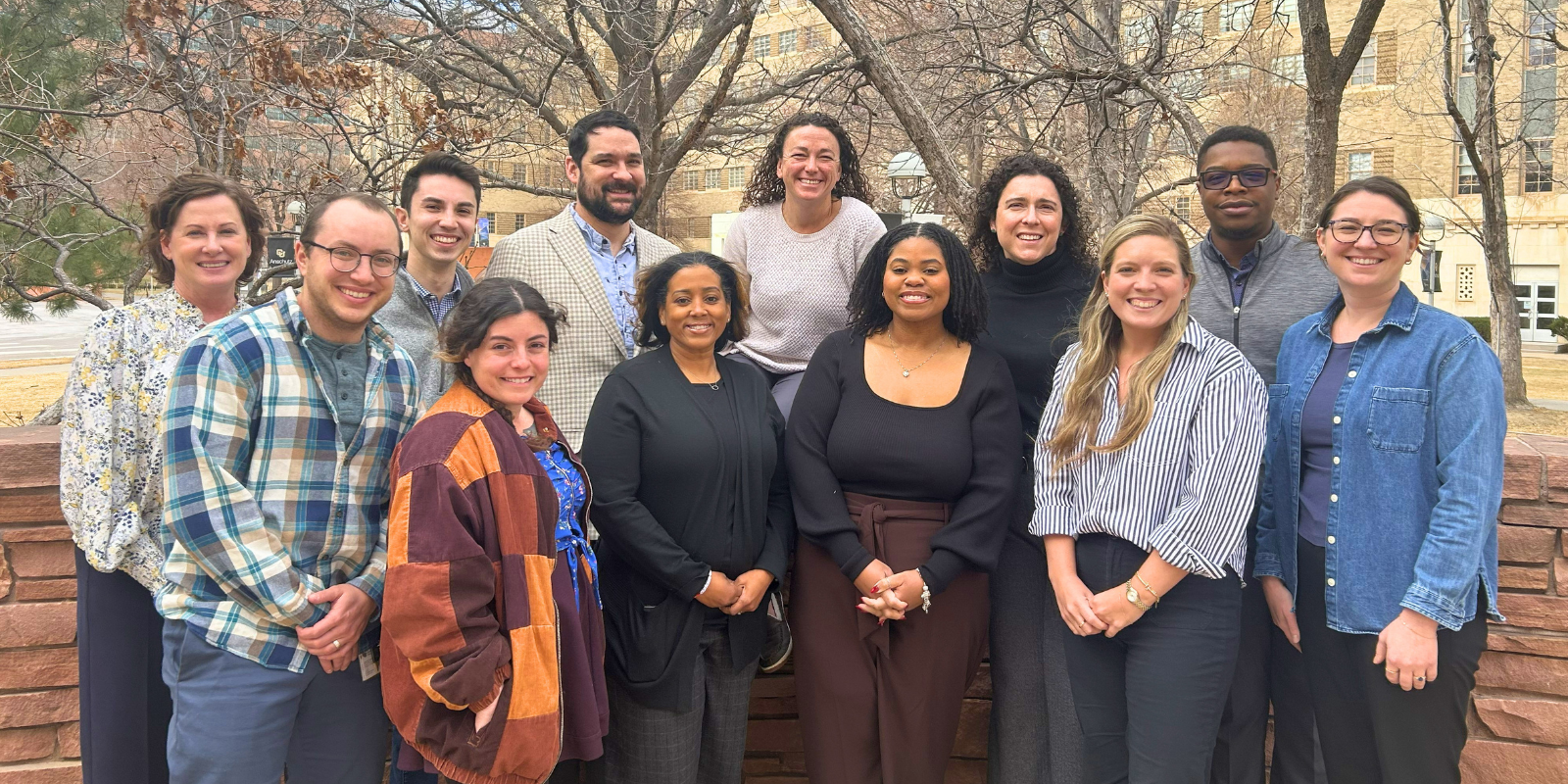
A staff meeting including forensic nurse navigators in the FNE program at UCH along with forensic nurse examiners. Photo provided by courtesy of Rachel Kennedy, PhD.
Progress report
Over the last year and a half, since the grant came through, work has proceeded rapidly on the FNE project, Yannetsos and Kennedy say.
The two nurse navigators brought in under the project help patients access support services and follow-up care, allowing forensic nurse examiner staff to focus on immediate patient needs. The navigators connect patients with advocacy organizations and assist with legal and housing referrals, safety planning, callbacks after exams, and follow-up screening, such as assessing recovery from traumatic brain injuries.
The project uses ReloShare, an online booking platform that caters to social services organizations, to efficiently book suitable rooms for patients needing a safe place to stay, often under an assumed name for safety. The Lyft rides are for patients who lack safe or reliable access to follow‑up appointments or safe discharge destinations.
After more than a year of development, the SheltersConnect Colorado dashboard became fully functional early this year. “It’s kind of a crowdsource platform,” Kennedy says. “People can update a shelter’s capacity in real time – ‘Hey, this one just shut their doors, you can’t go there anymore, so call that one instead.’ This saves everyone a lot of time and stress.”
After the current grant for the FNE project expires at the end of the year, Adams County has agreed to give SheltersConnect Colorado a permanent home, Kennedy says.
Going forward, Yannetsos would like to see nurse navigators branch out into the community to connect with more people, perhaps by being stationed at advocacy organizations and family justice centers, but that would require additional resources.
“We know that when patients are in an abusive relationship, that may involve children or elders. We also know when patients are affected by gun violence, there may be other forms of violence within the home,” she says. “So there's a lot more work to be done, and a lot more collaboration we could potentially do to ensure the health and safety of our patients.”
“There’s a lot of evidence and research behind forensic nursing models and how they can make an impact on health outcomes,” Kennedy says. “It’s exciting to be able to champion that in this way. This project has given us a critical opportunity.”
Yannetsos cited the value of her group's collaboration with the Vulnerable Elder Services, Protection and Advocacy (VESPA) team at the CU Anschutz Multidisciplinary Center on Aging. She says the work of VESPA team members Sarah Cox, LCSW, and Elizabeth Bloemen, MD, MPH, "has really enhanced the project and the work we do."