.png)
Logan Harper, MD, DCM, Instructor in the Department of Family Medicine at the University of Colorado Anschutz, has officially graduated from the University of Colorado Family Medicine Residency Program and joined the department as full-time faculty. As one of this year’s two sponsored Junior Faculty Fellows, Dr. Harper’s transition to full-time faculty marks an exciting milestone in his academic and clinical journey—a proud moment for the department’s commitment to comprehensive education and faculty development.
In 2024, Dr. Harper began his fellowship journey—a multifaceted path that consisted of “two separate fellowships, simultaneously.” The Junior Faculty Fellowship enabled Dr. Harper to continue delivering comprehensive care and stay connected with the Family Medicine Residency Program, while also allowing flexibility for additional training through the University of Colorado Anschutz Climate and Health Science Policy Fellowship.
Driven by what is described in many scientific journals s as “this century’s single greatest public health threat,” Dr. Harper centered his fellowship on climate change—emphasizing the influential role physicians can play in shaping public understanding and communication around health issues.
Fond Memories and a New Chapter
During his Climate and Health Science Policy Fellowship, Dr. Harper collaborated with the Centers for Disease Control and Prevention (CDC) to enhance clinical guidance on extreme heat. This work laid the foundation for initiatives aimed at strengthening community resilience to climate-driven heat waves. One such initiative involved a partnership with the American Public Health Association and ecoAmerica to design and facilitate a three-hour CME training for healthcare and public health professionals on heat-related health impacts and preparedness.
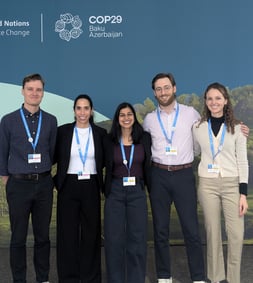
Dr. Harper said that a major highlight of his fellowship—one he will never forget—was collaborating with the Global Climate and Health Alliance (GCHA) to author a report on centering health in the transition from fossil fuels to renewable energy. As part of this work, he also participated in the UN Climate Conference (COP29) in Azerbaijan, where he tracked international negotiations on behalf of health professionals advocating for climate-smart policies. (Pictured left)
This October, Dr. Harper will begin practicing primary care at the UCHealth Family Medicine Westminster Clinic. He looks forward to sharing his experience and knowledge with fellow faculty, residents, and medical students. He’s also excited to dedicate more time to primary care—enhancing his availability and continuity of care for patients.
Read the Interview
- What brought you to work in Family Medicine?
“I applied to medical school planning to go into Family Medicine. The holistic, person-centered approach to care was what first drew me in, but meeting so many great people in Family Medicine is what sealed the deal.”
- Can you briefly describe your fellowship experience?
“I essentially completed two separate fellowships simultaneously. The Department of Family Medicine Junior Faculty Fellowship afforded me the opportunity to continue providing full-spectrum care and remain connected to the family medicine residency at the University of Colorado Anschutz, while also giving me the time and flexibility to pursue additional training through the University of Colorado Anschutz Climate and Health Science Policy Fellowship. In that role, I worked with the CDC to improve their clinical guidance on extreme heat. This led to several other projects aimed at building community resilience to worsening heat waves, including one in which I collaborated with the American Public Health Association and ecoAmerica to design and facilitate a three-hour CME training on heat resilience for healthcare providers and public health professionals.”
- What is one major highlight from your fellowship that you’ll never forget?
“I worked with an international non-profit called the Global Climate and Health Alliance (GCHA) to author a report on how we can prioritize the health of people and communities as we transition away from fossil fuels and toward renewable energy. As part of my work with GCHA, I also attended the annual UN Climate Conference (COP29) in Azerbaijan.”
- Your focus during your fellowship was climate and health communication—what motivated you to pursue this important work?
“Many leading scientific journals have labeled climate change as the single greatest public health threat of this century, and yet roughly a third of Americans still aren’t taking it seriously. Polling consistently shows that doctors are among the most trusted voices in society when it comes to climate change, but most of us don’t know how to talk to patients about it—nor do we know how to adapt our clinical practice to address these mounting health threats. Every physician is already dealing with climate-related health impacts, whether they realize it or not. We need to use our powerful voices to start talking about it so that policymakers and the public fully understand the real human impacts.”
- What’s something you wish more physicians knew about climate and health communication?
“You don’t need to be an expert—you just need to be able to explain a few keyways in which climate change is making your patients sick, and what needs to be done to limit those impacts. If you share that message regularly, you’ll be a powerful and trusted advocate.”
- What are one or two things you’re most excited about as you join the department as full-time faculty?
“The opportunity to teach what I’ve learned about climate and health to faculty, residents, and medical students, and to spend more time in primary care so I can offer better availability and continuity to my patients.”
A very warm official welcome to Dr. Harper as he joins as a full-time facultymember! We’re eager to see the continued impact of his work and the ways he’ll enrich our community with his passion and knowledge. To learn more about Dr. Harper’s fellowship experience, we invite you to watch this presentation on our YouTube channel (beginning at minute 23:35).
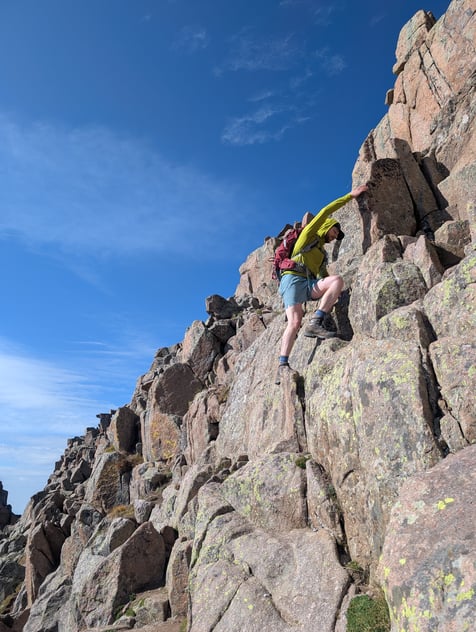
Pictured is one of Dr. Harper’s hobbies: here he is climbing Mt. Eolus, a 14er in the San Juan Range.
-1.png)
-1.png)