
October 2026
Diabetes Care
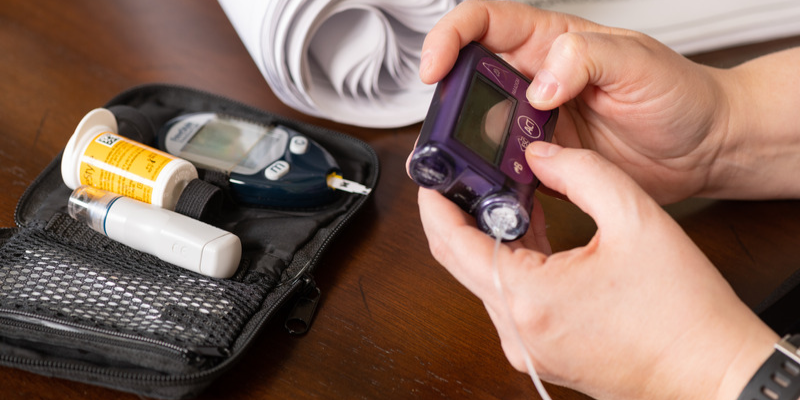
E. Seth Kramer, DO, MPH, DABOM, Associate Professor of Family Medicine at CU Anschutz, is co-author of a recent article title, “A Multicenter 13-Week Evaluation of the twiist Automated Insulin Delivery in Insulin-Treated Type 2 Diabetes: The twiist-T2D Pivotal Trial” published in Diabetes Care, a journal from the American Diabetes Association.
Dr. Kramer noted that this trial will help expand access to care for patients with type 2 diabetes and would have not been possible without the support of the Department of Family Medicine's Primary Care Diabetes Lab (PCDL).
"In the twiist-T2D Pivotal Trial, we evaluated an automated insulin delivery system for individuals with insulin-treated type 2 diabetes," said Dr. Kramer. "Participants achieved notable improvements in glycemic control while maintaining low rates of hypoglycemia. Soon after, the FDA approved the twiist system for adults with type 2 diabetes, offering patients an important new option. These findings further validate automated insulin delivery as a safe and effective approach. The PCDL team worked tirelessly to bring this trial to completion."
From the article:
"Although medications such as glucagonlike peptide-1 receptor agonists (GLP-1RAs), with or without glucose-dependent insulinotropic polypeptide, and sodium glucose transport protein 2 inhibitors (SGLT2is) have enabled more people with type 2 diabetes to achieve HbA1c levels below the American Diabetes Association target of <7% (1), there remains a substantial proportion of adults with type 2 diabetes with elevated HbA1c levels above target. In the Centers for Disease Control’s National Diabetes Statistics Report (2021–2023) (2), 53% of people with diabetes in the U.S. had HbA1c levels above the 7% target, with 30% having an HbA1c >8% and 20% having an HbA1c >9%. Approximately 25% of adults with type 2 diabetes use insulin (3). Such individuals might benefit from using an automated insulin delivery (AID) system.
AID systems were originally developed and received approval from the Food and Drug Administration (FDA) for people with type 1 diabetes. In recent years, these same systems have been tested in people with type 2 diabetes and have been shown to be safe, with improvement in HbA1c and continuous glucose monitoring (CGM) glycemic metrics comparable to that in type 1 diabetes (4).
A new AID system, the twiist Automated Insulin Delivery System (“twiist”), has received FDA clearance and is commercially available for type 1 diabetes but has not been tested in type 2 diabetes. This system uses the insulin pump manufactured by the DEKA Research and Development Corporation (DEKA pump) in conjunction with a Freestyle Libre 3 Plus or Eversense 365 sensor."
Read more from the article.