What can you tell us about chronic pain and spinal cord injuries?
When people think about spinal cord injury, they often think first about day-to-day function, which includes bowel, bladder and skin issues. Those are important, but up to 80% of people with spinal cord injuries also experience chronic pain. That’s the majority of patients. So, for this review, we wanted to know whether spinal cord stimulation was being used in the spinal cord injury population. And once we looked, we learned that there aren’t a lot of studies.
How do spinal cord stimulators work?
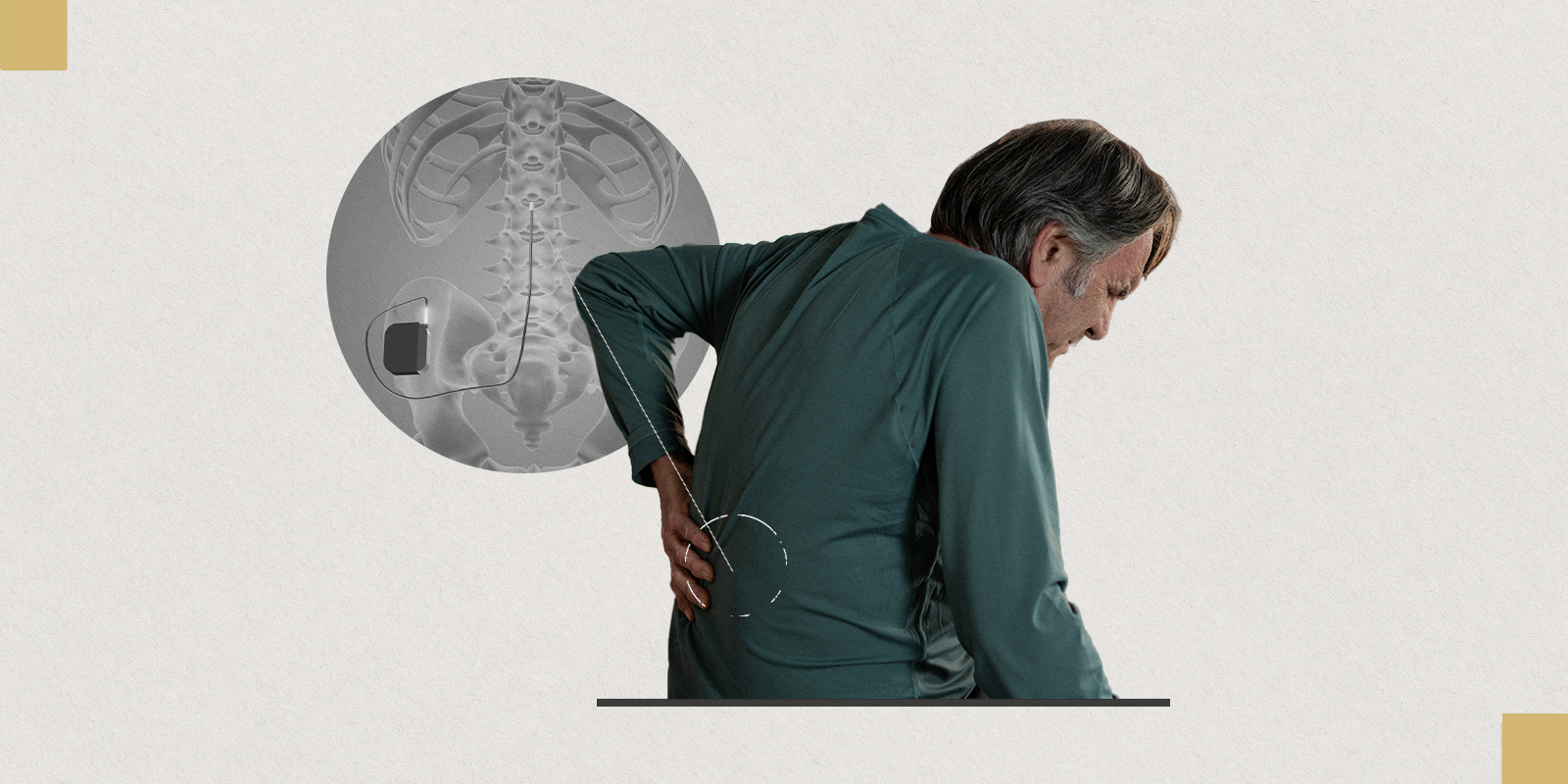
The idea with spinal cord stimulators is that you apply nerve stimulation near the spinal cord so the pain signals don’t travel all the way to the brain. If they don’t reach the brain, the person experiences less pain.
The broader field is called neuromodulation, which essentially means altering or modulating the nervous system. The brain and spinal cord are pathways for signals traveling throughout the body. The original idea behind spinal cord stimulation comes from something called gate control theory – the idea that if you stimulate part of that pathway enough, you can essentially “close the gate” and reduce pain signals reaching the brain. Nothing changes anatomically, but you change the experience the person is having. Additionally, certain, devices allow patients some control over the level of stimulation through a remote.
There are different ways to implant the devices. One option uses percutaneous leads, which can be placed through a small incision using imaging guidance. Another uses larger paddle leads that require a more invasive surgical procedure performed by neurosurgeons.
What type of pain are these devices targeting?
Primarily, neuropathic pain, which is nerve-related pain caused by damage to the nervous system. That’s why medications like gabapentin and pregabalin are commonly used in these patients. Neuropathic pain is the main target for neuromodulation, but pain is complicated.
Pain is very subjective in terms of how people experience it. We don’t yet have a clear biomarker or objective way to measure pain. Patients can have overlapping pain syndromes, so you have to look at the full patient picture. For anyone with chronic pain, the basics still matter, too: Sleep, exercise, nutrition and mental health all play a role in pain management.
What did your review of the literature find?
We screened more than 1,000 studies related to spinal cord injury and chronic pain. Ultimately, only 10 studies met our criteria, representing 43 total patients.
Most of the studies were case reports or case series, which are considered lower levels of evidence because they don’t include control groups. But across those studies, patients generally reported substantial improvements in pain.
Average pain scores before treatment were often between 8 and 10 out of 10, and afterward many patients reported scores between 0 and 4. Some studies also reported improvements in sleep and quality of life.
The evidence is still low grade because the sample sizes are small and the studies aren’t standardized, but it suggests there may be something promising here.
Why has there been so little research in this area?
Spinal cord stimulators are being used more and more broadly for chronic pain, especially over the last five to 10 years. But spinal cord injury patients are a more complex subgroup.
For someone without a spinal cord injury, the pathways in the spinal cord are generally intact. In spinal cord injury patients, those pathways may be altered or disrupted. Some people have incomplete injuries where some pathways remain intact, while others have complete injuries.
That raises additional questions about where stimulators should be placed and how they should function in different patients. It adds another layer of complexity.
What do you hope happens next?
Typically, spinal cord stimulation is not a first-line treatment. Patients usually try medications, therapy and other conservative approaches first. I hope this study raises awareness that spinal cord injury patients may be candidates for this kind of treatment.
These devices are generally considered for people with more refractory pain that hasn’t improved with other options. But for the right patient, these interventions can potentially be game-changing.
I also think the future involves larger collaborative databases and more personalized medicine. Right now, individual hospitals may only have small amounts of data. But if institutions collaborate and share outcomes across states or countries, we can start looking at hundreds or thousands of cases and identify which patients respond best.
Do you believe this technology could eventually help people like your brother?
It makes sense physiologically. The body runs on nerves and electrical signals. We already modulate electrical activity in other parts of the body, like the heart with pacemakers. That doesn’t mean everything that makes sense in theory will ultimately prove true, but I think there’s enough promise that we should keep studying it.
Technology is also advancing rapidly. Newer systems can adjust stimulation in real time based on what patients are experiencing. When you start talking about customizable implantable devices that can respond dynamically, I think there’s reason to feel hopeful.
What should people understand about spinal cord injuries?
Spinal cord injury is a broad term. It can involve complete damage to the spinal cord or partial injuries that disrupt communication between the brain and the body.
Some people experience total paralysis, while others have weakness or sensory changes. But spinal cord injuries affect much more than movement. The nervous system controls bowel and bladder function, sexual function and many automatic body processes.
These injuries can affect nearly every aspect of daily life. Fortunately, there are many rehabilitation services and resources available to help patients adapt after what is often a traumatic, life-changing event.
Key points:
-
Chronic pain affects up to 80% of people with spinal cord injuries.
-
Spinal cord stimulation uses electrical signals to help decrease pain messages reaching the brain.
-
A CU Anschutz-led review found encouraging but limited evidence supporting the approach for spinal cord injuries.
-
Existing studies suggest potential improvements in pain, sleep and quality of life.
-
Larger, collaborative studies are needed to identify which patients benefit most and which stimulation parameters are most effective.