What are you trying to accomplish through the ASCENT Consortium?
The ASCENT Consortium is really a resource for the entire field. We published a paper in May to make sure researchers and others interested in palliative care research understand that this major NIH investment has occurred, what it offers and how to access those resources.
Primarily, it's a resource for researchers or people interested in doing palliative care research. This includes brand-new investigators, which is why we have established Research Scholar Awards. We also have an investigator in residence program for very early-career researchers to bring them into the community and help them get started in research.
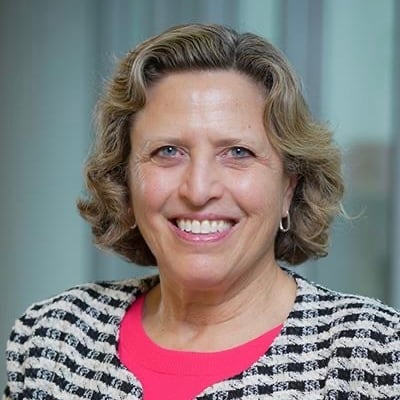
"We have to do this work because people living with serious illness – and the people who care for them – are depending on us to generate the evidence that will make their care better. We can't let them down." – Jean Kutner, MD, MSPH
How will the ASCENT Consortium improve palliative care?
Not all researchers are as fortunate as we are here at CU Anschutz, where we have such a well-developed research group. Many providers and researchers are at institutions where they may be the only person interested in palliative care research. ASCENT especially wants to reach those early-career investigators who don't have the depth and strength of a research community like we have here.
We also serve more established researchers who may be new to palliative care. That's what the Pilot and Exploratory Awards are for. Or someone may already be a palliative care researcher but be pursuing a new line of research and need pilot data to be competitive for larger funding opportunities.
Another very important audience is the people who will actually use the research findings. There's no sense doing research if it's just going to sit on a virtual shelf somewhere. This includes healthcare delivery organizations and others responsible for translating research into practice. We've engaged a group that represents healthcare delivery across the lifespan and across the continuum of care. They help advise us as we identify research priorities, and they'll also help move the evidence generated through ASCENT into practice.
What's at stake? Why is making palliative care a research priority important?
This is something I tell our junior investigators and our team, especially when people feel discouraged about what's happening in the research world.
We have to do this work because people living with serious illness – and the people who care for them – are depending on us to generate the evidence that will make their care better.
What's at stake is their experience. We can't let them down.
CU Anschutz is located in a major metropolitan area with a network of hospital systems and resources. What’s happening in other areas around the country?
Here at CU Anschutz, we have many more resources than other areas of the state and country. Rural care is a huge gap, and it's been an NIH priority. One of the key research questions we’re asking is understanding which care delivery models work best in different settings.
For example, even within UCHealth, the way we deliver palliative care at UCHealth University of Colorado Hospital here in Aurora is very different from how it's delivered at UCHealth Yampa Valley Medical Center in Steamboat Springs. The resources simply aren't the same. We need evidence about which models work in which settings because we can't assume one model can simply be translated everywhere.
Why is CU Anschutz uniquely positioned to lead a project like this?
There are a number of reasons. First, we have a strong cohort of palliative care investigators with a long track record that's well respected in the field. We also intentionally designed this grant to distribute resources across the country. We have more than 40 key personnel at more than 20 institutions.
Beyond that, CU Anschutz has the infrastructure to manage a grant of this size. The grant’s management component is substantial. We have an Institutional Review Board (IRB) willing to serve as the single IRB, and we have the research infrastructure to support this kind of national effort.
Personally, I'd also spent 13 years leading the Palliative Care Research Cooperative Group, so we were already experienced in managing multiple subcontracts and running pilot grant programs. When I was asked to serve as contact principal investigator, I was told that both myself and CU Anschutz were among the few with the experience needed to carry this off.
You recently announced the first group of pilot awards funded through ASCENT. What can you tell us about the work this funding represents?
The projects were selected through a rigorous peer-review process based first and foremost on scientific merit. They also aligned with our identified funding priorities. The projects selected represent a combination of scientific excellence and alignment with both the ASCENT priorities and those of the NIH institutes supporting ASCENT. We also looked to spread the awards across the country and assure that the portfolio of funded proposals included populations across the lifespan.
How is ASCENT ensuring its funding is going to projects people want and need?
The original funding opportunity was very intentionally framed around palliative care across the lifespan and across all care settings. That's important because there's an even greater lack of evidence in pediatric palliative care than in adult palliative care.
It's essential that we hear directly from people with lived experience, so we know what's actually important to study. As we've developed our ASCENT research priorities, we've gathered input from our lived experience panel, which represents people across the lifespan and a wide range of backgrounds. We've also sought input from our healthcare delivery partners and researchers. We bring all of those perspectives together because there's no point in doing research if it's not going to answer questions that matter and ultimately improve care.
We've involved our lived experience panel in multiple ways. They review our materials. They participate in the grant review process and provide input on submitted applications. They've helped shape our research priorities, and they also participated in our first annual meeting in June to continue providing their perspective.
What does success look like five years from now?
Success means that the people we're funding are conducting meaningful research – and that the findings actually make it into practice. We're continuing to build our website and add resources, but ultimately we want the field to find those resources valuable.
The original goal was to advance and strengthen palliative care research in ways that make a meaningful difference. Five years from now, I'd like to see that happening.
Key points:
- Palliative care focuses on improving quality of life for people with serious illness and their caregivers.
- CU Anschutz is leading the $64 million NIH-funded ASCENT Consortium to strengthen palliative care research nationwide.
- The consortium supports researchers through funding, mentorship and shared research resources.
- ASCENT is studying which models of palliative care work best in different settings, including rural communities.
- Researchers, healthcare organizations and people with lived experience are helping shape research priorities so findings can improve patient care.





%20(2).jpg)
.png)