
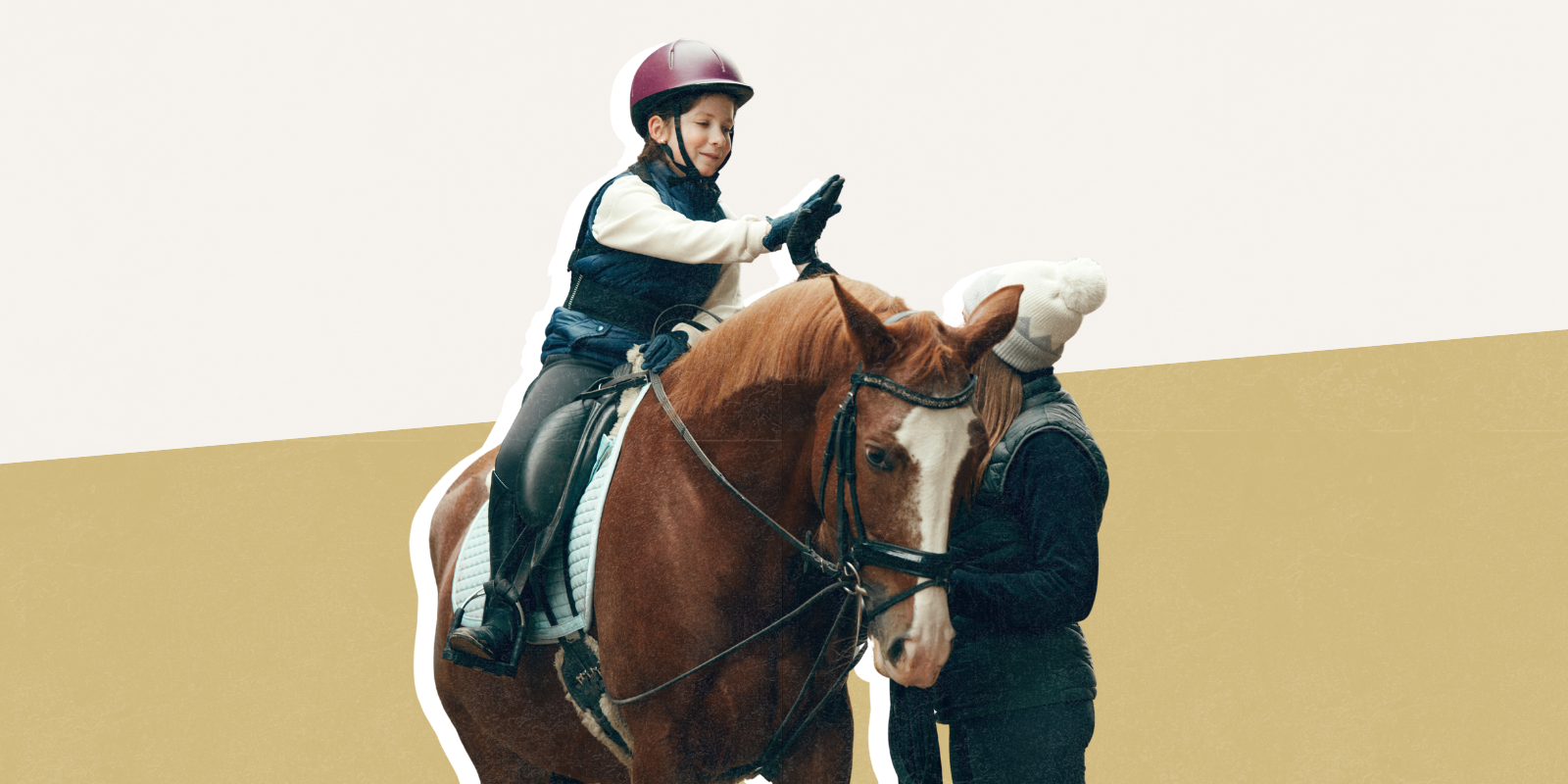
AURORA, Colo. (Oct. 9, 2026) — New research from the University of Colorado Anschutz provides strong evidence to suggest that horseback riding can help reduce hyperactivity and improve other behavioral and emotional challenges in children with autism and other psychiatric disorders.
The study, supported by the National Institutes of Health and published today in Pediatrics, builds on earlier research showing benefits from eight to 10 weeks of therapeutic horseback riding for children with autism. Researchers wanted to determine whether those findings could be replicated at two different riding centers and whether learning about horses — without interacting with or riding them — could provide similar benefits.
The new study involved children with autism and a co-occurring psychiatric diagnoses who participated in one of three groups: horse riding, horse-related but no horse contact barn activities and a waitlist control group.
The researchers found that children in the riding group experienced significantly more improvements in hyperactivity compared with children in the other groups. Improvements were also seen in both equine activity interventions (riding and barn groups) compared to the waitlist in areas including irritability, emotional regulation and social functioning.
“There is something about riding a horse that is particularly helpful for kids with hyperactivity,” said the study’s senior author and principal investigator, Robin Gabriels, PsyD, MA, professor of psychiatry and licensed clinical psychologist at CU Anschutz and Children’s Hospital Colorado. “For kids with autism and hyperactivity, equine-assisted therapy might be a good way to augment existing treatments.”
Or even an alternative to traditional drug therapy, which can have unwelcome side effects.
Replicating the findings
The study was conducted at Riding to the Top, a therapeutic riding center near Windham, Maine. The center is smaller than Hearts & Horses in Colorado, where the researchers conducted their earlier study.
The researchers intentionally chose a different riding center to see whether the results could be reproduced in another setting and with a different group of instructors, horses and children.
“We wanted to see if we could replicate what we found in Colorado at another riding center across the country,” Gabriels said. “The fact that we saw similar results at both centers is encouraging.”
Do children have to ride?
The study also examined whether children could benefit simply by spending time at the riding center learning about horses by engaging in horse-related activities with a life-sized stuffed toy horse, but having no direct contact with horses or riding horses.
Those activities may offer an alternative for children who are not ready or able to ride.
“Horses are very accepting, and they respond to body language,” Gabriels said. “That interaction can provide children with opportunities to practice communication, emotional regulation and other skills in a very different environment.”
Focusing on children with multiple diagnoses
About 50% of the children in the earlier study had both autism and another psychiatric diagnosis. The new study specifically focused on children with autism and psychiatric diagnoses to determine whether therapeutic horseback riding could benefit this higher-intervention risk group .
The researchers say the findings do not mean that every child with autism will benefit from horseback riding. But they add to growing evidence that structured activities involving horses may be useful as part of a broader approach to addressing behavioral and emotional challenges.
The study also suggests that horse-based programs may provide benefits beyond traditional clinical settings, particularly for children who respond well to animals and outdoor activities.
“Working with horses gives these kids a chance to do something active, social and engaging,” Gabriels said. “For some children, that may be a particularly effective way to help them develop skills that can be difficult to teach in a traditional clinical environment.”
The researchers plan to continue studying how horse-based activities affect children with autism and psychiatric conditions and which aspects of the interaction may be responsible for the benefits.
Key Points
- Horseback riding reduced hyperactivity in children with autism and psychiatric disorders.
- Horse-based activities improved irritability, emotional regulation and social functioning.
- The findings replicate earlier CU Anschutz research at a different therapeutic riding center.
- Children may benefit from horse-related activities even if they do not ride.