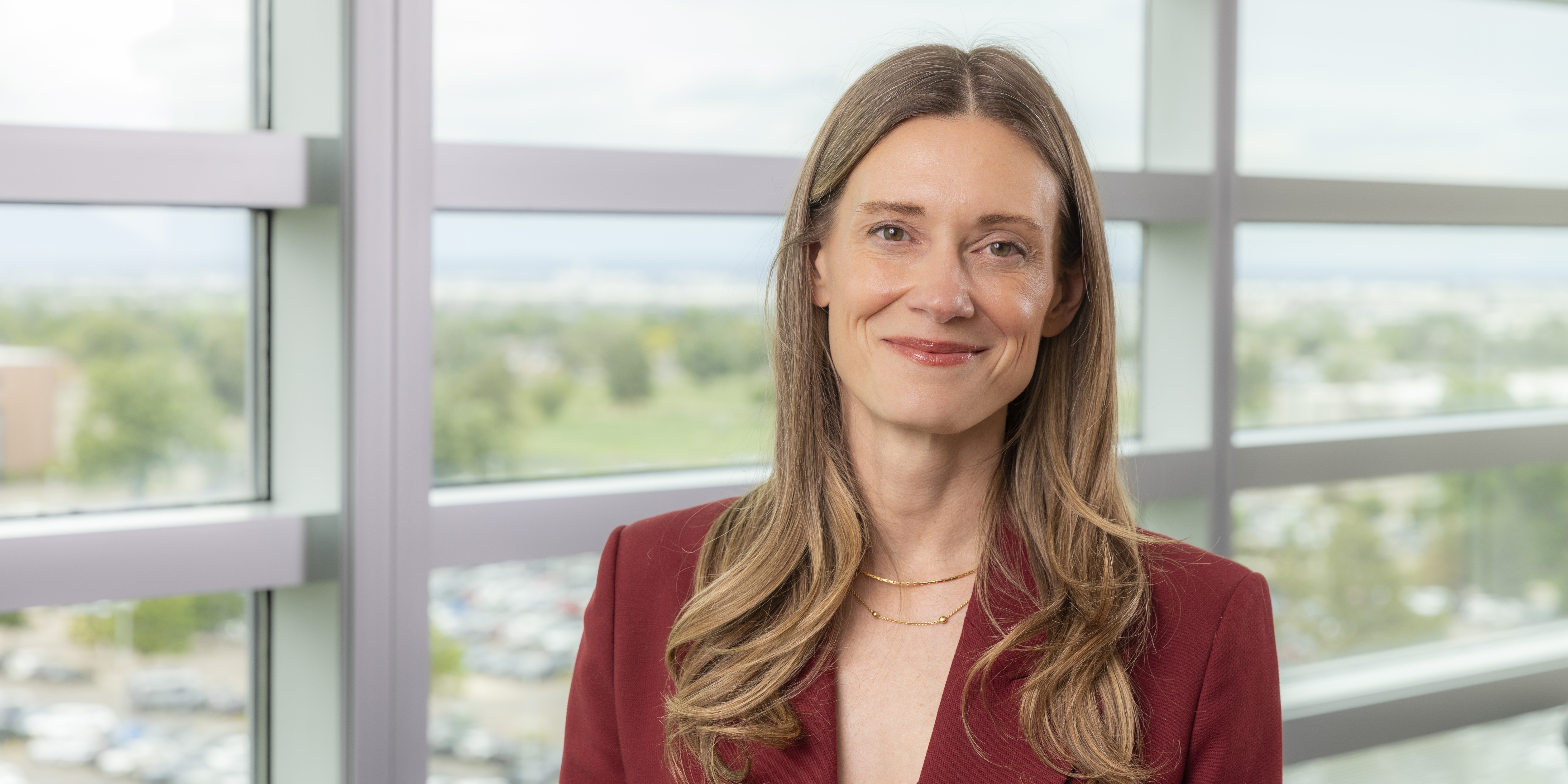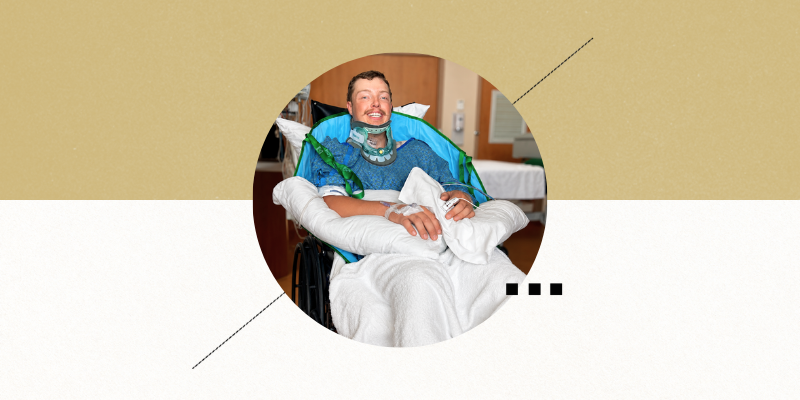
On an early summer day in 2017, Jen MacKenzie’s busy and fulfilling life as a wife and homeschool mom suddenly began to slip away. She woke up with what felt like severe jet lag – a headache and profound fatigue. Within a couple of months, she was engulfed by other symptoms that left her sidelined from a normal active life: nausea, dizziness, brain fog and hyper-sensitivity to sounds.
“For me, it was a very specific onset. It felt like I was in quicksand,” said the mother of two children, then ages 8 and 12. “I was grounded from daily life.”
Jen’s debilitating symptoms gradually robbed her of her ability to cook, drive and do most daily activities. The headache felt like a warm brick at the base of her skull. “It wasn’t a headache in the commonly understood sense,” she said. “It was weighted and warm, and deeply unsettling to experience.”
→ $50 Million Gift Will Accelerate Growth of CU Anschutz Cerebrospinal Fluid Leak Program
Meanwhile, she described the dysfunction of her sensory systems as its own kind of pain. “It’s really disorienting,” she said. “It just felt like there were lots of aspects of pain and dysfunction that were happening simultaneously.”
Why CSF leaks can take years to diagnose
During those first years, she saw her primary physician and specialists, including multiple neurologists, getting diagnosed with migraine, new daily persistent headache, cervicogenic headache, medication-overuse headache, temporomandibular dysfunction and other conditions. “None of the treatments did anything to provide relief or reduce the head pain,” said Jen, who lives in Washington state.

She steadfastly explained to doctors what her life was like before the quicksand. “Honestly, I felt like I was going crazy, but I tried to trust that I knew what I was experiencing.”
Almost exactly two years after onset, a primary physician suggested she might have a CSF leak, having seen a patient with similar symptoms a few years earlier. That prompted her to seek care specific to CSF leaks, including specialists out of state.
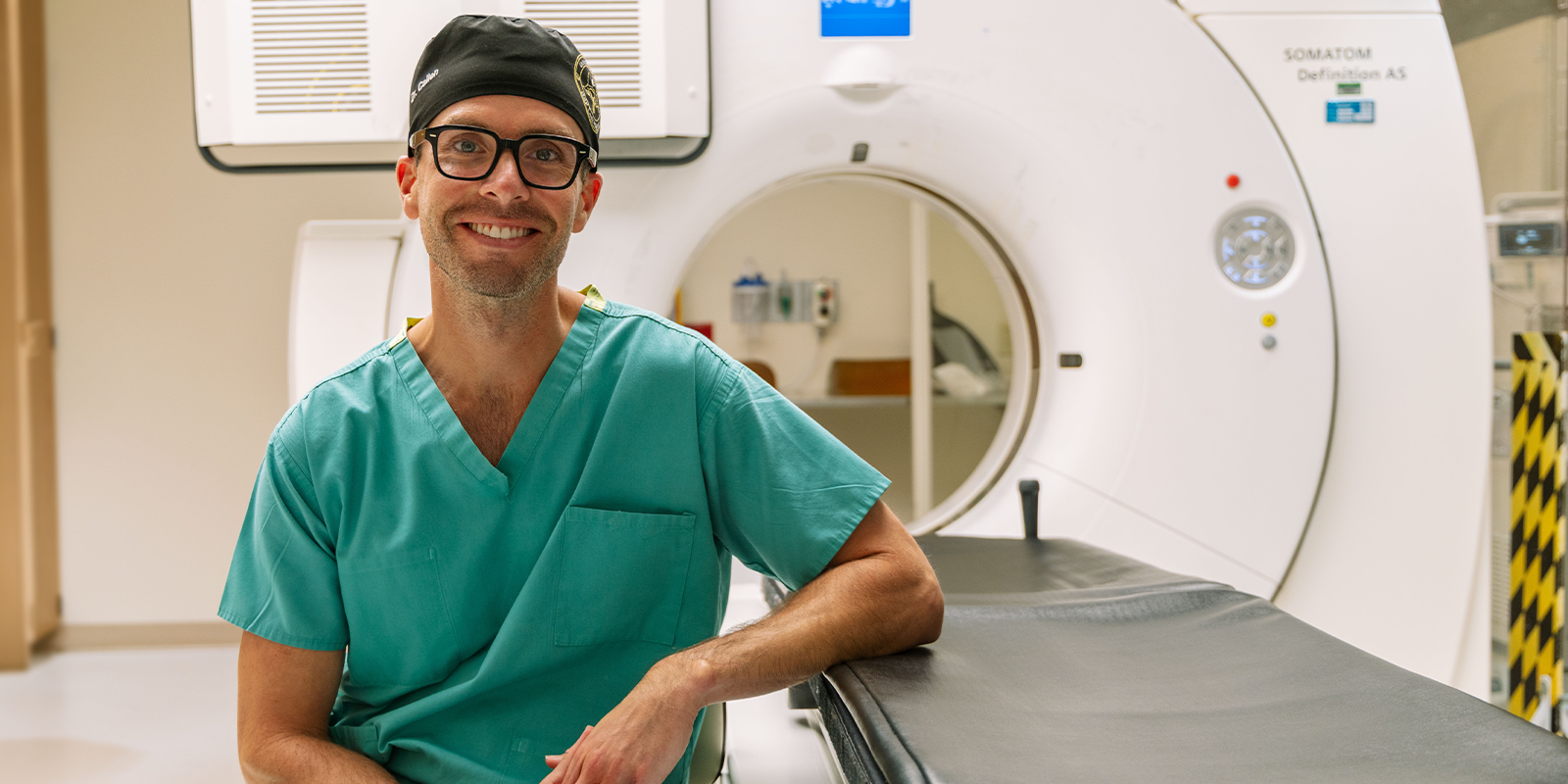
Her difficult journey continued for 5-1/2 years – “flat on my back staring at the ceiling” (with increased headache pain when standing a hallmark of CSF leaks) – before Jen learned of Andrew Callen, MD, and the Cerebrospinal Fluid (CSF) Leak Program at the CU Anschutz School of Medicine.
She vividly remembers the phone call in which Callen quietly listened and said, “I’m happy to help.” It was the moment Jen began to reclaim her life.
How a $50M gift will expand CSF leak care and research
Cerebrospinal fluid surrounds and protects the brain and spinal cord. When that fluid leaks, the resulting pressure changes can cause headaches and other neurological symptoms.
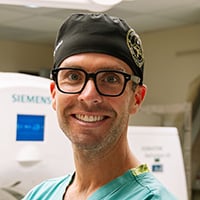
In just a few years, CU Anschutz has grown into one of the nation’s leading centers for CSF leak diagnosis and treatment. Callen’s team performs about 20 CSF leak procedures a week, totaling close to 600 a year, with approximately 50% of patients being out of network, out of state and even out of country, he said. “There just aren’t enough places doing this work, so people have to find somewhere to go.”
Callen said the landmark gift of $50 million from an anonymous donor will help “supercharge” the CSF Leak Program’s patient access, research, innovation and overall impact for this undertreated and underdiagnosed illness.
What is a CSF leak?
Cerebrospinal fluid is a clear liquid that surrounds the brain and spinal cord. It serves as a shock absorber to cushion the brain and spinal cord from sudden impact or injury, also making the brain feel lighter and keeping lower structures from being crushed by their own weight. It carries nutrients to the central nervous system and clears metabolic waste products from brain tissue. A leak can produce multiple debilitating symptoms, including headaches that worsen when standing.
Millions of women in the United States receive neuraxial anesthesia during childbirth each year, and accidental dural puncture is a recognized complication that can result in persistent symptoms in a subset of patients, Callen said. “And that is only one source of CSF leaks. We still have remarkably little population-level data on spontaneous leaks, so the true burden of this disease remains poorly understood.”
The transformative gift will also help grow the CSF Leak team with additional specialists “who can devote their whole self to this,” Callen said. “With our staffing model, we’re booked into mid-2027 right now. And these people are, as Jen says, staring at the ceiling and suffering in silence. That’s unacceptable.”
Parents instill patient-centered care
Callen grew up in California’s Bay Area and is the son of doctors. His late father was a pioneer in obstetric ultrasound, writing the textbook “Callen’s Ultrasonography in Obstetrics and Gynecology.”
“He used to always say to me as I was coming up through training (at the University of California San Francisco School of Medicine), ‘Don’t go into academics … It’s all this stuff on these numbers and measurements; it’s not about the patient anymore,’” Callen said.
“I was like, ‘Dad, what are you talking about? You base your whole career on this. You love your job.’”
Passionate, patient-centered care was clearly ingrained in the younger Callen. He regularly sees heavy psychological burdens being carried across painful, frustrating and time-consuming patient journeys. According to CU Anschutz researchers in collaboration with the Spinal CSF Leak Foundation, nearly 80% of patients reported being misdiagnosed and saw a median of more than six clinicians before receiving the correct diagnosis.
“They’re sick. They need help. Not in their head, but in their spine,” Callen said. “So they arrive at their appointment, and I just feel devastated for them because it reminds me of somebody who is accused of a crime they didn’t commit.”
A critical moment of the treatment, he said, is sitting with the patient and listening to their story – free of preconceived notions. It’s not uncommon for patients to show him pictures of their lives pre-onset – running marathons, climbing mountains, traveling the world, caring for their families.
“It is therapeutic for someone to say, ‘I believe you. I believe you, and I’m not a miracle worker. I can’t guarantee I’m going to find something to fix you, but I believe you. There’s something going on here. You’re not crazy.’”
How doctors diagnosed Jen’s complex CSF leak
For Jen, the crushing claustrophobia of her condition – the relentless pain, sensory dysfunction, cognitive fog and nausea – began to finally lift after she arrived in Aurora.


Callen diagnosed her as having an iatrogenic CSF leak, meaning it was caused by a medical procedure. Using a specialized MRI protocol designed for detecting subtle CSF leaks, he localized a “bleb” along her lumbar spine: a small outpouching of the dura characteristic of a prior needle injury – and in retrospect this had been present on her earliest MRIs. After discussing this finding with her, it was suspected that when given an epidural during labor with her first child, the needle accidentally poked through the dura, which surrounds and contains the CSF in the spine.
Unlike iatrogenic/doctor-caused CSF leaks, a spontaneous spinal CSF leak occurs without a preceding medical procedure or specific precipitating event.
There are three subtypes of spontaneous leak:
- a bone spur that pierces a hole in the front of the dura;
- a tear in the side of the dura, near where the nerve exits the spine;
- a CSF venous fistula, which is an abnormal connection between the normal space containing CSF within the dura and veins outside the dura. Venous fistulas weren’t described until 2014 and require more research as they still aren’t well understood.
A patch, then surgery
Jen’s treatment began with a patch using fibrin glue, a sealant made from pooled donated human plasma that is distinctly different from a typical blood patch. “Every one of these procedures is really something different, depending on the type of leak they have,” Callen said.
The patch procedure took place in December 2022, giving her immediate, though temporary, relief. Her family then traveled home to Seattle, where she finally settled back into the living room couch.
Jen had spent the last couple Christmases in her bedroom as her husband had set up cameras so she could see her family opening gifts. “We shared Christmas for the first time in years,” she said, holding back tears.
In February 2023, Jen returned to CU Anschutz for surgery performed by Callen’s neurosurgical partner and leak program co-director Peter Lennarson, MD, and the CSF Leak team. Using a minimally invasive surgical approach, Lennarson repaired the bleb.
“Once I was awake and had my full faculties back, I was feeling better,” Jen said. “I knew it worked.”
What recovery after CSF leak treatment can involve
She went through a “rebound intracranial hypertension” period where her symptoms fluctuated, and some new symptoms appeared, as her body re-accommodated to her new sealed state. It wasn’t until September 2025 – 2-1/2 years after the surgery – that Jen began to drive again. “For so many people,” she said, “recovery is a really curvy line with ups and downs, so you just need patience and compassion for yourself because it’s very complicated.”

Callen said it’s common for CSF leak patients to experience rebound intracranial hypertension, which causes a different type of headache and other lingering symptoms, which can last days to months, or even longer in some cases. It’s another area where the CSF Leak Program gift will help advance research, potentially leading to better treatments.
“That’s another reason we felt we needed to have a clinic and a program, not just a procedure service,” Callen said. “For patients who’ve been living with this for a long time, after closing the leak, they develop a sort of CSF disequilibrium state. You could think about it as their internal thermostat sort of being off. They’ve been leaking for so long. You close the leak, but now the body needs to readjust.”
Back home in the Pacific Northwest, Jen is once again an active participant in her own life. She is grateful for the freedom to travel and savor life’s simple joys – from taking a walk to going out to dinner. Even everyday tasks such as cooking and running errands have become meaningful opportunities to rebuild confidence and independence, caring for herself and supporting her family.
“Being able to plug back into these milestone moments with my kids is what I live for,” she said.
She often thinks about Callen and how his expertise and kind, respectful manner made all the difference. “I’ve been so pleased watching him flourish,” she said. “He’s one of the good ones, and I experienced it firsthand.”
Brighter future for CSF leak patients
Bolstered by the $50 million gift and looking decades into the future, Callen envisions a much more accessible care landscape for patients suffering from CSF leaks. He hopes stories of extreme perseverance, like Jen’s long and painful path to diagnosis and treatment, will become a thing of the past.
When he comes home from work, his kids often ask what he did all day.
“I say, ‘Well, I help people,’” Callen said. “I mean, it doesn’t get better than that. It’s pretty awesome. So, all of this – the gift, my job, my patients, their grace and gratitude – I am just overwhelmed with gratitude from all directions.”
Key points:
- CSF leaks can cause debilitating neurological symptoms and may go undiagnosed or be mistaken for other conditions for years.
- Jen MacKenzie experienced symptoms for more than five years before CU Anschutz specialists identified and treated her complex CSF leak.
- Diagnosis can require specialized imaging, and treatment varies depending on the type and location of the leak.
- CU Anschutz’s CSF Leak Program performs nearly 600 procedures annually.
- A $50 million gift from an anonymous donor will expand patient access, specialist capacity, research and innovation.