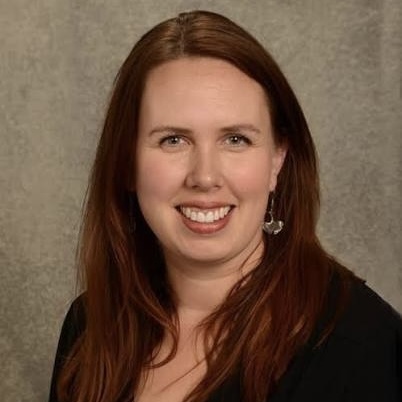
Julia Bruckner, MD, MPH, remembers the night she and a teenage patient sat under a palm tree, sipping piña coladas and plotting a “Project Runway” style makeover of hospital gowns.
In reality, they were sitting in wheelchairs under an IV pole, staring at the sand-colored walls of a hospital hallway, and sucking on piña colada-flavored lollipops.
But for a short time, the teen’s pain lessened. A smile replaced her scowl. And Bruckner, at the time a senior resident, experienced a “lovely, humanizing experience” on an imaginary vacation with a frequent-flyer patient, talking about everything but the teen’s incurable illness.
Bruckner is now an assistant professor of pediatrics and emergency medicine at CU Anschutz. She’s also a writer who teaches narrative medicine workshops for her colleagues at Children’s Hospital Colorado to help them offset the “secondary traumas” associated with the practice of medicine.
Combatting burnout through narrative medicine
Burnout rates have lessened since 2021. Yet nearly half of providers continue to report at least one symptom of the condition characterized by emotional exhaustion, reduced empathy and a decreased sense of personal achievement.
It’s not unusual for people experiencing chronic workplace stress to withdraw emotionally. Bruckner says the data show that “leaning in” can help.
“Finding creative ways to create moments to be with patients that aren’t about their illness actually feeds your own practice and reminds you of the humanity of people,” she said.
“Storytelling is the foundation of empathy, which is essential in the practice of medicine. Stories help us better understand ourselves and others." – Julia Bruckner, MD, MPH
Bruckner came to the practice of medicine via an undergraduate degree in journalism and time spent working in television and radio. She’s always believed in the power of stories to create change and build community.
“Storytelling is the foundation of empathy, which is essential in the practice of medicine. Stories help us better understand ourselves and others.”
When Bruckner discovered narrative medicine, she found a perfect union of her interests and skills. The field of narrative medicine was pioneered more than 20 years ago by Rita Charon, MD, from Columbia University. It’s a concept that draws on literature and uses reflective writing to help clinicians elicit patient stories and become better listeners.
Bruckner developed a workshop on narrative medicine with the help of her mentor, Anjali Dhurandhar, MD, associate professor of internal medicine at CU Anschutz. They took the lessons of narrative medicine a step further to support the well-being of faculty and staff in her department and beyond.
“The workshops provide a healthy outlet for processing the emotional weight of clinical work, which can be heavy and traumatic,” she said. “The workshops invite providers to engage in a different kind of thinking than they might use in practice – something a little more creative, more right-brained.”
Reluctant to join, yet quick to return
The sessions Bruckner facilitates focus on themes relevant to anyone working in healthcare, such as empathy, medical mistakes, gratitude, joy, grief and shame. The workshops start with a “third object” – an on-theme poem, essay or piece of art that facilitates the psychological safety needed to talk about difficult things. After a brief discussion, Bruckner provides prompts for “off-the-cuff” reflective writing time.
If it sounds “touchy-feely,” she admits, “it kind of is.”
The intangible nature of her workshops can be a barrier to getting people to attend. The work requires vulnerability.
“It’s often hard to get people to attend their first session,” she said. “But once they do, they tend to keep coming back.”
“I’ve had people disclose things they truly thought no one else had ever gone through, only to discover that they had silent partners in the room who had been there, too.” – Julia Bruckner, MD, MPH
Finding common ground in shared experiences
The real value of what workshop attendees learn is in the process itself, Bruckner said.
“Writing is a way to work through everything they’re experiencing, and people who participate have said they feel a weight lifted afterward. They have this realization of, ‘Oh, I’m not the only person who has experienced this or feels this way.’”
Privacy and safety are priorities in a group setting, so Bruckner can’t share specific changes she’s seen among attendees. But she has seen people process events they’ve carried for a long time, especially around topics such as shame or medical error.
“I’ve had people disclose things they truly thought no one else had ever gone through, only to discover that they had silent partners in the room who had been there, too,” she said.
The workshops help to create a sense of community among colleagues, which Bruckner believes is part of combatting burnout.
“Shared vulnerability creates an incredibly open, healing moment. Suddenly they don’t feel so alone. And there’s a feeling of release – an unburdening as they work through heavier themes.”
Shifting perspectives strengthens bonds
Workshops with more positive themes, such as gratitude and joy, are just as impactful.
“We inevitably experience shifts in perspective that remind us how we can still find moments of gratitude, joy and fun in our practices. And that we can laugh together and share these stories, too – it’s a process that feeds the soul.”
Bruckner believes in the therapeutic power of story and reflective writing to help caregivers deal with the time pressures, lack of control and chaotic nature that can surround the practice of medicine. She encourages her peers to keep reflecting – and creating the kind of space with patients that makes toasting over pretend piña coladas possible.
“We all need a little bit of that silliness and joy,” Bruckner said.
Julia Bruckner, MD, MPH, Anjali Dhurandhar, MD, and Eve Makoff, MD, are editors of Narrative Medicine: A Guidebook to Transforming Hearts and Mind. While the narrative medicine workshops Bruckner teaches at Children’s Hospital Colorado aren’t open to the public, the book explains narrative medicine principles and offers exercises for individuals or small groups.