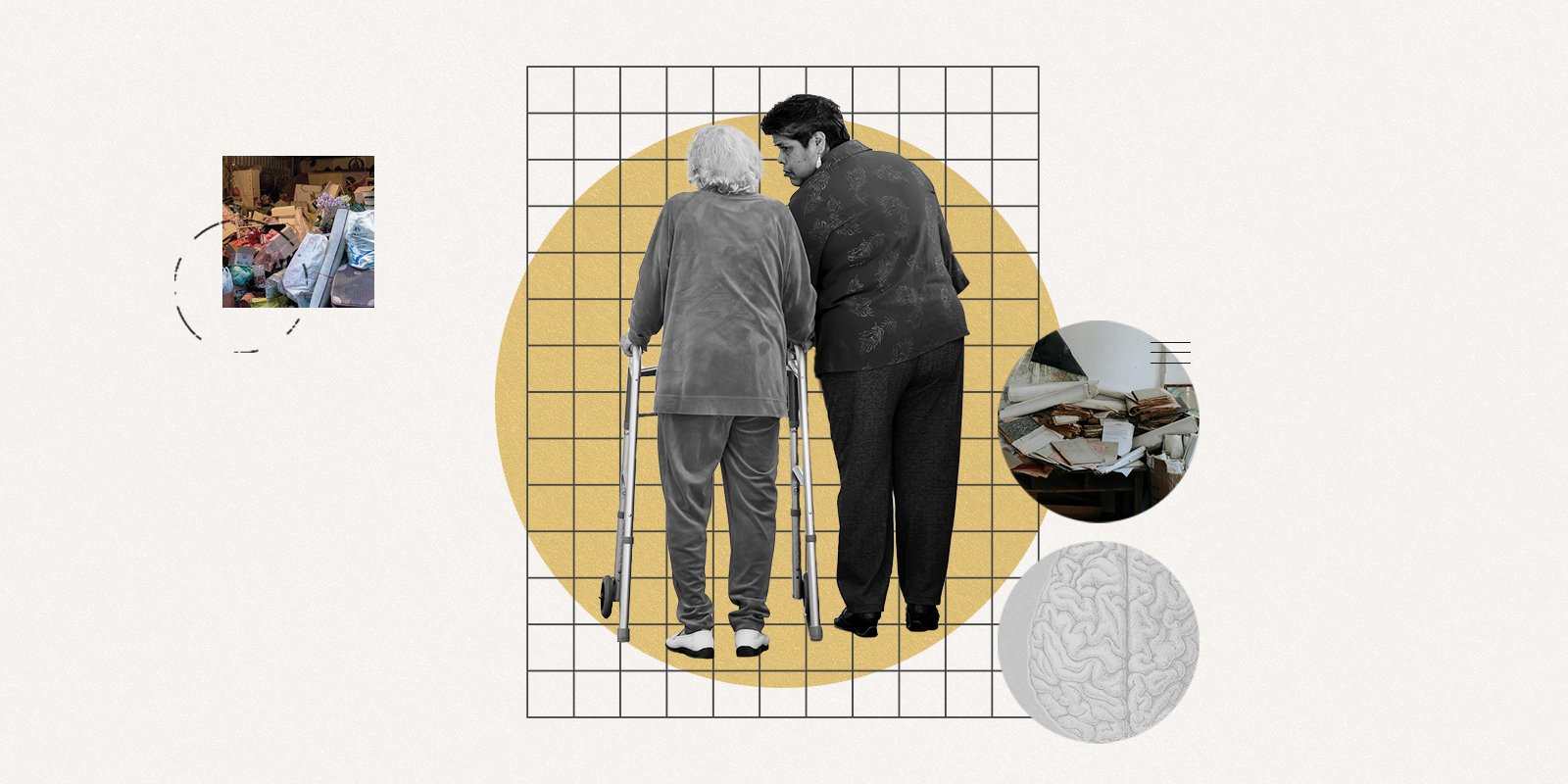
What is hoarding disorder?
Hoarding disorder is defined as a persistent inability to discard or part with possessions, regardless of their actual value. All people normally hang on to important things that they value, but hoarding involves accumulating objects that aren't important or valuable, often to excess. So, clutter in living spaces often becomes a problem that can significantly interfere with safety and well-being.
Is hoarding disorder a mental illness or a neurological condition?
Hoarding disorder is classified as a mental health condition, but it can also occur in people with neurological disorders such as Alzheimer’s disease and other forms of dementia. In these cases, brain pathology is thought to contribute to the abnormal behavior.
How common is hoarding disorder?
The overall incidence is about 3% of the population, with people over age 60 having higher rates. It's common in psychiatric settings, where it is often associated with depression, anxiety and obsessive-compulsive disorder. We also see it in our neurological patients, which is why we’ve developed a one-question screening tool doctors can use to identify hoarding behaviors in patients with memory loss and brain disorders. If hoarding is detected early in the course of the illness, we can intervene.
How does hoarding relate to memory loss and brain disorders?
We noticed in our behavioral neurology clinic that many caregivers were reporting that their loved ones had developed new hoarding behaviors after or around the time of diagnosis. This led to a study of 135 patients with diagnoses including Alzheimer's disease, frontotemporal dementia and other disorders involving impaired cognition. Around a quarter of our patients – 23% – were reported by their caregivers to have a problem with hoarding. The single-item questionnaire that we published is easy for clinicians to use: When caregivers check this box, we know there’s an issue that needs to be addressed.
What’s happening in the brain of someone who develops new symptoms of hoarding disorder along with diagnosis of a neurological disorder?
Research on this question is preliminary, but we have a hunch that changes arise in the frontal lobes of the brain that result in a person becoming “stuck” in a way of behaving that doesn't allow for flexibility. So, people with hoarding disorder have moved from normal to excessive collecting and are unable to modify this unhealthy behavior. After starting to accumulate objects, they keep wanting to collect more because they aren't flexible enough to inhibit that impulse. But this is just a first approximation – we need more studies to better understand the pathology associated with hoarding.
What causes hoarding disorders?
Hoarding disorder is most often linked with depression, anxiety and obsessive-compulsive disorder. For this reason, emotional issues, broadly considered, have been thought responsible. However, our experience with hoarding in neurological patients suggests that brain pathology may ultimately be found to explain this condition.
When do behaviors such as collecting cross a line into a disorder that requires treatment?
We all have items we like to keep with us. That's perfectly normal. To illustrate, you normally develop emotional attachment to items such as pictures and souvenirs from trips, books you have read or musical recordings you have enjoyed. Those are all fine. Hoarding, however, involves the excessive accumulation of even the most trivial things to the point where your living space is almost unnavigable. We've had patients who have so much clutter they can hardly move around their home. There's so much stuff being stacked up that there’s a real risk to well-being. Not only can people trip and fall over the clutter, but it’s also harder for others to keep the home clean, and caregiving becomes more difficult. When hoarding interferes with daily functioning in the person’s environment, that’s when a line is drawn.
How do we treat patients with hoarding disorder?
The most effective treatment is thought to be cognitive behavioral therapy – a form of counseling that involves discussing the reasons for this behavior so the patient can understand how to gain control over it. Some people may also need antidepressants or other pharmaceutical treatments for this problem.
In patients with dementia, treatment may be more challenging because cognitive behavioral therapy may not be as effective in this population. We would certainly try some level of counseling first, but we often find that small doses of medication may be necessary.
It is also important to consider some common sense interventions. For example, we had a patient who had numerous subscriptions to magazines that were never discarded. The simple solution in this case was to cancel the magazine subscriptions.
What is misunderstood about hoarding disorder?
A major question is discovering what’s really going on in the brain. As behavioral neurologists, we study brain pathology that corresponds to abnormal behaviors, but study of this particular behavior has been limited. If we knew the pathology of hoarding in more detail, we could design better interventions.
Can caregivers help their loved ones by just cleaning the house?
Yes, this can be effective, but you can't just take something that someone's had for years and say, ‘OK, you're done with this now.’ Ideally, we want to balance the need for people to keep what is most important while discarding what is less important. It's crucial for caregivers to make this emotionally difficult process as easy as possible.
If someone has a loved one who's struggling with hoarding behaviors, what can families do to help?
A first approach to try involves gently confronting the person about the reality of the situation. Let them know that you’re not trying to be difficult, and that safety is your main concern. If a medical professional is needed, the person can consult with a doctor and see if there's a psychiatrist or psychologist who can get involved. And if there's a neurological problem, of course, referral to a neurology clinic would be a good way to go.
Related: Simple One-Question Test May Identify Hoarding Behavior in Alzheimer’s and Other Brain Disorders