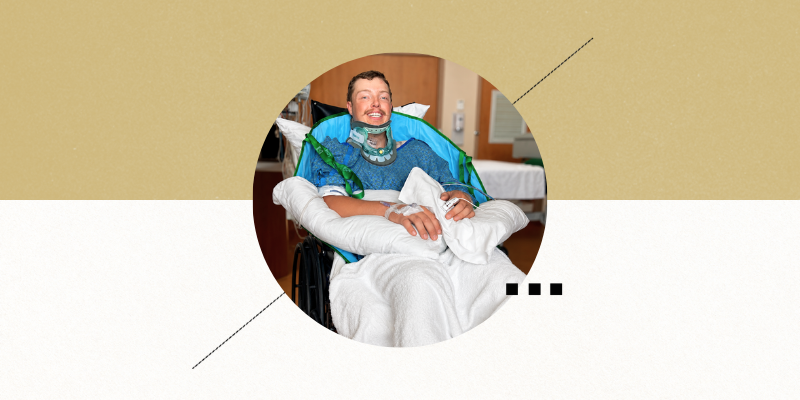
A few nights before Ross Matthews was set to leave on a family trip to Wisconsin with his wife and two young children, he woke up with severe abdominal pain. Matthews popped a Pepcid. But his wife, a primary care physician, suggested he see his doctor before their vacation.
The next day, Matthews’ doctor ordered routine bloodwork. His hemoglobin came back extremely low, and he was referred immediately to a gastrointestinal specialist. A colonoscopy revealed a 10-centimeter tumor in his transverse colon. Matthews was diagnosed with stage 4 metastatic colorectal cancer. It had already spread through his abdomen.
Matthews was 38 years old. Other than the one episode of severe pain, he had no symptoms. He cycled, ran, ate well and only drank in moderation. There was no family history of cancer or the telltale “bloody stool” – just one painful night that he might have ignored had he not been planning to travel.
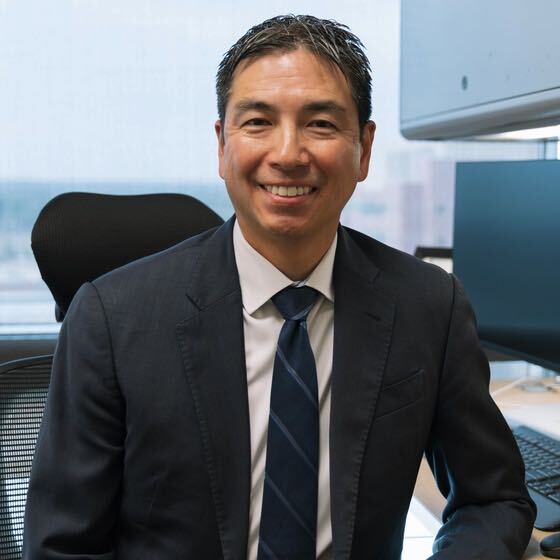
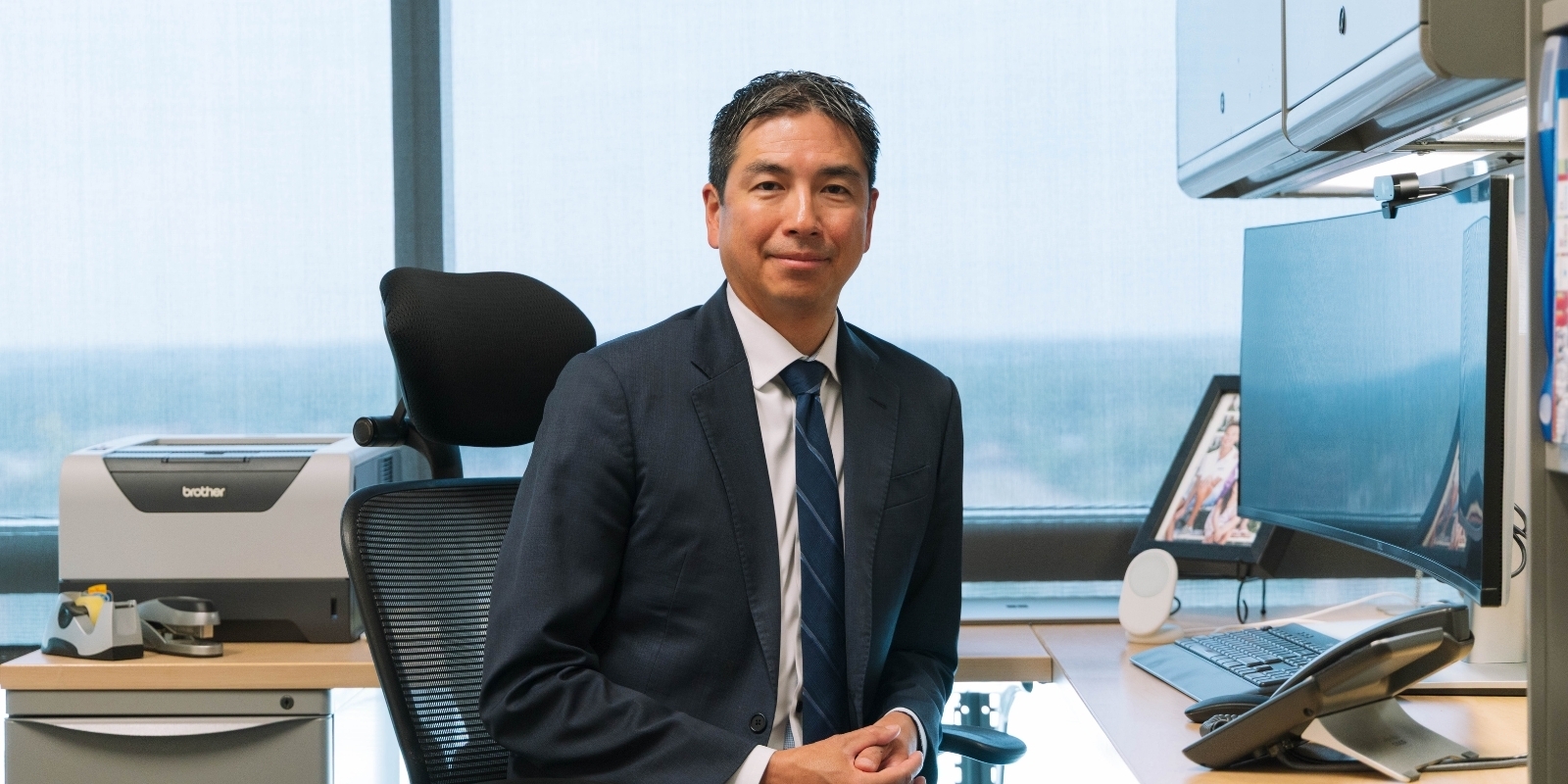
In March 2020, as the COVID-19 pandemic shut down the world, Matthews underwent his first surgery in an attempt to remove the grapefruit-sized tumor. Ever since, he’s been under the care of Christopher Lieu, MD, professor of medicine and medical oncology at the University of Colorado School of Medicine.
Matthews' journey reflects a trend Lieu has observed in his practice for more than a decade: more younger adults being diagnosed with aggressive, difficult-to-treat gastrointestinal cancers. It’s why Lieu, a CU Anschutz Cancer Center member, and his campus partners have been hard at work in their labs to develop new personalized treatments, such as immunotherapies, which harness the body’s immune system to recognize and fight cancer.
“Colorectal cancer is now the number one cause of cancer deaths in people under 50. Our goal is to give patients like Ross options when all the others have been exhausted,” Lieu said.
"We’re not aiming for an incremental advance. We’re aiming for a paradigm-shifting one. We’re aiming for a cure." – Christopher Lieu, MD


When the standard of care isn’t enough
Matthews was diagnosed with BRAF-mutated colorectal cancer, a molecular subtype associated with more aggressive disease and found in about 10% of patients. Lieu said it’s known to “spread like wildfire.” When Matthews googled the mutation, he learned the five-year survival rate for people with advanced stage BRAF-mutated colorectal cancer was less than 20%.
Over the years, Matthews has undergone two HIPEC (hyperthermic intraperitoneal chemotherapy) surgeries – a two-step treatment that combines tumor-removal with targeted chemotherapy.
“I’m still here because of those surgeries,” Matthews said, explaining that while the surgeries “knocked it back,” they were not a cure.
So Matthews has been on palliative chemotherapy and targeted treatments, which help stave off the disease’s progression and maintain his quality of life.
Aside from a few hard days, Matthews said he’s been able to be active with his kids and has only felt ill in public a handful of times. He’s also completed two ultra marathons – 50K and 60K – while receiving chemotherapy, which he shares to show others that “life doesn’t need to end when chemo starts.”
Matthews has tried to keep life as “normal as possible” for his kids. He’s grateful to receive chemotherapy near his Loveland home while still being just an hour’s drive from Lieu in Aurora.
“I feel really lucky. Dr. Lieu is so plugged into everything. He’s incredibly up to date. Just having this center nearby and having people who are dedicated to staying on top of the newest advances – that’s huge.”
A shot at a cure
Immunotherapies such as CAR T-cell have been used to successfully fight certain types of cancers, including lung, skin and bladder cancers. But in colorectal cancer, immunotherapy is approved for only one specific genetic biomarker that impacts roughly 4% of colorectal cancer patients.
Matthews does not have this biomarker. But last May, Lieu connected Matthews with a nationwide clinical trial using CAR T-cell therapy to treat a different biomarker: guanylyl cyclase C (GCC). CU Anschutz is one of four sites in the country participating in this trial, which is sponsored by a pharmaceutical company that is also covering the cost of Matthews’ treatment.
Even though Lieu and his partners at CU Anschutz were in the process of designing their own CAR T-cell therapy targeting different biomarkers, Lieu was honest with Matthews and suggested he try this therapy because, “the sooner the better.”
Being away from his family during the 17-day UCHealth University of Colorado Hospital stay required for the CAR T-cell therapy was hard for Matthews. That was especially true during that first week, when he was just “hanging out” while the T-cells expanded.
It’s around the one-week mark when patients begin to have an immune response, which can be overwhelming and manifest in a lot of ways, Lieu said.
“So we keep them in the hospital so we can calm the immune system down.”
Across CU Anschutz, scientists, providers and patients work side by side to do what’s never been done before. From using brain modulation and recording for Parkinson’s and mental health disorders to harnessing a patient’s immune system to attack advanced cancers, our latest advertising campaign underscores a single truth: Dreamers Never Quit.
A paradigm shifting advance
Now four weeks out from CAR T-cell therapy, Matthews is just excited to know that other options exist. When he was first diagnosed, there weren’t any open trials for patients with a BRAF mutation.
“I'm happy to be alive and well enough to help the scientific community learn and hopefully find cures for these devastating diseases.”
In clinical trials for experimental therapies, Lieu said patients like Matthews are taking risks for themselves and for the advancement of science. It’s why Lieu’s vision is to fundamentally change how colorectal cancer is treated.
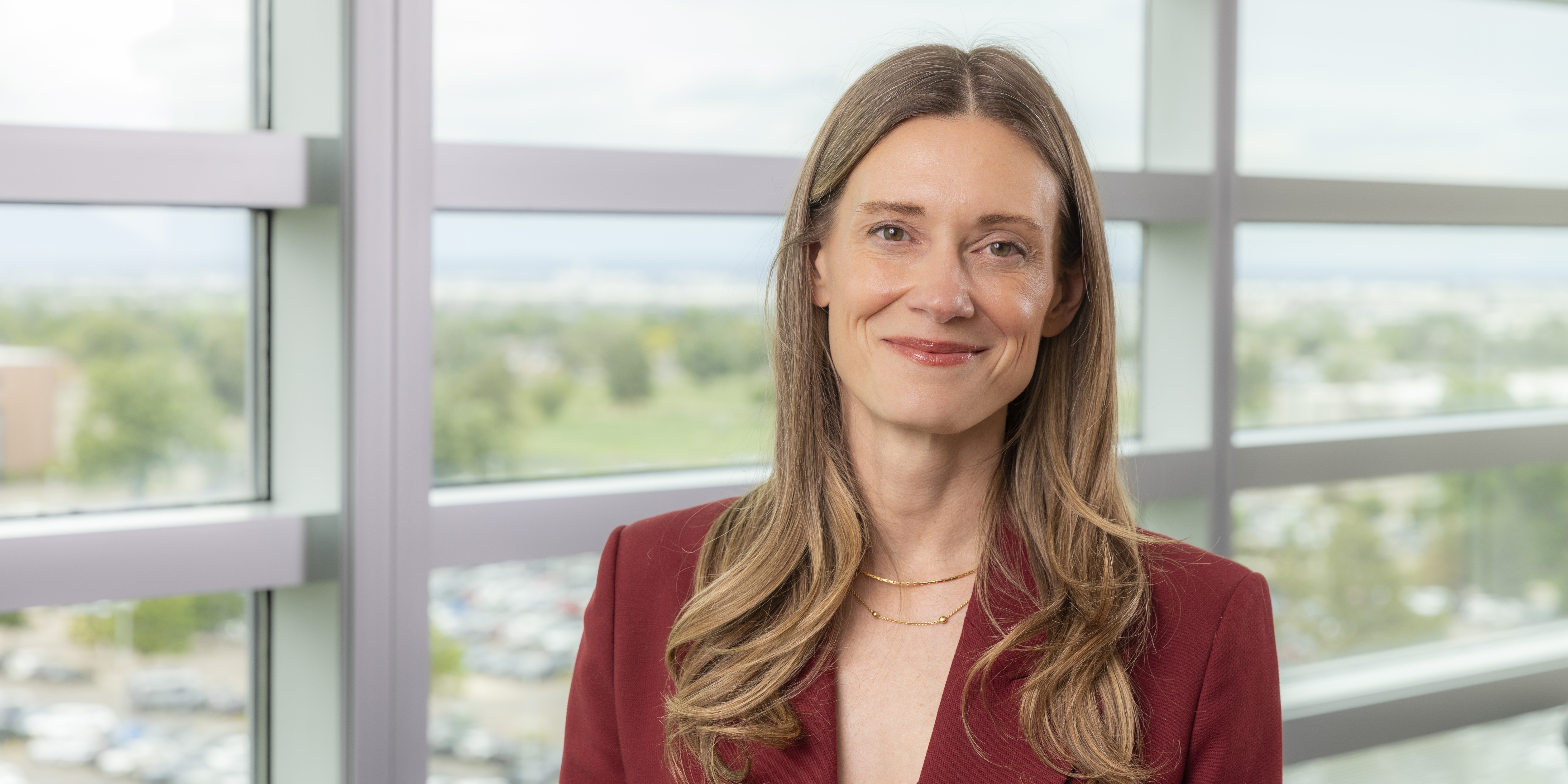
“For that kind of risk, financial commitment and disruption to your life, you don’t want just a couple of weeks of benefit. You want years. We’re not aiming for an incremental advance. We’re aiming for a paradigm-shifting one. We’re aiming for a cure.”
A 'homegrown' trial starts soon
CU Anschutz has answered the call for new treatment options for patients like Matthews. Last week, the FDA cleared a new clinical trial that will test an experimental CAR T-cell therapy developed and manufactured at CU Anschutz for adults with treatment-resistant colorectal cancer.
The first-of-its-kind therapy will use genetically engineered immune cells to attack two targets associated with cancer: B7-H3, a protein found on most colorectal tumors, and IL-8, a protein that helps promote tumor growth, inflammation and the spread of cancer.
“This trial is significant because we’ve found and are targeting a biomarker that’s unique to the cancer and not healthy tissues,” Lieu said. He credits CU Anschutz’s ability to manufacture the experimental cells through the Gates Biomanufacturing Facility on campus, along with the philanthropic support that made the trial possible.
The trial is expected to begin in December.
Every cancer journey is unique
When Matthews began his cancer journey, his daughter was just starting kindergarten. His son was 3 months old. Now, she’s 12, and he’s 7. Matthews doesn’t take those intervening years for granted. Given the seriousness of his diagnosis, he’s grateful to be an “n of 1,” knowing that his cancer journey, like every patient’s, is unique.
Lieu said Matthews’ experience underscores why he cautions patients against putting too much weight on statistics.
“Statistics can give us valuable general information, but they don’t necessarily predict what your future will look like.”
It’s been four months since Matthews received the CAR T-cell treatment. He’s currently waiting on the results of a set of scans to see how the therapy is performing.
As Matthews awaits news from his latest scans, he knows what he’s hoping to hear.
“I’d love for a miracle to be part of my story. But honestly, I’d be thrilled with no progression. If I could do CAR T therapy once, have no progression, and stay on chemotherapy for a couple of years, that would be awesome,” Matthews said.
Whatever the scans show, Matthews feels fortunate to have Lieu on his side.
“Dr. Lieu always has my family’s best interests in mind, and we have a great deal of trust in him.”
Key points:
CAR T-cell therapy is being investigated as a potential option for some patients with advanced colorectal cancer that has resisted standard treatments.
Ross Matthews, diagnosed with stage 4 BRAF-mutated colorectal cancer at age 38, participated in a clinical trial investigating CAR T-cell therapy targeting GCC.
CU Anschutz researchers have developed a separate experimental CAR T-cell approach targeting B7-H3 and IL-8 in treatment-resistant colorectal cancer.
Clinical trials are designed to determine whether experimental therapies are safe and effective; individual outcomes cannot be predicted from another patient's experience.
Average-risk adults should begin colorectal cancer screening at age 45 under current U.S. recommendations, while concerning symptoms warrant medical evaluation regardless of age.