On Halloween night 2024, Garrett Northrup drove into the endless prairie dark, working the animals and land he loved.
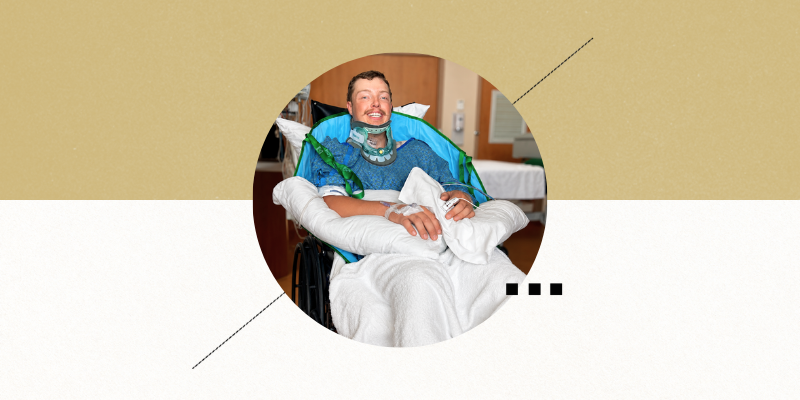
Traveling deeper into the black world, the clock ticking into the early hours of Nov. 1, the truck suddenly veered off the dirt road and flipped into a ditch in a remote part of Douglas County. The ranch hand broke his neck and was paralyzed from the chest down.
Shock. Surgeries. Recovery. Physical therapy. A new “normal.”
And now?
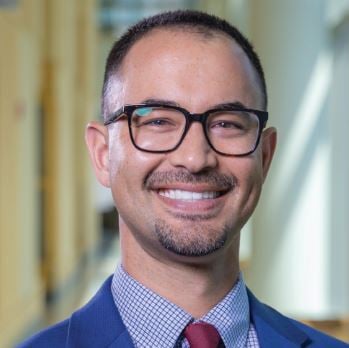
He has joined a new research study exploring spinal stimulation at the University of Colorado Anschutz. Led by Andrew Smith, PT, DPT, PhD, an associate professor in the Department of Physical Medicine and Rehabilitation, the study will assess the innovative therapy as a way to restore some of Northrup’s lost movement.
It’s another big step in an already long journey for the Colorado native. But giving up is not in this young man’s nature.
Head, Heart, Hands, Health
Northrup grew up in Castle Rock with his parents and sister. By his own admission, he had a fairly standard childhood.
“We were just your average, normal middle-class family,” Northrup said. “I played hockey and baseball growing up. My mom and dad taught the importance of a hard day’s work and being proud of the work you do.”
One of the Northrup's true callings, however, was the outdoors.
“We loved the outdoors as a family. We always were outside doing something, whether it was projects in the garage or traveling in our fifth wheel camper. We went camping a ton.”
With a joking smile, he added, “I pretty much saw more of the state of Colorado by the time I was 15 than most kids I graduated high school with.”
Above all other outdoor activities – the camping, the hunting, the fishing – he felt a growing pull toward agriculture.
“I was in 4-H from fifth grade until I turned 18 and FFA through high school. These programs were a massive part of my life,” Northrup said of the cooperative education program sponsored by the U.S. Department of Agriculture. “It’s something that I felt connected to in two ways. One, on my mom’s side, we are fifth-generation farmers and ranchers with land on the Western Slope.”
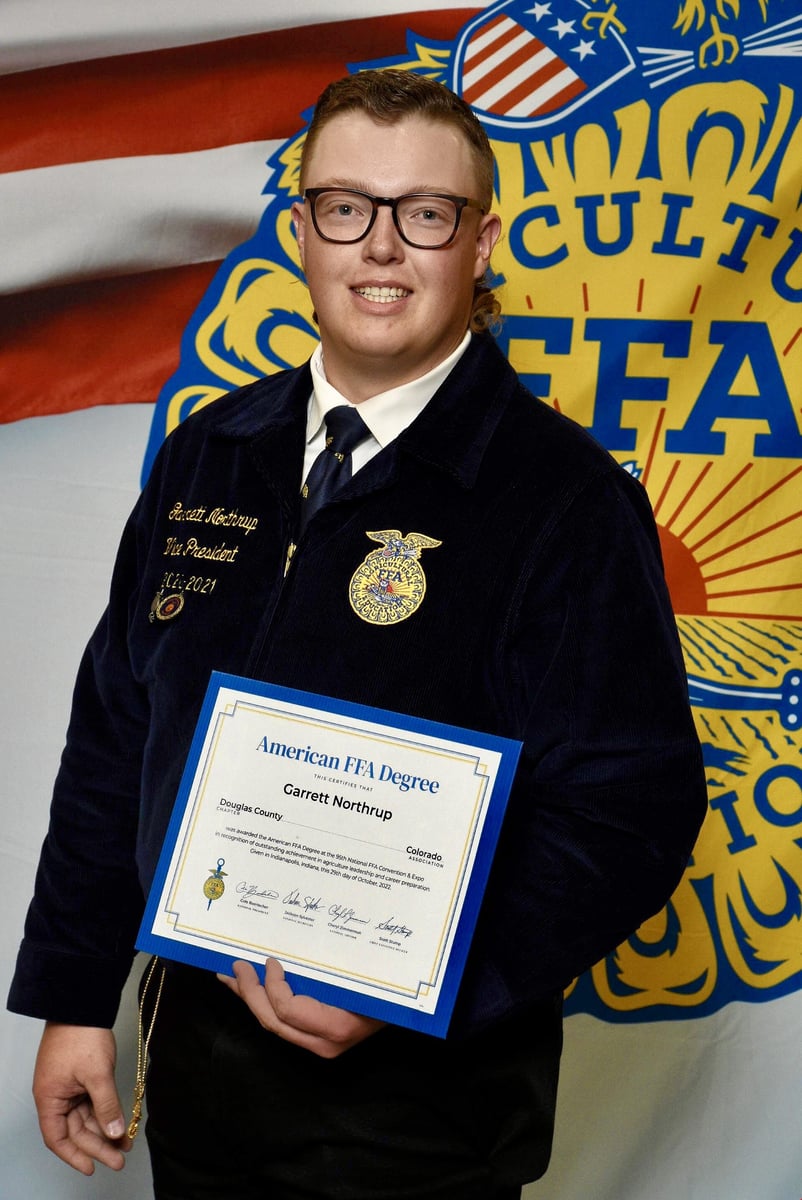
And two, he felt a connection to the land, the rewarding aspects of working outside in agriculture quickly hooking Northrup.
“Farming and ranching is something you can take a lot of pride in. It’s taught me a lot of responsibility, patience and perseverance.”
Another smile. “It’s not instant gratification,” he said. “You plant a grass seed, and it takes four months to fully develop. You watch the passage of days, get up before sunrise and wrap work up after it goes down.”
This cadence and hard work brought Northrup a sense of calm and focus, even when the individual days can be so varied – that’s what keeps things fun and interesting in his view.
“One day, you could be chasing cows on the county road after they got out through a gap,” Northrup said. “Your next day might be a little boring since you fixed the fence that allowed them to get out.”
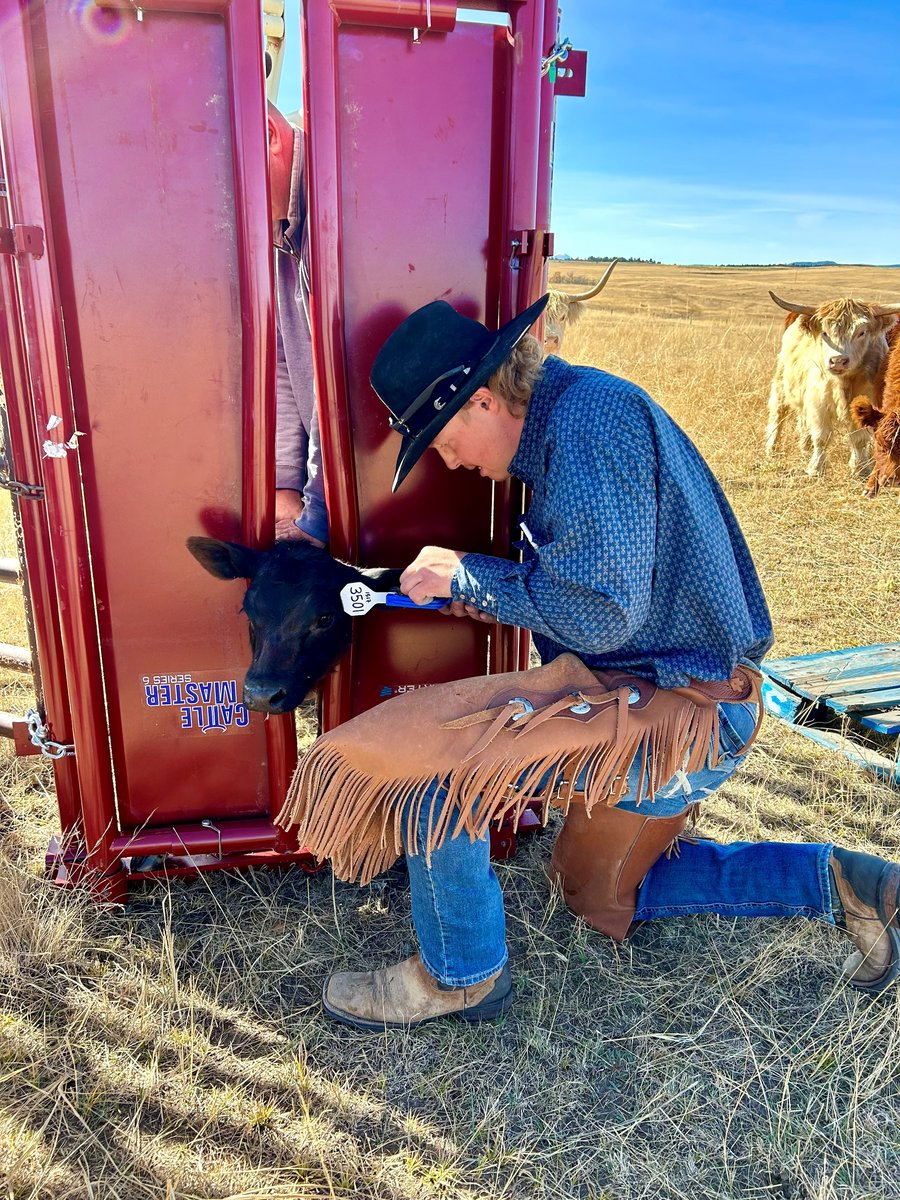
It’s also why Northrup went for a bachelor’s degree in agricultural science and business and has plans to get his master’s degree in agricultural communications and education.
Northrup ended up putting all his energy into helping as a hand at a ranch with a cow-calf operation through high school. Then came the opportunity to be a ranch manager. Around the same time, he and his father began plans to start their own family-owned cow-calf operation.
Then came the life changing Halloween night.
A Crash in the Night
That night, Northrup awoke in a panic. He had drifted off and needed to check on the herd.
It was 12:45 a.m. – much later than usual for his nightly routine of visiting the cows, filling their feed and water, just as he’d done dozens of other nights.
But Northrup fell asleep behind the wheel out on the county road.
From there, things get fuzzy.
“All I remember is as soon as the truck kind of went into the ditch, I had woken back up and I went to re-correct the wheel,” Northrup said. “I was knocked out at some point, then all I remember is laying there, not knowing what to do.”
While struggling to remain conscious, a flurry of activity unfolds. Due to the impact, Northrup’s phone activates the emergency contact system. All emergency contacts were called and 911 was alerted of a heavy G-force at a recorded speed on his phone with his current location. Paramedics arrive and pull him from the wreckage. They lift him into an ambulance. Faces of the young first-responders flash before him, and Northrup asks that they take him to Advent Health Castle Rock, where his mom is the Director of Women’s Services.
Things start to drift in and out.
Northrup would soon go from Advent Health Castle Rock to Advent Health Parker by helicopter. From the time of his accident to the medical team’s decompression of his spinal cord, four and a half hours passed.
He would be in an MRI machine at one point. The gleam of lights in the intensive care unit in Advent Health Parker washed across his recollection of the day.
His memories didn’t start returning until late in the evening of Nov. 2.
“It didn't really hit me until that night when I was like, ‘I can't move,’” Northrup said. “I could barely move my arms. I couldn't move anything below my chest. I was just there in bed.”
But Northrup is still himself, even in recalling the stretch of days that would change his life.
“One thing I do remember is that night I ate a pretty dang good Chick-fil-A chicken sandwich for dinner,” he said with a grin.
The next 12 days in the Parker ICU brought a variety of hurdles – a scary blood pressure drop, pressure sores, and gastrointestinal bleeding. But he received great care and soon began to imagine what would come next.
The “Mayor of Craig Hospital”
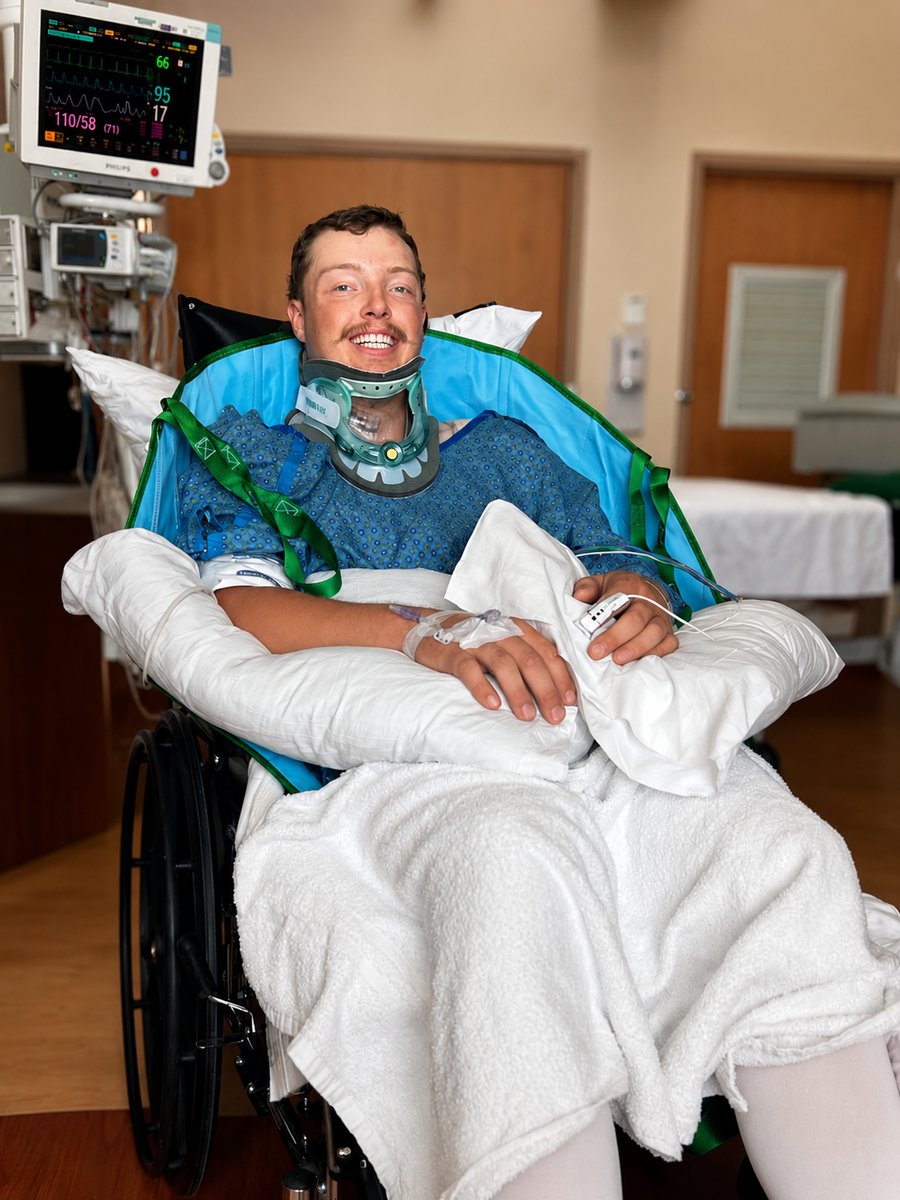
On Nov. 14, 2024, Northrup was moved to Craig Hospital.
“Craig Hospital laid it all out for me and my family,” Northrup said. “Food, intensive therapy, physical therapy, OT, assistive technology therapy, and everything. It was one of the coolest things that I experienced in a hospital.”
One part that came naturally: his power chair.
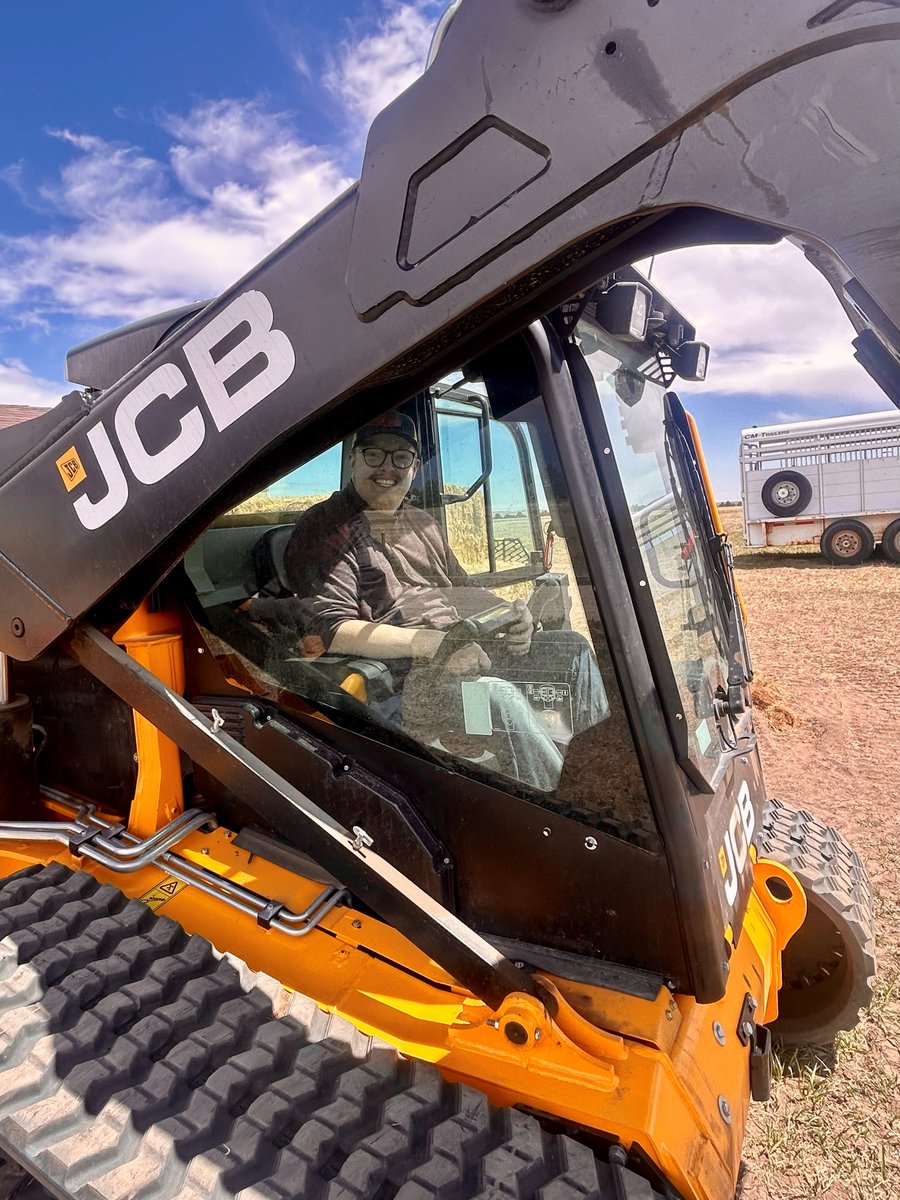
“The folks at Craig said, ‘Now it’s going to be a little weird driving it,’” Northrup said. “I started moving the chair and it clicked: This is just like the tractors and skid steers I had at the ranch – this is the easiest thing ever.”
Northrup began taking physical therapy at Craig Hospital from 8 a.m. to 4 p.m. every day, with his parents driving round trip from Castle Rock to Englewood to visit.
"Playing the bad hand you’re dealt with doesn’t mean you still can’t enjoy being at the table with friends and family."
Soon, Northrup joined his new community of patients with a wide range of backgrounds, finding ways to make rehab activities fun competitions – such as turning wheelchair classes into races. Northrup’s gregarious spirit eventually earned him the nickname “The Mayor of Craig Hospital” among hospital staff.
By late January 2025, it was time for Northrup to return home. While his care team ensured he was fully prepared to make the transition, with new life skills and movement they worked on with him, Northrup still felt some trepidation.
“Coming home that first week after Craig, (I was thinking), how are we going to do this? What is it going to look like? Who's going to be able to help me? Mom has got to go back to work. Dad's going to take an intermittent leave. My sister's a second-grade teacher. So, how are we going to adapt?”
But just like any hurdle, the Northrup family rallied and got to work. They learned how to load his chair into the car, how to help him navigate their home, and begin living a more normal life again. In short order, Northrup was back on the ranch.
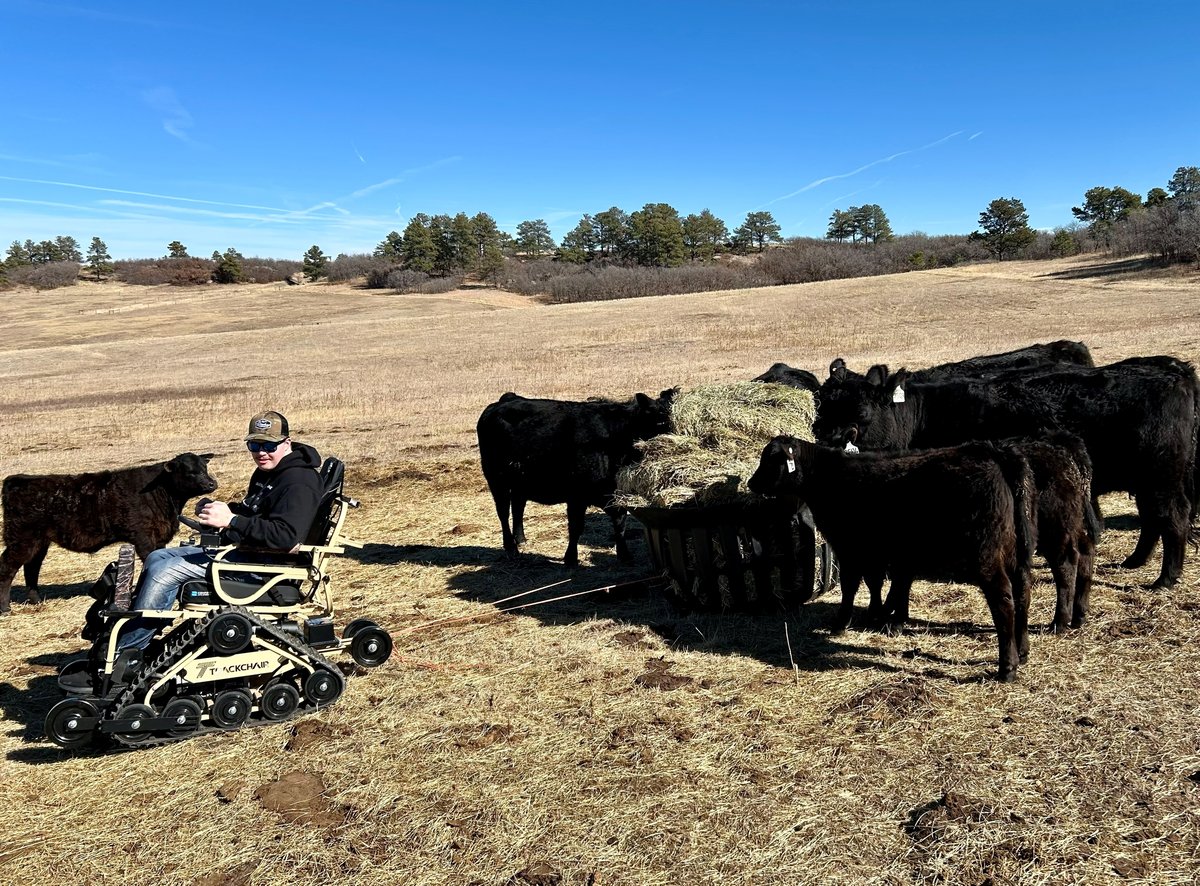
“Dad would load me up in the truck and we would just go check cows, check the fence, and watch the rain clouds,” Northrup said. “It was a really fun experience to get back out in the fresh air with the animals.”
A New Normal and the Beginning of a Partnership
Northrup returned to living his life with the same energy he had before his accident. From going to the zoo with his sister and niece, seeing country music concerts and reconnecting with friends and family, Northrup also continued his physical rehabilitation at Craig Hospital.
Always willing to push harder, he soon came across Smith’s work at CU Anschutz. The researcher’s new therapy approach could help the rehabilitation process of patients like Northrup. Specifically, Smith is investigating whether advanced MRI assessment and spinal stimulation can restore function to paralyzed legs.
“Garrett had an injury to his spine, with breaks at his C5 and C6,” Smith said. “We classify this as a motor complete injury. He has no voluntary movement below the neurological level of his spinal cord injury, which means there's some damage to the spinal cord.”
Smith has been working with a number of partners, including Candy Tefertiller, PT, DPT, the Executive Director of Research and Evaluation at Craig Hospital. They evaluated Northrup for the study, and he was approved as a viable candidate, kicking off the next chapter in the Northrup story.
“We verified with MRI that there are some non-functional but intact descending pathways,” Smith said of Northrup’s injury. “Our lab has been working for the last 10 years on taking high-resolution imaging of an injured spinal cord to actually see what the damage looks like on MRI. And what we see in a case like Garrett’s is that although he has a clinically motor complete diagnosis, we can see evidence of strands of spared neural tissue that is still viable within his spinal cord. We want to see if these strands can communicate below the injury site with a little help.”
Smith’s research project will encompass three phases: the MRI, physical therapy with a spinal stimulator attached to Northrup’s back, and a final stage that will implant a stimulator into Northrup’s back – with the goal of improving voluntary motor output – also with physical therapy. The entire process will last over a year.
Northrup was on board immediately.
“From the MRI and baseline measurements, we will do three days a week of research therapy for up to 90 minutes each day,” Northrup said. “And I fully believe in pushing recovery as far as possible. That’s my goal.”
And, with another grin, Northrup said: “Let’s get to work.”
In part two coming soon: Northrup and Smith team up for a summer of physical therapy.