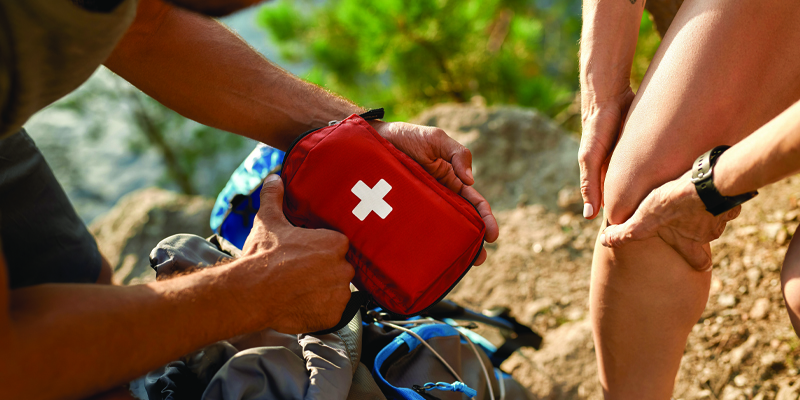
1. Have a first aid kit
Your first aid kit will depend on the type of activity you’re doing and where you might need it. There are fundamental kits that have things like hand sanitizer, wipes, Neosporin, and bandages that you can put in your car or keep at work. Other kits come with a lot more supplies, like gauze, antiseptic wipes, Advil or acetaminophen, antihistamine, gloves, scissors, and various Band-Aid sizes. Those are good to keep at home.
💡CU Nursing tip: Check your first aid kit(s) every three to six months to make sure items inside aren’t expired.
2. Prepare to bring more items when you’re hiking
For people who are doing a lot of outdoor activities, I would recommend getting something called Band-Aid antiseptic solution or a liquid wound spray that closes small wounds right away. You should also get something called a “sting pad”, which helps take the sting away if you get stung by a bee or wasp, ant, or spider.
Other things to have handy when in the outdoors include: tweezers, scissors, medical gloves, an instant cold pack, pain medication, or antihistamines.
Nurses and first aidNurses are trained in trauma scenes, so they’re taught first aid and CPR. They are taught how to stabilize patients before emergency medical services arrive. Oftentimes, nurses are also teaching others how to perform life-saving measures before more help arrives. Nurses working in in-hospital settings such as trauma or med/surg units are taught advanced CPR (whereas other nurses are certified in basic CPR). |
It’s also a good idea to have emergency supplies in case you get stranded, like a blanket, a whistle, or flashlight, a compass, and some kind of fire starter. Hikers should always carry a knife, extra snacks, and extra water.
3. Know how to perform CPR
CPR is going to be the most useful first aid technique, and everybody should know how to perform it. Typically, people 12 and older can take a class. Organizations like the American Red Cross offer classes, and they also have an app you can download that shows step-by-step guidance.
Performing CPR can be lifesaving because you have between two and five minutes to respond to a patient if emergency medical services are not there.
💡CU Nursing tip: You should renew your CPR certification every two years.
4. Call 911
My golden rule is – when in doubt, call 911. If someone is having trouble breathing, staying conscious, or has collapsed and hit their head, call 911. Or, have someone else call 911, and you can go to the person in need and care for them.
5. Do your research and ask for help when preparing a first aid kit
A wealth of useful information is available online, including resources from organizations like the American Red Cross and FEMA. Both organizations have more details about first aid, preparedness tips, and other training resources.
💡CU Nursing tip: Nurses at Community Health Clinic are more than happy to answer questions and discuss what items they recommend for emergency preparedness or first aid kits.