Starting something new can feel overwhelming, and nursing school is no exception. You might be feeling excitement, anticipation, and a sense of being overwhelmed with starting classes and settling into a new routine.
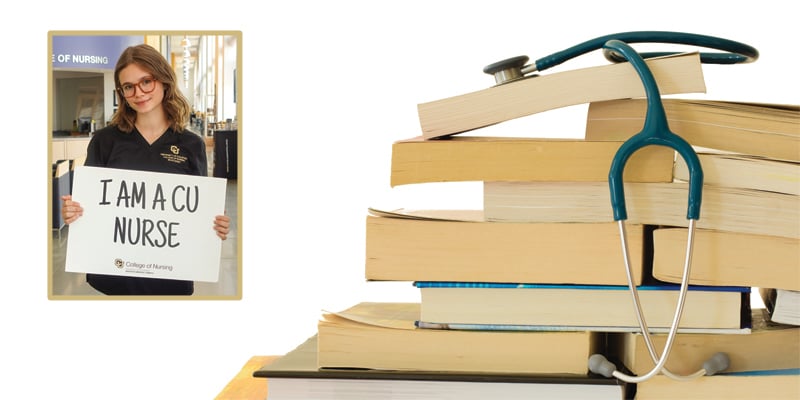
The University of Colorado College of Nursing at Anschutz Medical Campus wants to make your transition to a BS in Nursing student go as smoothly as possible. Campbell Paul, a student who started in CU Nursing's Traditional (TRAD) BS in Nursing pathway in June, shares these tips that helped her feel prepared when she stepped on campus.
Spend Time in a Healthcare Setting
Paul always had an interest in healthcare, so she got a job as a Certified Nursing Assistant (CNA) at Swedish Medical Center in Englewood, Colorado. She fell in love with nursing and interacting with patients, and it inspired her to enroll in CU Nursing.
“Before working as a CNA, I had no healthcare experience and had no knowledge of medical terminology,” she says. “I feel so much more comfortable now. I work in an intermediate trauma unit, so it was a great learning experience because I saw so many different things. Working in healthcare made me much more confident in my decision to become a nurse, and now that I’m in the program, I have a better sense of what I’m learning.”
Note: Healthcare experience is recommended but not required for the TRAD pathway. It is a requirement for the college's Accelerated (UCAN) BS in Nursing pathway. You can find requirements for all the college’s BS in Nursing pathways on our Admission Requirements webpage.
Get Out of Your Comfort Zone
Paul acknowledges she was a shy person before she started her job as a CNA, but quickly found out she couldn’t be shy when talking to patients or other healthcare workers.
“I’ve heard from other students who didn’t have prior healthcare experience that the biggest hurdle for them was familiarizing themselves with how to interact with patients and getting comfortable speaking to people,” she says. “So I think working as a CNA and getting used to talking with patients has been the most important part of my experience so far.”
Talk With Current Students…
Paul says she was “very lucky” because she was able to talk to three current CU Nursing students before she applied to the program. She says it was easier to relate to students because they’ve gone through the program already.
“They’re dealing with having to juggle multiple schedules, working, and having a life outside of school,” she says. “Hearing how they’re doing it – and getting their advice about what worked best for them gives you a better sense of what to expect in the program,” she says.
💡CU Nursing Tip: Faculty are also good resources for advice and can give insight into the program, including classes and clinicals.
…And Ask Them Questions!
About a year before she applied, Paul worked with a student who was at Swedish Medical on a clinical rotation.
“She let me pick her brain, ask about her GPA, ask about any extracurriculars, and things like that,” she says. “It helped me identify my strengths and weaknesses before applying – and I could make changes and bulk up my application.”
💡CU Nursing tip: Need help with your application? This article explains ways to stand out when applying or contacting our Admissions and Student Affairs Team.
Prepare for Your Interview
Paul helped her manager interview a student who was applying for a job at the hospital, two weeks before Paul was set to be interviewed at CU Nursing. The student also shadowed Paul, giving her a chance to ask questions.
“I probably asked her more questions than she asked me,” she says. “Preparing for the interview was the biggest source of anxiety because I didn’t know what to expect. I was expecting a medical school interview when you’re being interviewed by faculty members, and this student helped ease my anxiety because she told me it was much more informal.”
The biggest advice Paul received was to be vocal in the interview, but not to dominate the conversation.
“I also re-familiarized myself with CU Nursing’s values, and that made me feel so much more confident going into my interview," she says.
Manage Your Expectations
Earning a BS in Nursing takes commitment – and the ability to be flexible to study, attend class, and plan for clinical rotations. It’s something Paul hadn’t thought of, even after she was admitted to the program.
“I convinced myself it wouldn’t be too much of a lifestyle adjustment, I thought I’d be able to maintain all my extracurriculars,” she says. “But after talking to students, they explained the importance of being uncommitted going into nursing school and adjusting my expectations.”
Hearing that advice gave Paul enough time to pick up a few extra shifts at work and put her volunteering commitments on pause (right now, she still works as a CNA but has reduced her hours considerably).
“So far, that’s been the best decision I could have made,” she says. “At orientation, they say nursing school is unlike any other schooling you’ve done, so going into the program knowing what the program looks like and what to expect made me feel so much more comfortable and confident.”
Prepare to Make Adjustments
When you get into the BS in Nursing program, understand that what you thought was a good plan might change.
Paul is still new to the program, and says she was nervous about changing her study habits. So far, she hasn’t had to make any adjustments, but is prepared that her study habits might need to change as classes and assignments change throughout the program.
💡CU Nursing Tip: Need help staying on track? Check out CU Nursing’s Academic Support webpage for guidance on study habits, catch-up plans, and test-taking techniques to help you succeed.
Stay Confident
Another crucial piece of advice Paul received was to have confidence in her academic ability.
“It’s overwhelming when you’re going through the onboarding process with so much information, but stay grounded and stay focused,” she says. “It’s cheesy, but you can do it. You got yourself here, and you can do it. And know what’s best for you. What works for others may not work best for you, and I felt more confident coming to CU Nursing knowing that.”