Students earning their BS in Nursing from the University of Colorado Anschutz College of Nursing are required to fulfill a certain number of clinical hours to graduate. As of the Fall 2025 semester, 765 hours of face-to-face training are required.
Clinicals provide hands-on experiences in real healthcare settings (hospitals, clinics, etc.) for nursing students, preparing them for a career as a registered nurse. Students apply what they’ve learned in the classroom to patient care under the supervision of a licensed nurse. They develop practical nursing skills, including taking vital signs, performing assessments, administering medication, and delivering patient-centered care.
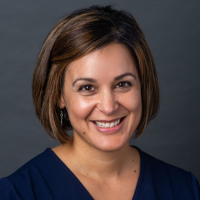
CU Anschutz Nursing offers students the unique opportunity where the college coordinates clinical placements at some of Denver Metro’s top hospitals, providing students with quality hands-on experiences. Monica Brock, MS, RN, CNEcl, is UCHealth’s Supervisor for Clinical Entry Programs and supervises a team of 15 clinical scholars who teach clinical rotations for CU Anschutz Nursing. She answers some common questions new and prospective students might have as they begin their nursing journey.
Can you explain your role as the Supervisor for Clinical Entry Programs?
My role involves oversight and management for all undergraduate nursing student placements for UCHealth in the Denver Metro region. Because I also supervise the Clinical Scholars who work with CU Anschutz Nursing students, I collaborate frequently with the college’s Experiential Learning Team. Our strong academic/agency partnership allows us to meet regularly to ensure the provision of high-quality learning experiences for students, including the identification of process improvement opportunities.
Can you give some insight into the clinical placement process?
We plan rotations more than a year in advance so we can seamlessly accommodate large volumes of students within various settings. This is all done with the support of UCHealth senior leadership, acknowledging our commitment to grow and educate the next generation of nurses. I also work with our unit educators to secure preceptors, as needed for rotations.
Part of the placement process is facilitating hospital systems’ access for students (badging and electronic health record) and ensuring student compliance with organizational and regular regulatory requirements prior to clinical rotation start.
What different hospital units do nursing students conduct clinicals in?
They work in several areas, including:
- Med-Surg I and Med-Surg II (Complex Care): Several acute care units, including Surgical, Medicine, Oncology, Transplant, Neuroscience, Orthopedics, Acute Care of the Elderly, and Cardiology populations. Students in the complex care rotation have the opportunity to learn about a nurse’s role in specialty areas such as perioperative, critical care, or the ER.
- Pediatrics: UCHealth’s Neonatal ICU
- Obstetrics: Labor & Delivery and Mom Baby Units
- Mental Health: Inpatient and outpatient treatment centers
- Community Health: Anschutz Outpatient Pavilion is one of our many outpatient clinics
How many hours (or shifts) do students spend in each unit?
Each rotation differs in the number of required clinical hours. We aim to place students in the same or similar settings throughout a single rotation, which helps them learn more effectively in their clinical environments.
The shortest off-site clinical rotation is mental health and OB, both 48 hours (typically four, 12-hour shifts). The longest rotation is Senior Practicum, which is 180 hours (fifteen, 12-hour shifts).
What is a Senior Practicum?
Senior practicum is a student’s final clinical experience during their last semester. This provides additional, and more in-depth, hands-on training to prepare them for working as a nurse. Senior practicum placements may take place in any of the above locations, depending on student interest and unit/preceptor availability.
What can students expect during their clinical rotations?
We intentionally design most of our clinical experiences to be immersive and hands-on. Students get the opportunity to help manage patients' care and practice skills such as head-to-toe assessments and medication administration, under the supervision of a Clinical Scholar or preceptor. In cohort rotations, students typically learn in groups of five or six.
Several of our rotations are precepted, meaning students are paired one-on-one with an RN preceptor for their shift. Depending on scheduling, the preceptor may remain consistent throughout the rotation or may vary from shift to shift. In the Senior Practicum course, students typically work with no more than 1-2 preceptors.
Why is it important for undergraduate students to get exposed to different areas of nursing?
Each rotation has specific course outcomes, which require placement in an appropriate setting to provide students with relevant learning opportunities.
Additionally, students graduate as generalist nurses, but after passing their licensing exam, may desire to begin their career in a specialty area. It is through exposure to many areas in nursing school that students either have their interests validated or are exposed to areas of nursing that they either didn't know about or hadn't previously considered.
What are a few things students should know ahead of their clinicals?
Come in with a positive attitude and a strong work ethic; you will get out of the experience what you put in! Even if the patient population isn’t what you hoped for or have a preference for, there are always valuable learning opportunities to be had.
In addition, stay hydrated, get adequate rest, arrive to clinicals prepared, and expect feedback. Our clinical scholars bring exceptional clinical expertise and are eager to share their knowledge and help students grow.