

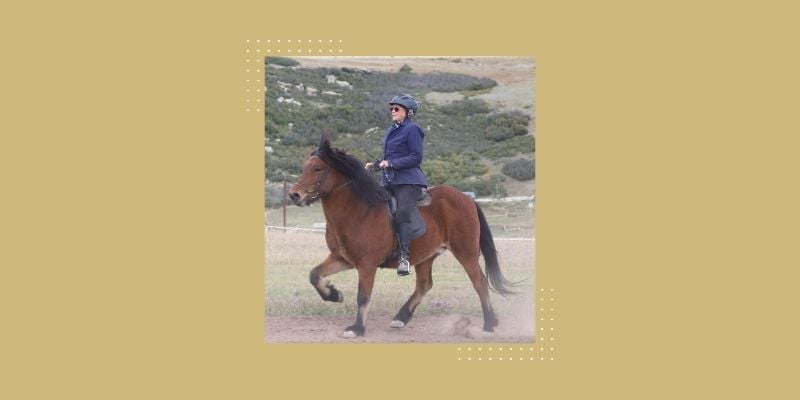
Dr. Deborah Kenny wanted a safer horse after a bad fall. What she got were two champions and a passport to Iceland.
Kenny, an Associate Professor and Division Chair of Health Systems, Leadership, and Informatics at the University of Colorado Anschutz College of Nursing, now owns two Icelandic horses: Skálmar and Ástarstjarna. Both live on her Colorado property, both have won ribbons by the armful, and both are members of one of the world's purest (and most protected) horse breeds.
Icelandic horses date back 1,000 years, unchanged by crossbreeding. They're smaller than typical riding horses, sturdy enough to carry adults across volcanic terrain, and subject to strict biosecurity laws: once an Icelandic horse leaves Iceland, it can never return.
So how did these two end up in Colorado?
"That's a story in and of itself," Kenny says.
A Safer Ride
After retiring from the military in 2010, Kenny and her husband moved back to Colorado and purchased a bit of land.
"I told my husband, I'm getting horses because we have a little bit of land. And I got a thoroughbred. She threw me, and I got hurt pretty badly, so I sold her and got a Quarter Horse."
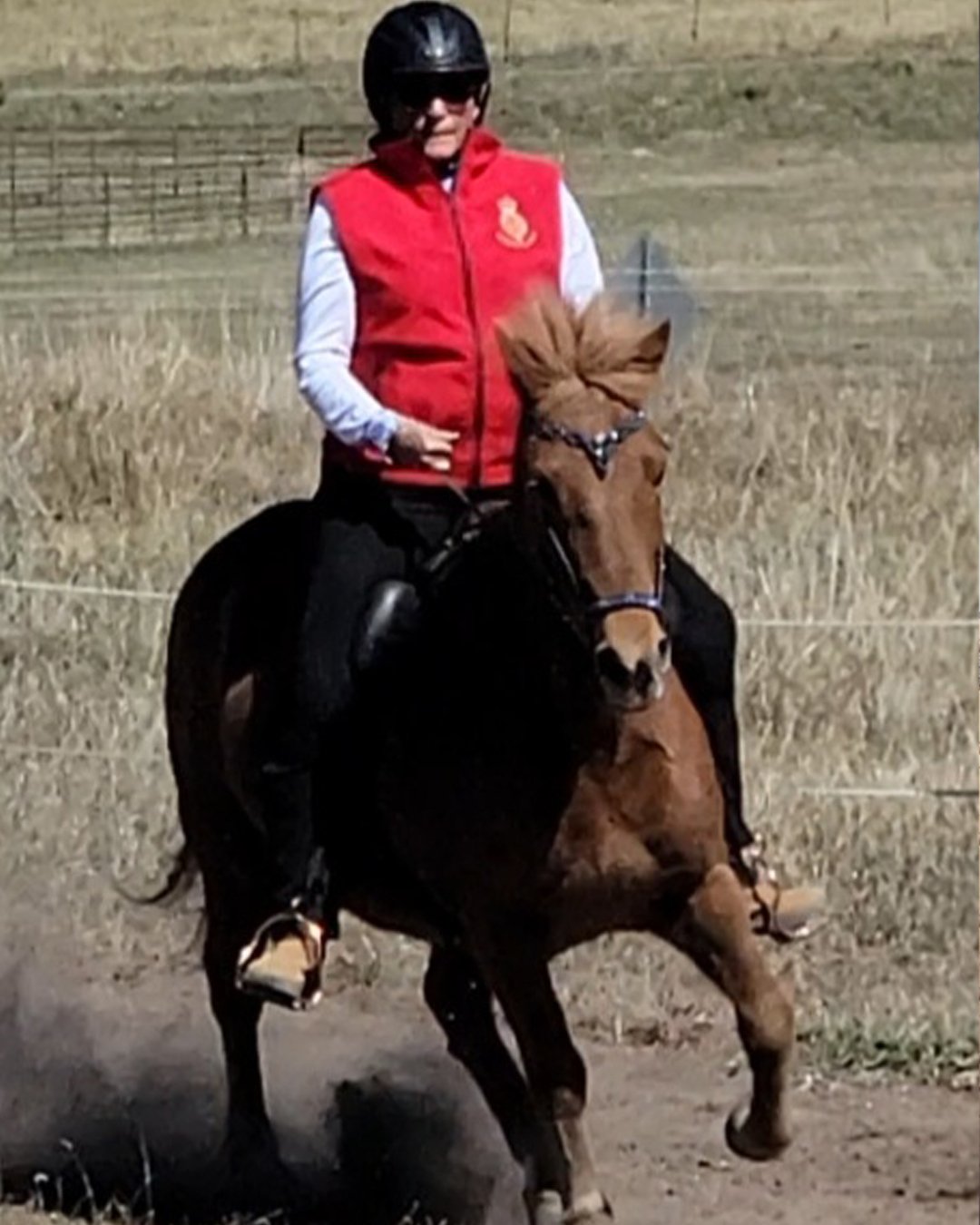
Deb Kenny riding her Icelandic horse, Ástarstjarna. |
Kenny first kept her horse at a boarding barn but eventually brought her home.
"She was in a pasture all by herself, and she looked so sad being there all alone," she says. "Then someone suggested I look into Icelandic horses since I had gotten hurt falling off a horse, and Icelandic horses are smaller and shorter than other horses."
Kenny found an Icelandic horse trainer in Monument and started taking lessons. A year later, the trainer said she'd help Kenny find an Icelandic horse.
"I met a trainer from California and bought my first Icelandic horse," Kenny says. "His name is Skálmar, and he's a great horse."
Kenny's trainer said she should show him at an event in Kentucky. "I came back with ten ribbons," she says. "He was coming in second and first in everything, and even got a grand champion for one of his classes."
One More Horse
"Someone said to me one day, you should buy Ástarstjarna. I was like, buy who?"
Kenny hesitated—she still had Skálmar and her Quarter Horse, Sierra. But Sierra was getting older (she's now 26) and Kenny couldn't ride her anymore. "I wouldn't sell her because she's earned her right to be a pasture ornament. She's the sweetest and is my emotional support horse."
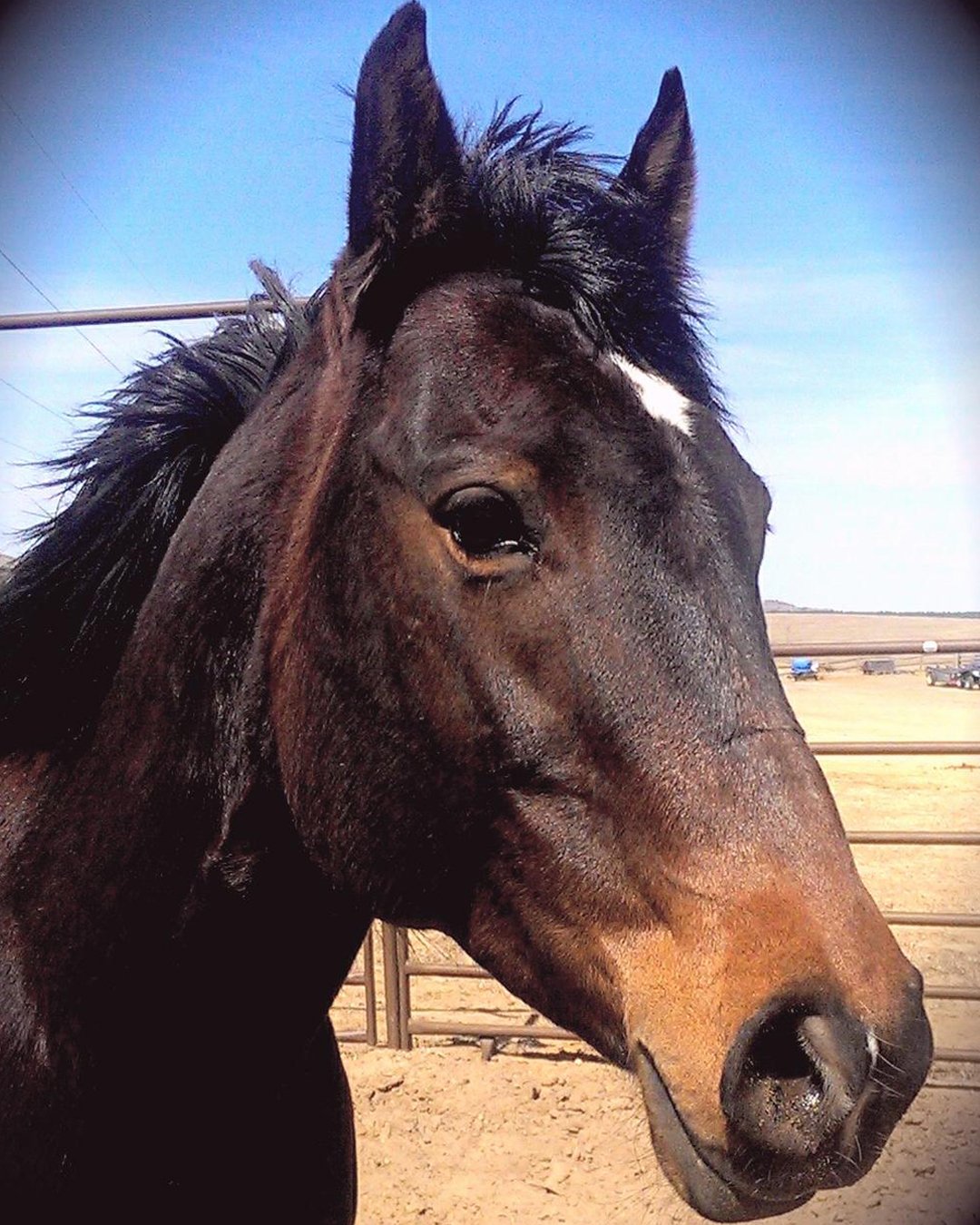
Deb Kenny's Quarter Horse, Sierra. |
Could she make room in her barn for one more horse?
Yes, she could.
So she bought Ástarstjarna.
"Ástarstjarna also started winning," she says. "She's 13 and loves to go really fast. And I love to go fast on her; we tear through the hills and the track and give judges heart attacks."
Kenny rides and shows both Skálmar and Ástarstjarna, but only once or twice a year, mostly because she was showing Skálmar too much. "He started throwing me, so we're working on building up that trust again. I only show him once a year now."
Iceland Calling
Kenny is retiring from CU Anschutz Nursing in December 2026, and she's looking forward to spending more time with her horses and taking trips to Iceland. She's been five times and has made lots of friends. She plans to go twice in 2026!
"We do trips where we knit Icelandic sweaters then go out for a ride," she says. "Or I've done treks where you ride with loose herds of horses, which can get a little crazy because they want to go all over the place and we have to round them up."
As for adding any more horses to her pasture…Kenny says three horses are enough.
But she still wants to be involved and support the Icelandic riding community, so she became an investor at an Icelandic horse farm in Larkspur.
"What I really love about riding and showing is the community," Kenny says. "Some of these other jumping or Western horse barns are very competitive, but in the Icelandic world, it's not like that. I lost by one-tenth of a point in one competition to a young kid. I was so happy because this kid is doing so well, and it's so much fun to see her become a great rider."


.png)