Burnout among healthcare workers, including nurses and midwives, is not uncommon. Brie Thumm, PhD, CNM, RN, MBA, FACNM, an assistant professor at the University of Colorado College of Nursing at Anschutz Medical Campus, is trying to figure out how to prevent burnout among midwives, particularly midwives in the middle of their careers.
Thumm presented her research at Academy Health's Annual Research Meeting, the largest and most prestigious health services research conference in the field. Her study earned the best poster award in the workforce category—a significant achievement given the conference's competitive nature.
The award-winning research, titled The Roles of Workload and Practice Climate on Workforce Retention across the Midwifery Career Lifespan: A Latent Profile Analysis of Early-, Mid-, and Late-Career Midwives, was conducted in collaboration with CU Nursing Assistant Professor Denise Smith, PhD, CNM, FACNM, and Zach Giano, MA, PhD, a research associate with the University of Colorado Center for Innovative Design and Analysis.
Following her presentation, CU Nursing interviewed Thumm about her research findings and the value of building professional networks with other healthcare researchers.
Q: Why is it so important to attend conferences like Academy Health’s Annual Research Meeting?
It’s critical because it helps researchers grow our programs of research by collaborating and networking with scientists across different institutions and disciplines. As a workforce researcher, the Academy Health Annual Research Meeting is where I can meet other health services and workforce researchers, see what they’re doing, and learn innovative ways to study, and ultimately build and stabilize the midwifery workforce.
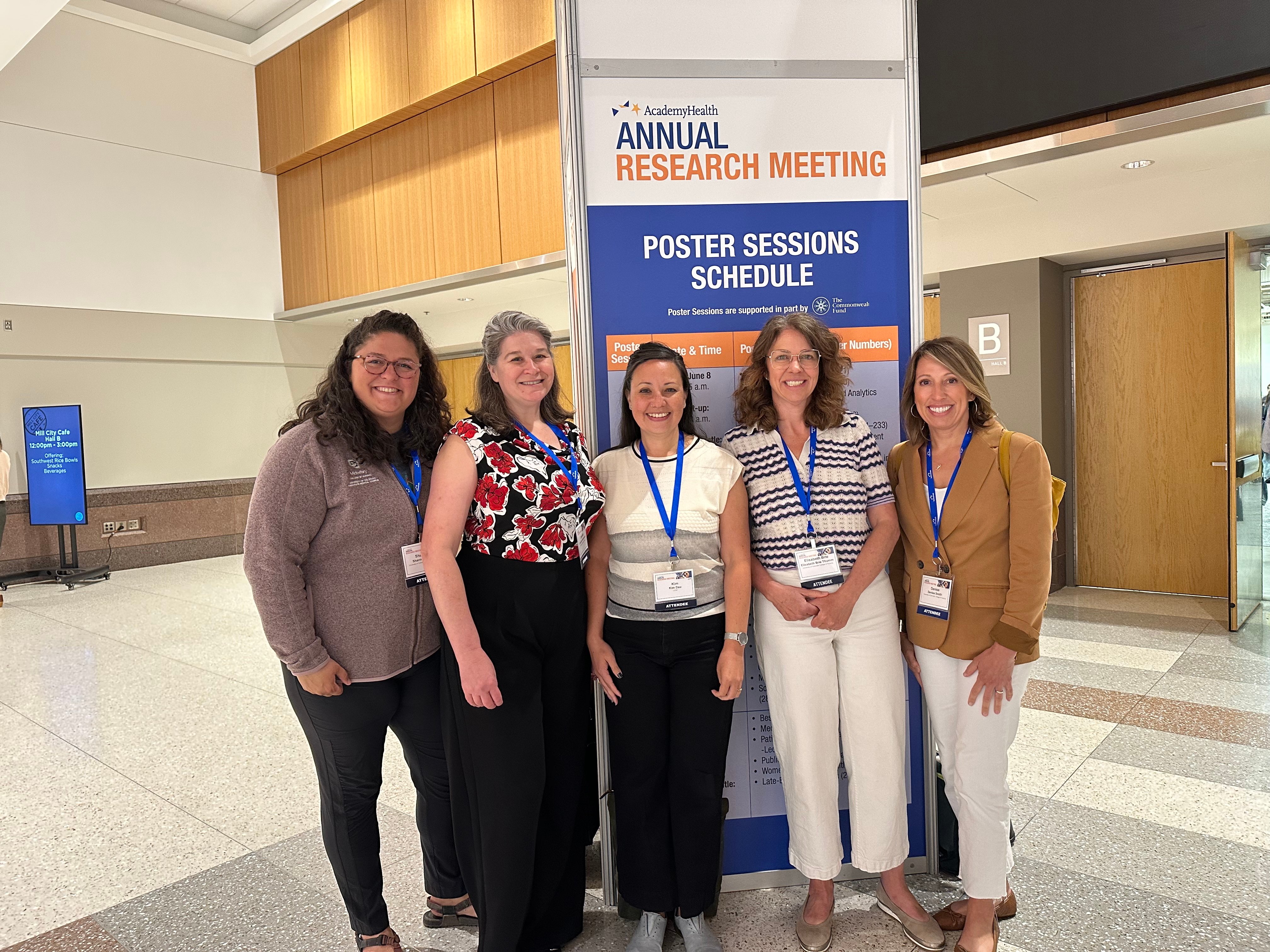
Several of CU Nursing's midwives attended the Academy Health Annual Research Meeting this year. |
Q: How does attending a conference like this help with your research?
We get an opportunity to learn about the emerging methods of study design and data analysis. For example, we might learn about a new program for supporting individuals with depression or learn about a new method for analyzing the relationship between workforce density and clinical care outcomes. All research benefits from team science, and at these meetings, we are learning about what other teams in our field are doing and building new teams. We all have the same mission: we want people to be healthy.
Q: You won the best poster for your study on predictors of job satisfaction and turnover intention across midwives’ career spans. Can you explain this research topic?
We studied how the demands and resources in their workplace affected midwives at different points in their careers. Not a lot of workforce studies break the workforce into different stages of their careers. We found that mid-career midwives are at particularly high risk of job dissatisfaction and leaving the profession.
Q: Why focus on mid-career midwives?
There’s so much attention paid to early-career midwives, and we do have to focus on them because they’re just starting their careers and are at risk for burnout. But we have this mid-career group who are at high risk of leaving the profession. I think in a profession like nursing or midwifery, which is predominantly women, these healthcare workers have increased demands with their children or caring for their aging parents. They have a lot of caring responsibilities while trying to maintain their work and career.
Q: What can be done to help them stay in the profession?
I think a big part is making sure we have flexibility in the midwifery profession. Some options include letting midwives go from full to part-time, changing schedules [going from working nights to days], or maybe transitioning to exclusively outpatient care for a few years so they can maintain a good work-life balance.
Q: What did your research find when it came to late-career midwives?
Once people get past their mid-career stage, we find most of them are happy and thriving. If we can get our midwives through challenges in their mid-career and give them more flexibility, it’s better for the midwifery workforce. We also need to think about how to keep our midwives engaged. If they’re ready to take on extra things later in their career, we need to present them with opportunities to keep them thriving.
Q: What are the next steps with this research?
This is a building block. I’ll be able to continue asking questions like: What are interventions to support mid-career midwives and keep them in the workforce? How do we build practice settings that are flexible for them? How do we get them back into the workforce if they leave? So, this work will help me move forward and conduct more detailed research.
Q: How has CU Nursing helped support your research?
CU Nursing has a unique midwifery and perinatal health services research core, and not a lot of places are doing this kind of work. It’s important we continue to grow this type of research that focuses on improving maternal healthcare and maternal healthcare outcomes through our own research, as well as training new nurse scientists in the CU Nursing PhD program. I’m very grateful for CU Nursing’s support.