“Good things happened today.”
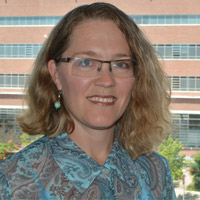
The excitement in Dr. Heather Coats' voice was unmistakable. After years of uphill battles for research funding, she had just discovered something that would change palliative care research: a new Palliative Care Research Consortium was coming to the University of Colorado Anschutz.
The $64 million NIH award wasn't just another grant—it was validation for a field that has long struggled to secure the resources it desperately needs. For Coats, an associate professor at the University of Colorado Anschutz College of Nursing and director of research for the Hospice and Palliative Care Nurses Association, this moment represented the culmination of advocacy and strategic thinking.
“It feels fantastic to get this funding, and it took so many palliative care and hospice leaders to make this happen,” she says. “For it's in the palliative care field, it’s always been a struggle for us to receive funding. We work really hard to be able to get funding so we can find ways to help people living with serious illness.”
But this time, something was different. This time, the palliative care and hospice community had rallied together—and won.
Coats had been instrumental in making it happen, wielding her expertise—crafting letters as the Director of Research for Hospice and Palliative Nurses Association, navigating her own grant applications, and articulating why palliative care research isn’t just important—it’s essential. The victory belonged to many, but it started with voices like hers.
A Long Journey
The path to this $64 million breakthrough began with crushing disappointment in 2022. Coats and her fellow researchers had lost critical funding from the National Institute for Nursing Research (NINR)—funding they counted on, funding their field desperately needed.
But this time, something was different. This time, the palliative care and hospice community had rallied together—and won.
“I remember having urgent meetings with the NINR director…explaining how they have successfully funded me before and let’s keep this funding, but unfortunately, we didn’t win that fight,” Coats says.
But defeat has a way of clarifying purpose. That’s when Coats and other palliative and hospice researchers started asking, “What’s next?”
The answer would require them to completely reimagine their approach.
“We had to pivot our process,” she says. “It really created a space for everyone to stop and think, ‘How can we do this? How can we get this funding?”
They began doing what they do best: they collected data about what was being funded. Colleagues reached out to her, saying other institutes at the National Institute of Health (NIH), were funding some palliative care and hospice research. They told her NIH was funding palliative care-like grants for research with people living with cancer. If they couldn’t get through the front door, maybe there was a side entrance. It was then that the group of colleagues put together a massive spreadsheet with what institutes at the NIH had been funding and got to work writing letters.
Armed with spreadsheets and determination, the team mapped out the relationships at the broader NIH institutes that had been funding palliative care and hospice research. They wrote letters to program officers across these institutes, casting a wide net and refusing to be pigeon-holed into a single category.
“We wanted to get funding from different areas of NIH to diversify the institutes to support hospice and palliative care research.” Coats says.
It was strategic, it was bold—and it worked.
Something else that helped was having a line item about palliative care in an appropriations bill passed by Congress, that showing lawmakers wanted to set aside funding for palliative care research.
“Palliative care has never been in an appropriations bill before, so that was a big win for us,” Coats says.
Finally, the NIH Trans-Institute funding opportunity application was posted, sponsored by the National Institute on Aging with funding and collaboration from the Eunice Kennedy Shriver National Institute of Child Health and Human Development, National Institute of Mental Health, National Institute of Neurological Disorders and Stroke, National Institute of Nursing Research, and National Cancer Institute. With submissions of an interprofessional multiple PI team in June 2024.
“My leadership in the healthcare field and in palliative care allowed me to have a voice in the process,” she says, adding that in the previous NINR grant application, nurses were not part of the multiple PI team. “When the process of applying for this new trans-institute grant became a reality, I put together a list of nurse scientists who could be considered on the leadership PI team."
Coats found out they were awarded the $64 million NIH award grant in August 2025.
Adjusting Your Research Funding
What was so successful in securing the funding? A lot of hard work, determination, and a willingness to make adjustments. Coats says it’s natural for nurse scientists to encounter challenges while trying to secure funding and that it’s okay to pivot.
“The first thing you need to do as a researcher is ask yourself, ‘Is this the work I want to do?’,” she says. “Know the value of your work, but ask yourself if you can do this even if you don’t get funding…because that’s the life of a researcher.”
“We need to be nimble with our research, but nurses also need to understand themselves and think about 'What is my value?' You don’t ever want to cross that line where you’re doing something that’s not important to you.”
Coats says when writing grant applications or a program of research, nurses might have to make wording adjustments to make the applications appeal to different funding organizations.
“One time, my grant had the words ‘palliative care’ in several areas, and I was thinking, should I take that out of the application? I can still say I’m working with people with serious illnesses or heart failure. It means the same thing, but it doesn’t pigeon-hole my application into one topic,” she says.
Coats knows it might be more challenging and require more work, “but you have to figure out a way to do things when situations or environments change. What’s the line in the sand you’re willing to cross —or not cross—where you’re willing to change or not change your work?”
Being an Advocate
Coats also says nurses need to understand how to advocate for themselves, because it can also play a key role in securing funding. She’s attended meetings with local lawmakers—as a representative of herself, not the college.
“It’s important to make your story heard,” she says. “Nurses work in the healthcare system every day, so we’re natural advocates for patients. Every voice matters."
Dr. Coats' journey from funding disappointments to a $64 million award breakthrough illustrates a fundamental truth about research in today's landscape: success often requires the courage to reimagine your approach without compromising your core mission, working together as a field, and learn to be adaptable.
Her story isn't just about securing grant money. It's about the resilience required to advocate for overlooked fields and the strategic thinking needed to navigate an increasingly complex funding environment.
For nurse researchers facing their own closed doors, Coats' experience offers both practical guidance and hope: know your value, be willing to pivot your strategy, and never stop advocating for the work that matters. Sometimes the most important research happens not despite the obstacles, but because of how creatively we learn to overcome them.