The world generates five billion tons of medical waste per year. That’s equivalent to about 250 million fully loaded garbage trucks.
In other words, that’s a lot of waste.
“As a simulationist, I can do something about that,” Bishop, BA, CNA, says.
Bishop says instead of automatically throwing away materials (like IV tubing), “we can increase the lifespan of materials and cut down on waste. Simulation offers a unique opportunity over bedside care to reuse materials that are non-biohazardous.”
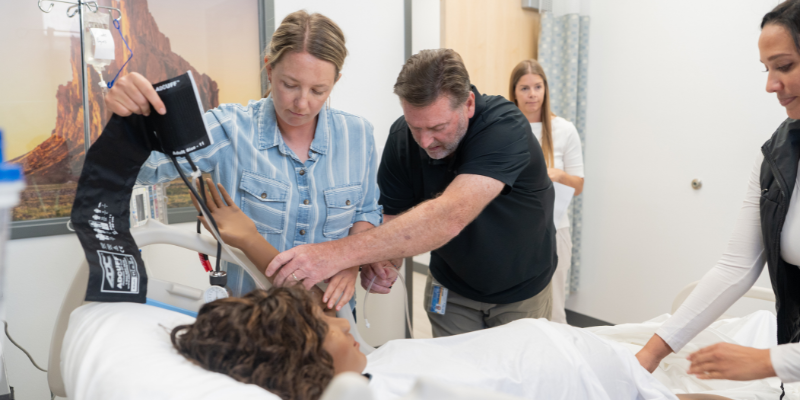
While working in the college's simulation lab, she realized how much waste was accumulating.
What is a Healthcare Simulation Technician?Healthcare Simulation Technicians focus on logistics in a simulation lab, including setting up and taking down equipment, maintaining manikins, and laying out supplies and medications so everything is ready for students and faculty when they use the simulation space. A nursing or healthcare degree isn’t required (though it can be helpful), but some members of the college’s team have healthcare experience. |
“We have up to 10 giant trash cans full of waste every day,” she says. “A lot of these supplies were used for skills testing. What would happen is that the learners may break sterile technique opening materials, so the entire kit would be thrown out without being used. Sometimes the solution is as simple as rubber cement.”
It’s why she created a sustainability guide for the simulation lab to reduce waste.
“There was so much waste…and I asked my boss, Dr. Theresa Noonan, if I could throw some of these materials in a bag and use them later? And from there, things just gained traction,” she says.
The Repackaging Process
Bishop’s plan includes focusing on repackaging sterile kits, like Foley/straight/suction catheters. She says up to 15 items go in these kits—in a very specific order—so her plan also includes step-by-step instructions explaining the process.
“Not everyone in simulation has a medical background, so I created this guide for people who may not know what a fenestrated drape is [it’s a sterile sheet used to cover the procedure area on a patient, providing a sterile barrier to prevent bacterial contamination],” she says. “You don’t have to know what this is or that is, all you have to know is what order things go in."
Bishop says that in the simulation lab, she and other simulationists follow a specific repacking plan for all materials. For example, with an IV setup, the bags and tubing contain purified water filled with alcohol (instead of the actual medication). And once the bag is spiked, that fluid will come through the drip chamber.
|
|
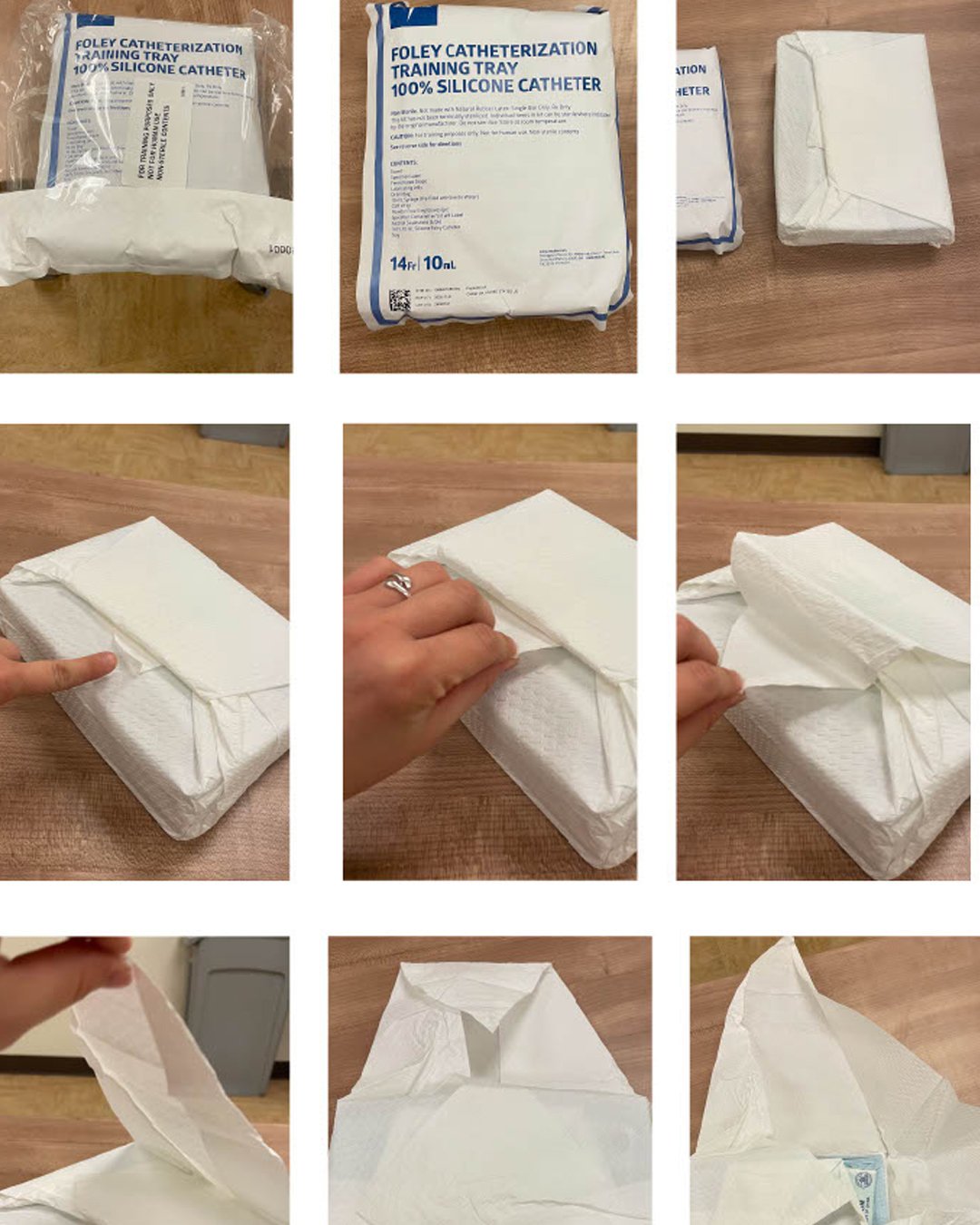 Repackaged Foley bags (above and below).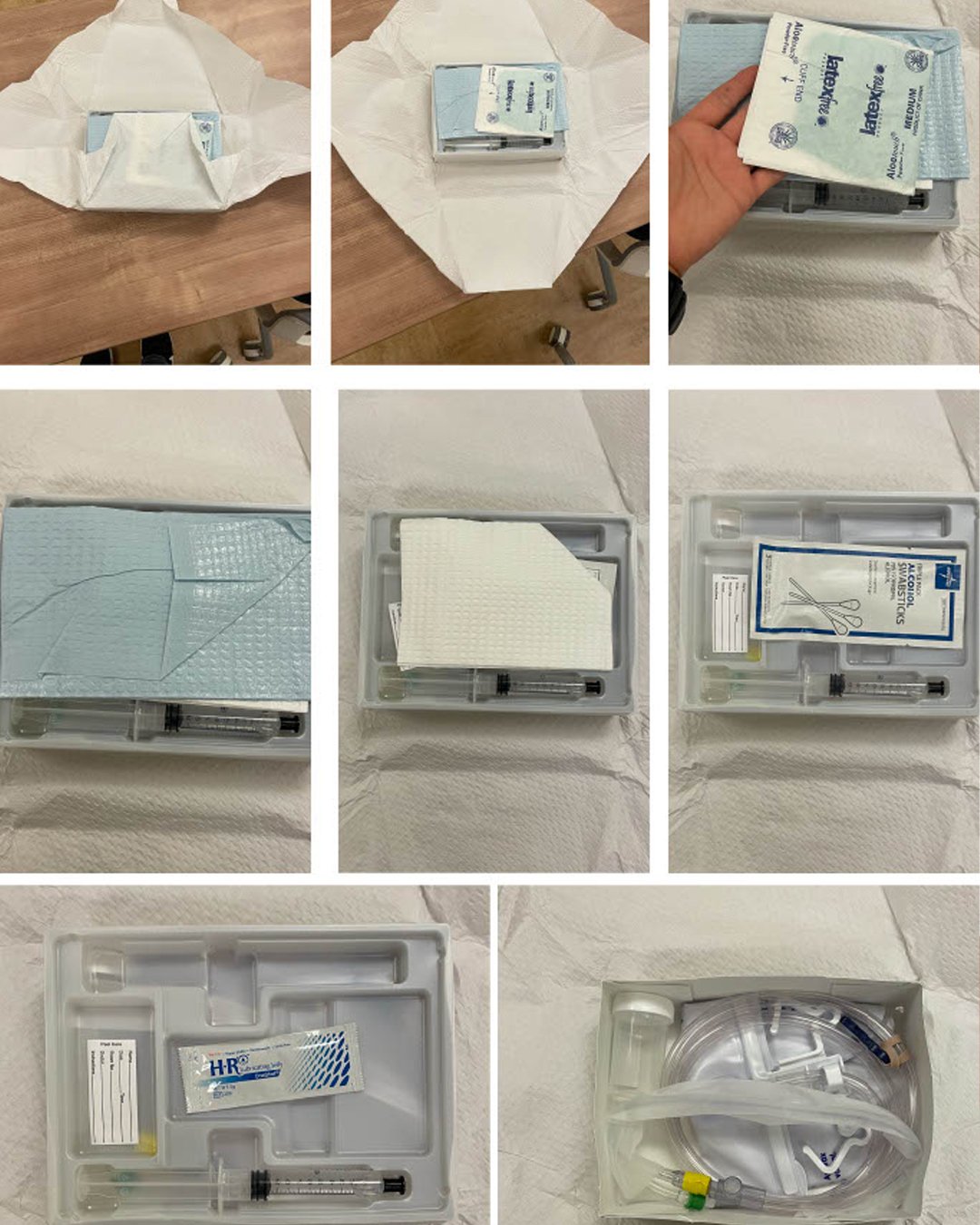
“We have a process to suction all of the water out because if there’s water still inside, a student will recognize that it’s been used before, and we want all the materials to replicate what they’d see in a hospital setting,” she explains. “We have a whole process that takes materials that look like they’ve been used and makes them new again.”
The simulation lab has eight areas, each with bins where students discard their materials after use. Bishop, who sometimes gets help from a student assistant, will sort through the materials.
“It’s called scrapping for parts,” she says. “You take each piece, and you put them into piles or areas, so that way when you create a new kit, you just grab and go to assemble them,” she says.
Repackaged materials are used for skills practice or open lab, not during simulation scenarios or other high-stakes events such as testing.
“Students may come in during open lab before a test, and they want to tear open ten packages. We give them the recycled materials, so they basically have an unlimited number of supplies they can use,” she says.
Then they recycle those materials again, trying to use one-use plastics three times.
Bishop says a catheter kit costs about $10, and the college can go through up to 80 per day of testing (in addition to many other materials), so her plan will likely save thousands of dollars per year. She is also finding uses for materials that can’t be repackaged, such as a lone catheter bag that can become a drainage bag for a manikin.
Follow Emily's WorkEmily also highlights her sustainability efforts on her YouTube channel, called Sustainability in Healthcare Simulation. |
“We likely have thousands of these catheter bags, and I stacked them all in a box. I started making things out of them, like using them as drainage bags or donating them to other programs or schools on campus that might have a use for them. It keeps these items out of the landfill, and we can find ways to reuse or donate them,” she says.
Support from the College
Bishop came to the college about a year and a half ago with no simulation experience and looked at the way things were done through a different lens. She was worried about pushback, but the Experiential Learning Team embraced her ideas instead.
“I didn’t have much experience in sustainability, so a lot of my process was, ‘Let’s just try it and see if it works,’” she says. “I wanted to buy a water distiller, but then I realized that’s just crazy. Why not use the water bottle refilling stations in the hallway? So, I’m kind of figuring things out as I go along.”
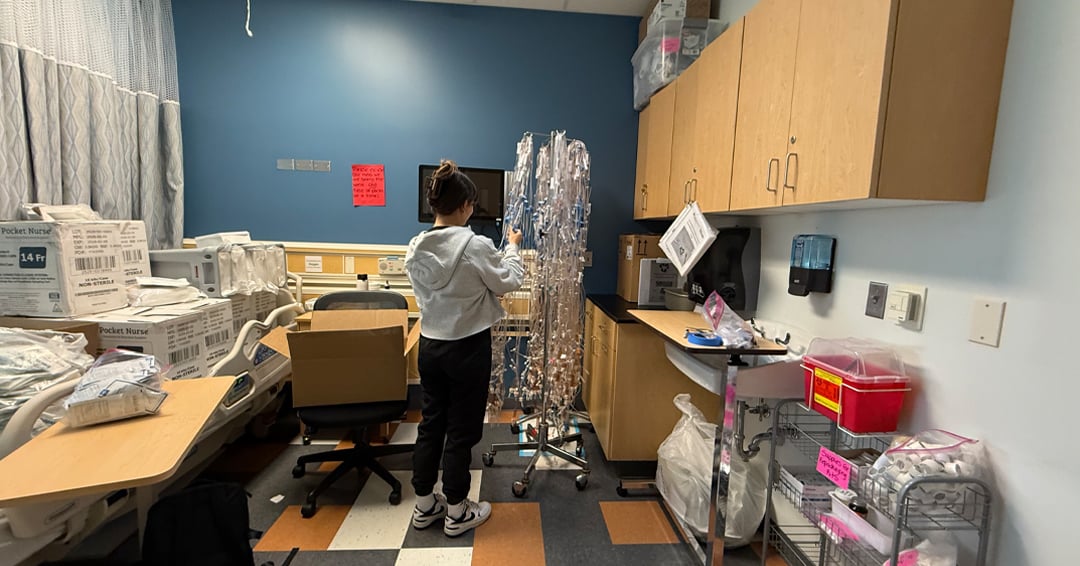
A look inside the simulation lab's sustainability workshop at CU Anschutz Nursing. |
And when she needed more space to put the materials, she was given a designated space.
“Theresa made that happen, so now I have a room dedicated to sustainability where our team can go through materials and repackage everything,” she says. “Theresa has been very supportive, and she helped push this through, and it feels wonderful to get so much support. It’s amazing.”
Bishop says the college's Legacy Campus in Lone Tree participates in her sustainability plan, and Fort Lewis College, which hosts the college's CU Nursing Fort Lewis College Collaborative, will begin using it in Fall 2026.
Presenting Her Plan
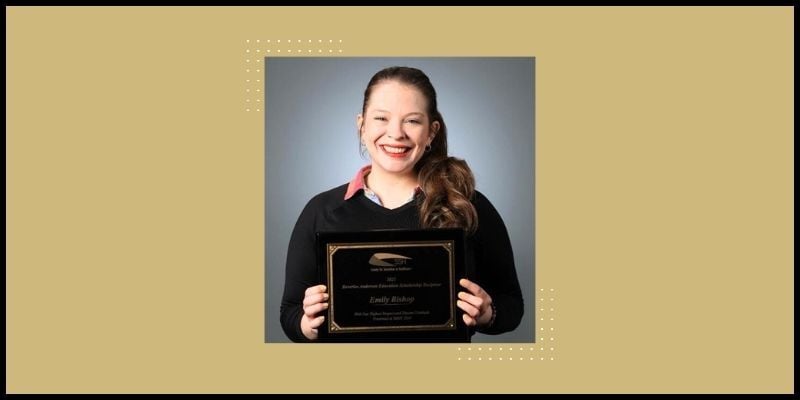
Bishop presented her sustainability plan at the International Meeting of Simulation in Healthcare conference in January. It’s the largest meeting of healthcare simulationists in the world, bringing together professionals from diverse simulation specialties (nursing, dentistry, veterinary medicine, etc.) to discuss the latest advances in simulation technology. She was one of three people in the world awarded a scholarship to attend.
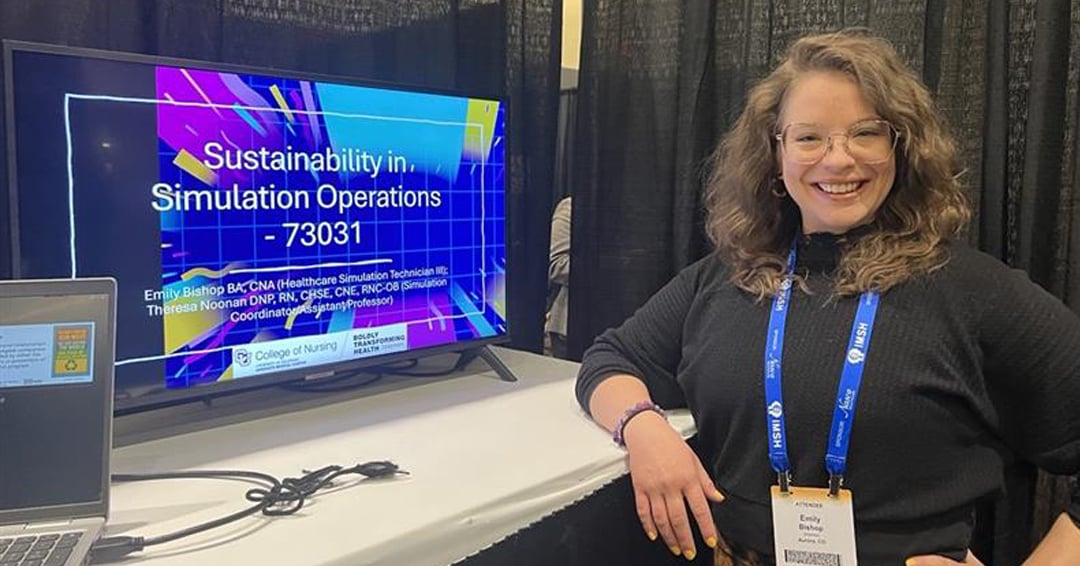
Emily Bishop presenting her sustainability plan at the International Meeting of Simulation in Healthcare conference in January. |
“Being able to present my sustainability project allowed me to share these ideas with the simulation community,” she says. “It started the conversation about expanding this initiative. I could connect with people who might want to implement these ideas.”
Surprised by the scholarship, “I didn’t think I’d be able to go because I had just moved closer to campus and knew I wouldn’t have the money to attend. So, I wasn’t expecting this at all, and I’m so grateful I could attend."
Bishop hopes to have her sustainability guide published by the end of the year.
“I want to share this information with everyone,” she says. “Other simulationists might have different materials or work in a different area of healthcare, but they can see how this system works for us, and maybe they can adopt something of their own.”