

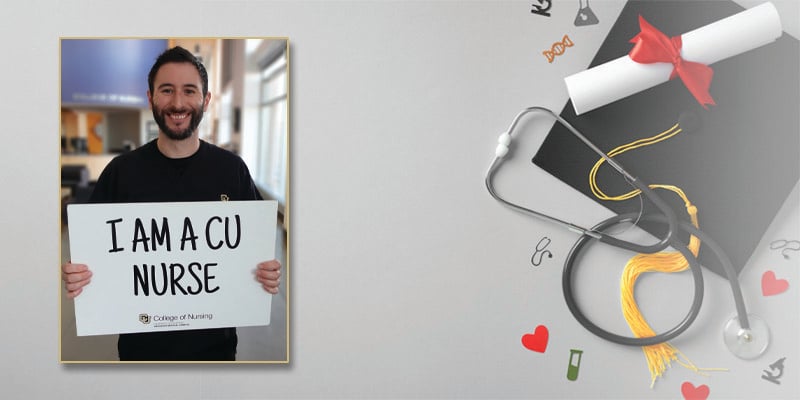
Eight years ago, Jason Lee was given a book about Holocaust survivors entitled Man’s Search for Meaning and how the survivors found a sense of purpose in their lives. His boss at Vail Resorts had noticed something: Lee was drifting.
“I didn’t have any professional motivation,” he says. “I thrive off goals, and I didn’t care about my job or career. I was just working to make money.”
After reading the book, he realized he needed that same sense of purpose. He continued searching for a role that could provide that purpose, but the pattern was becoming clear.
“I was really stagnant professionally,” he says. “And I knew I had to challenge myself with something.”
Finding Purpose Through Pain
Instead of staying stagnant, he started to move forward – literally. Lee began running ultramarathons.
“I decided to sign up for a race to see if I could do it,” he says.
He failed the first marathon, but he didn’t give up and signed up for another race. After training consistently for a year without missing a workout, he crossed the finish line.
“Going through the training and finishing the race was a turning point for me,” he says. “The whole purpose of getting into ultra-marathons was to jumpstart something professionally for me."
Failing his first race – followed by completing his second – gave him the confidence to go back to school and pursue a meaningful career.
“I was never a good student, so it took me going through failure to say, ‘If I work just as hard at school as I did at running, then I know I can do it,” he says. “I was able to flip my script and pursue a career in nursing.
A Career with Purpose
Lee knew he wanted to have a career that gave him purpose and did good for humanity. Attending the University of Colorado Anschutz College of Nursing’s Accelerated (UCAN) BS in Nursing program validated his interest in science and the joy he received from making a connection with patients.
“I really love getting to know people. I feel like it’s so easy to connect with them,” he says.
During his senior immersion, Lee was able to apply the nursing knowledge he’d learned in the past eleven months in one-on-one patient interactions. He connected the dots from classes and clinicals, leaning on preceptors for guidance.
“I could ask the patient all the pertinent questions, administer medications, discharge the patient, and talk to doctors – all with my preceptor there,” he says. “My preceptor is great because he would ask me the right questions to get my brain thinking, and if I forget anything, he could fill in the gaps.”
What’s Next
Lee thrives in hands-on, fast-paced environments, which is why he wants to start his nursing career in the ER. He’s not sure where his career will take him after that, but he enjoys knowing the profession offers so much variety.
“I need a career that has variability to it, and that’s what nursing can do for me,” he says. “Every day is something different, and that’s an environment I thrive in.”


.png)