

Why should I wear sunscreen to protect my skin?
Too much UV exposure could lead to certain types of skin cancer, premature skin aging, and sunburn. You want to protect your skin from wrinkles, sunspots, cancer, and long-term DNA damage. Colorado actually has the highest rate of melanoma because we get so many beautiful days of sunshine every year.
How often should I apply sunscreen? Do I need to wear it in the winter?
You should apply sunscreen every two hours. You’ll have to apply it more often if you’re swimming or doing an activity like running, hiking, or playing sports. I recommend applying every 30 minutes if you’re doing an activity where you sweat a lot or if it involves being submersed in water. If you have fairer skin or get burned easily, you should also be applying more often.
The U.S. Centers for Disease Control (CDC) says UV rays are typically strongest between 10 a.m. – 4 p.m., so you should still wear sunscreen year-round or limit your time outside during those hours. Even on cloudy or snowy days, UV light comes through the clouds or reflects off surfaces like water, sand, or snow.
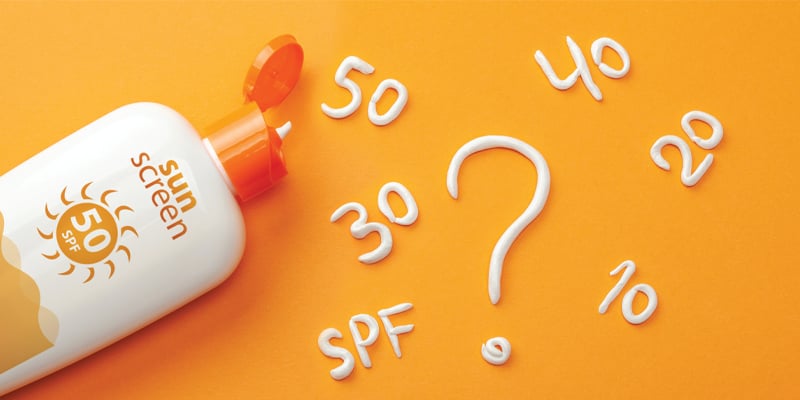
What does SPF mean?
SPF stands for sun protection factor. For example, SPF 30 means you are protected for about 300 minutes, and SPF 50 means you’re protected for about 500 minutes. Even so, I still recommend applying as often as possible or at least every two hours, more frequently if you have fairer skin, or doing activities that require more frequent application.
What kind of sunscreen should I wear? Does sunscreen expire?
It’s recommended you wear a broad-spectrum sunscreen with an SPF between 30 and 70.
Sunscreen does expire and is typically good for no more than three years. Most bottles have an expiration date. Keep in mind that sunscreen’s shelf life is shorter if it’s been exposed to high temperatures.
Are there other things I can do to protect my skin in addition to wearing sunscreen?
Yes! You should try to stay in a shaded or covered area to limit sun exposure. Wear hats, sunglasses, pants, and long-sleeved shirts. Plan activities for the early morning or early evening, when the sun is lower in the sky.
What are the long-term effects of not wearing sunscreen?
Not only are you at risk of skin cancer, but you’ll see sunspots on your skin. Actinic keratoses are rough, scaly patches that form on sun-exposed skin and are considered precancerous, meaning they can turn into skin cancer if not treated. It’s important to have them checked by a healthcare provider.
When should I get my skin checked?
I recommend seeing a dermatologist once a year for a full body check, and it can also be done by your primary care provider during your annual wellness exam. You should have a skin lesion checked if it meets any of the following criteria:
- Changes in size, shape, or color
- Becomes painful, itchy, or bleeds
- Persists for more than a few weeks without healing
What is the UV Index, and where can I find it?
The UV Index, created by the Environmental Protection Agency (EPA), predicts UV radiation levels across the US. The index is a daily forecast on the expected intensity of radiation from the sun. You can find it on the EPA’s website. If the UV index is 3 or higher in your area, it’s recommended to protect your skin with sunscreen.



.png)