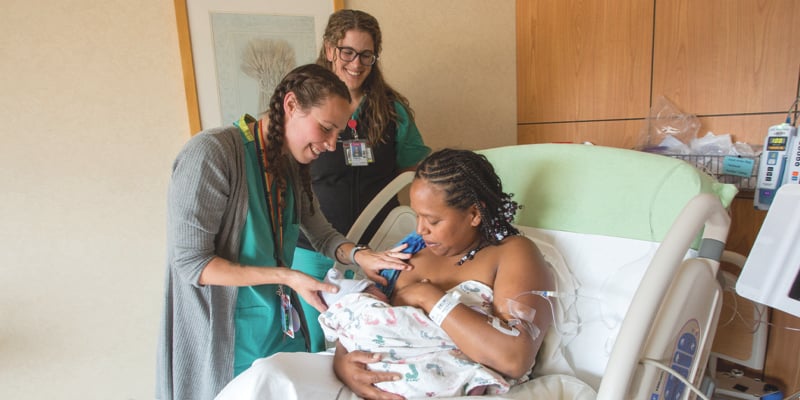
For centuries, mothers have nourished their babies through breastfeeding, yet modern science continues to unveil remarkable discoveries about this natural process.
From dramatically reducing infection rates in newborns to helping a mother with postpartum recovery, breastfeeding offers a cascade of health benefits that extend far beyond basic nutrition. As August marks National Breastfeeding Month, new research reveals just how profound these advantages can be—and why expert guidance makes all the difference in helping families navigate this important journey. The Centers for Disease Control cites many health benefits of breastfeeding for infants, children, and mothers, including nutrition and protection against certain illnesses.
Midwives play an important role in educating families about breastfeeding, typically at a mother’s first appointment. Ana Williams, MSN, CNM, IBCLC, the Clinical Lead for the Center for Midwifery-Longmont (a nurse-run clinic at CU Nursing), shares her expertise about what families should know about breastfeeding.
Midwives Are Here to Help
Williams says she talks with families about breastfeeding at their first midwife visit, always asking how they want to feed their baby. The Center for Midwifery-Longmont gives patients a handout in the third trimester with information about breastfeeding classes, support groups, and other resources.
“We want to make sure they have places to go if or when they’re facing obstacles or feeling like it’s not going well,” she says.
Families can find a list of resources CU Nursing's midwifery clinics offer by visiting the Patient Resources webpage.
The First Two Weeks Will Be Hard
“Even though breastfeeding is something humans do, it’s really hard in the beginning,” Williams says. “I encourage people to take a class and offer them resources so they’re prepared for some normal obstacles. It’s important they’re prepared and know these things are normal.”
Common obstacles mothers face when breastfeeding include sore nipples (“that’s number one – the most common thing people face,” Williams says), a baby having trouble latching, and concerns about babies not getting enough milk.
You’re Making Enough Milk
It's not unusual to be concerned about not producing enough milk. It's normal for a breastfed baby to eat every two to three hours, and sometimes even more frequently when going through a growth spurt. Parents are often worried that this is because they don't have enough milk.
You Can Donate Milk |
|
The Center for Midwifery-Longmont partners with Mother’s Milk Bank, where mothers can donate extra milk. Williams says the donated milk is important for premature babies, since the milk can save lives with its immune-boosting properties and appropriate nutrients. |
“Human milk is different from cow’s milk because of its proteins,” Williams says. “The proteins are smaller (compared to cow’s milk), so it’s easier for a baby to digest. That means babies are going to digest it faster and eat more frequently than they would if formula-fed.
She adds that the most important part of milk production is making sure your baby is nursing: “Your body is so smart. It makes milk according to what your baby needs and how your baby nurses.” If a baby is going through a growth spurt and eating more frequently, the body will be stimulated to make more milk to meet the baby’s demands.
Get Help
Every hospital or midwifery clinic may offer different resources, so Williams says it's important to see what’s available in your area. Common resources include lactation consultants, who can help if a baby has trouble latching.
“If a baby doesn’t latch on, mothers should pump their milk,” Williams says. “It’s important to do that to maintain a milk supply. The parent can then continue to work with a lactation professional to work on getting the baby latched while having enough milk."
Breast Milk is Amazing
Williams says breast milk is important for a baby’s health: it not only supplies nutrients, but it also passes immunity from all the illnesses a mother has had.
“When the baby is sick, its saliva goes into the mother’s body through the nipple, and the body knows what types of antibodies to make to help the baby during an illness. And, if a baby is cold, a mother’s breast will increase in temperature to warm the baby. It’s so incredible, beautiful, and comforting.”
Formula Has Its Place
Formula, made with cow’s milk and other ingredients, was invented during the Industrial Revolution when mothers worked in factories and left their babies with wet nurses. Wet nurses sometimes wouldn’t or couldn’t feed the babies adequately, resulting in babies dying or being malnourished.
“Formula is definitely lifesaving and necessary for many babies,” Williams says. “If you can’t feed a baby human milk, formula is there and we’re grateful for that because your baby will still grow and thrive, but if you ask me which one is better [formula or breast milk], human milk is always 100% better.”