

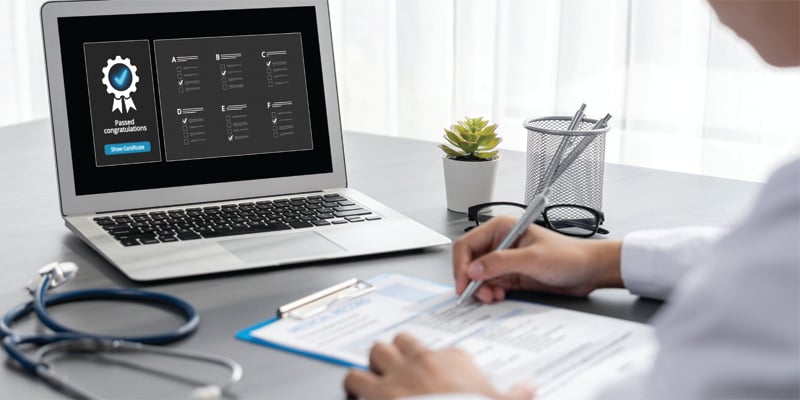
What is a certification exam?
A certification exam is a national, board-certified exam for students who have earned their MS in Nursing to become a nurse practitioner or an advanced practice nurse.
Each specialty has its own certification exam, and requirements may vary. It is recommended that students visit the certifying body’s website [more details below] to obtain the most up-to-date information on eligibility, exam details, and recertification standards, as these may change over time.
It’s typically a computer-based, multiple-choice test, similar to the NCLEX. It’s a proctored exam taken at a testing location.
Taking the exam is essential for your career
Taking the exam brings you, as an advanced practice nurse, credibility, professional growth, and broader career opportunities. It helps verify that you have received foundational knowledge, skills, and judgment to be considered a safe and competent APRN.
Certification v. licensure: What’s the difference?Licensure is state-based and allows you to practice as a nurse or a nurse practitioner. Your license comes from a state board. Certification is nationally recognized as a demonstration of competency and is valid in all 50 states. |
Typically, many states require you to have certification to get licensed as a nurse. Your employer will usually require you to be certified, too.
Four organizations offer the exam
You can register for a certification exam through these four main organizations:
- American Nurses Credentialing Center (ANCC)
- American Academy of Nurse Practitioners Certification Board (AANPCB)
- Pediatric Nursing Certification Board (PNCB)
- National Certification Corporation (NCC)
The ANCC and AANPCB are the two biggest organizations offering certification exams. In some specialties, only one certifying body exists; however, in most cases, students have a choice between at least two.
Take the exam once you graduate
You can register to take it before graduation, but you must wait until you have earned your MS in Nursing degree to sit for it (degree conferred and transcripts finalized). It’s recommended you take the exam as soon as possible after graduation, when you feel ready. Most graduates take it within the first 1-3 months after graduation.
You can retake the exam if you don't pass
Failing the exam is a setback, but it’s not a career-ender.
Top Pass RatesThese MS in Nursing specialties at CU Anschutz Nursing boast a 100% certification exam pass rate: |
Most people will succeed in retaking the exam because if they don’t pass, they receive a score report that shows them what areas they need to work on. Depending on which organization you go through, they have different requirements for re-taking it (for example, waiting 60 days or requiring continuing education credits).
There are requirements to keep your certification current
If you complete certification renewal requirements from the organization that administered your exam, you won’t need to retest. You may need to complete a certain number of continuing education hours, clinical hours, or similar requirements.
One of the biggest things I tell students is that when considering who to certify through, read about their recertification standards so you’re prepared. This decision is important, as the recertification process will set expectations for the remainder of their professional career.
Preparation starts early
As graduation approaches, particularly during the final semester, the student should consider taking a certification review course. These are available in multiple formats, including in-person, self-paced, and webinar-based options. Everyone learns differently, so aligning preparation strategy with the student's individual learning style is key.
CU Anschutz Nursing prepares students from the very beginning in their courses and curriculum. Our tracks are intentionally designed to prepare students for success in certification. We integrate certification-style practice questions, case studies, and other applied learning strategies throughout the curriculum, ensuring that exam preparation is seamlessly integrated into the educational journey.
Have the right resources
I recommend investing early in a certification review resource, such as an exam review book or an online program, and developing a realistic study plan that the student can engage with throughout their education. Whenever possible, select resources created by or endorsed by your certifying body, as these are most likely to reflect the exam’s structure and content. In addition to core review materials, other study modalities can be beneficial, including:
- Apps
- Flashcards
- Certification prep questions
- Practice tests
- Online programs
A predictor exam can also be useful. Simulating testing environments provides a more realistic experience, highlights strengths, and identifies content areas that require further focus.
Throughout the preparation process, it is essential to prioritize self-care, including rest, adequate sleep, a balanced diet, and regular exercise. Over-preparing without balance can diminish effectiveness and increase stress.
About the author: Dr. Krista Estes serves as the Assistant Dean of Master’s Programs and is an Associate Professor at the University of Colorado Anschutz College of Nursing. She actively practices as a Family Nurse Practitioner and previously held the role of Family Nurse Practitioner Specialty Director for eight years.



.png)