More than 300 researchers from across the country gathered June 4-5 at the University of Colorado Anschutz Medical Campus for the 6th annual Colorado Pragmatic Research in Health Conference (COPRH Con), hosted by the Adult and Child Center for Outcomes Research and Delivery Science (ACCORDS) conference planning committee and the Colorado Clinical and Translational Sciences Institute (CCTSI).
This year's conference offered two days of presentations and interactive content on the Future of Pragmatic Research: Team Science to Enhance Innovation and Impact.
Team science is a collaborative effort to address complex scientific and societal problems by leveraging the expertise of researchers and community members with lived experience.
“COPRH Con is the place to learn about the ‘how’ of conducting pragmatic research that is innovative and impacts health outcomes and policies. Our focus this year on team science and transdisciplinary research collaboration is enhancing the ability of our attendees to improve health in the real world,” says Sarah Brewer, PhD, MPA, assistant professor of family medicine and co-director of the Training, Education, and Mentorship (TEaM) Core at ACCORDS.
Attendees learned about current innovations, how to create highly functioning transdisciplinary teams, and future directions for team science in pragmatic research.
Following the life cycle
Bethany Kwan, PhD, MSPH, professor of emergency medicine and director of dissemination and implementation research at CCTSI, founded the conference in 2020 through a three-year R13 conference grant from the Agency for Healthcare Research and Quality.
The proposal emphasized the need for a research design and methodology conference to build capacity in health services research.
“We created COPRH Con to address the need for more research that generates evidence and interventions that can be readily adopted, used, and sustained in typical health care settings,” Kwan says. “Research that involves the patients, clinicians, and staff meant to benefit is more likely to have an impact on urgent health problems more quickly.”
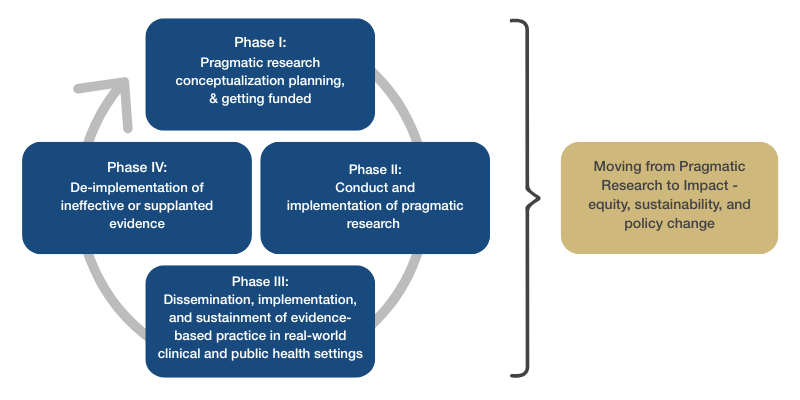
The first three years of the conference followed an evidence life cycle approach to innovation in research, which included planning, conducting and implementing, then sustaining and de-implementing pragmatic research studies.
More recently, the conference has focused on applying evidence for change and methods to move from data to equity, policy, and sustainability. The conference focuses on methods that produce actionable evidence, inform training and career development, and promote team science.
Engagement, communication, and impact
The conference began with presentations focused on the complexities of scientific research, the impact of transdisciplinary research teams, and the roles of community members with lived experience.
Kara Hall, PhD, senior scientist and program director at the National Cancer Institute, shared the evolution and challenges of transdisciplinary research to amplify our capabilities and accelerate progress.
“Transdisciplinary research integrates researchers working from different disciplines to create a process to develop theories, concepts, and methods to address a common problem,” Hall says.
Karen Martin, MIA, director of the Engagement Award Program at the Patient-Centered Outcomes Research Institute (PCORI), shared practical tools for comparative clinical effectiveness research teams to use to develop, conduct, disseminate and implement studies.
“We know that traditional health care research does not answer many of the questions that matter most to patients and families,” Martin says. “We want to ensure that research produces pragmatic, real world, information that can be used by patients, families, clinicians, as well as employers and insurers, to make the best choices they can.”
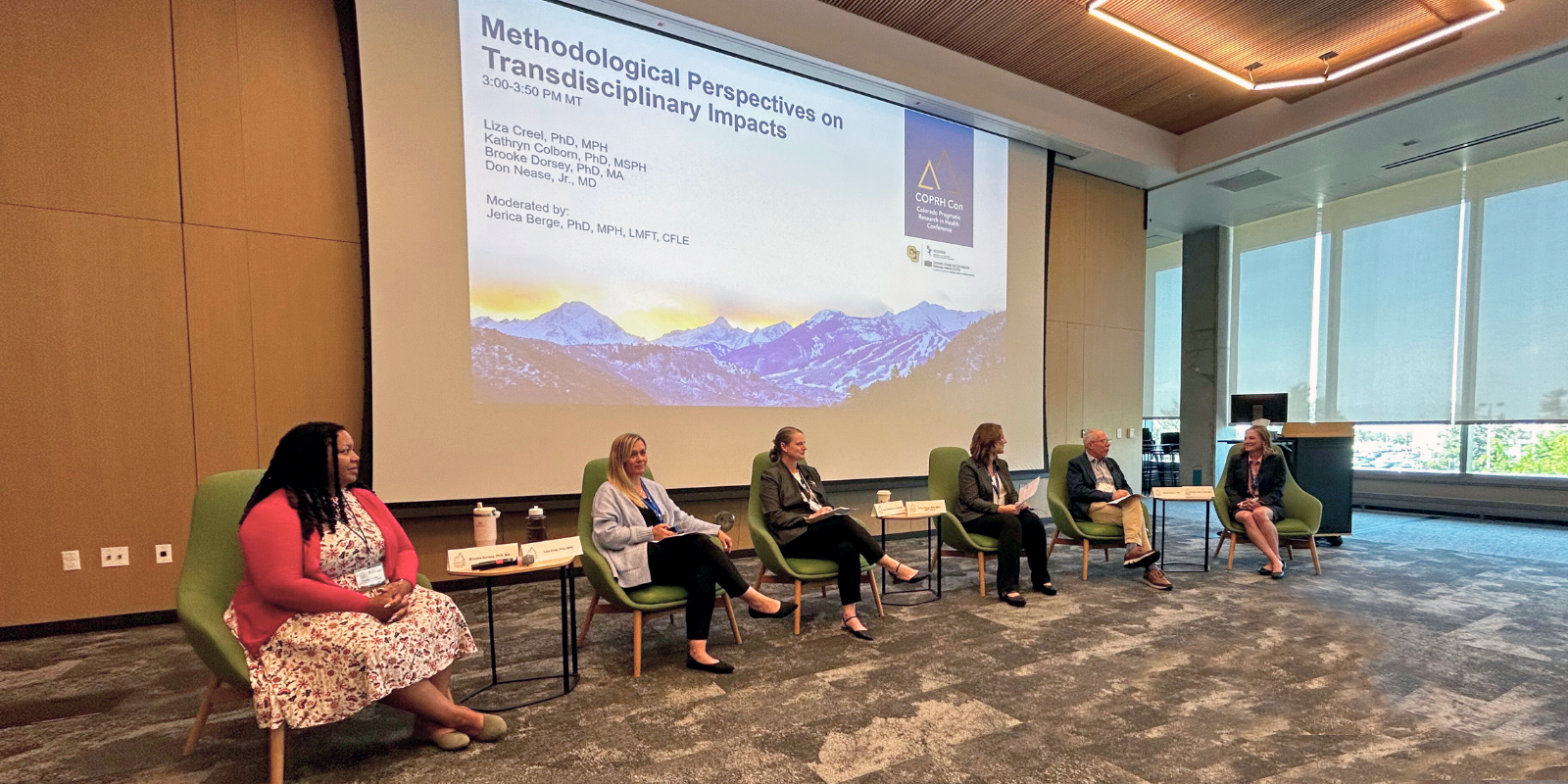
Day one finished with ACCORDS Core Directors discussing transdisciplinary impact and how to build trust and rapport within teams of researchers and patient partners. The presenters highlighted the need for strategic communication, flexibility in the changing research landscape, and setting clear expectations the team.
Future directions in pragmatic research
Day two of the conference highlighted the future of team science including affecting policy change, the role of artificial intelligence in health services research, and lessons learned on the journey of team science.
Gloria Coronado, PhD, associate director for population sciences for the University of Arizona Cancer Center, addressed the importance of public health policy.
“Policies are being created and implemented every day,” Coronado says. “Those policies are important considerations for pragmatic research as context, the intervention, or as an implementation or sustainability strategy.”
A panel of experts from the University of Colorado School of Medicine described various ways artificial intelligence can be leveraged in health services research, including developing predictive models, implementing AI tools into electronic health records, and using natural language processing for qualitative methodology.
The conference closed with a keynote by Jean S. Kutner, MD, MSPH, professor of general internal medicine, on the power and joy of collaboration. Kutner said the shared success of team science lies in the impacts in innovation, publications, grants, policy changes, and team fun.
“Scientific discovery is rarely a solo endeavor,” Kutner says. “Impactful research emerges from strong collaborative teams with complementary expertise and backgrounds, drawing on multifaceted perspectives and built on trust, inclusion, and shared purpose.”
The full COPRH Con agenda and speaker list is available at coprhcon.com.