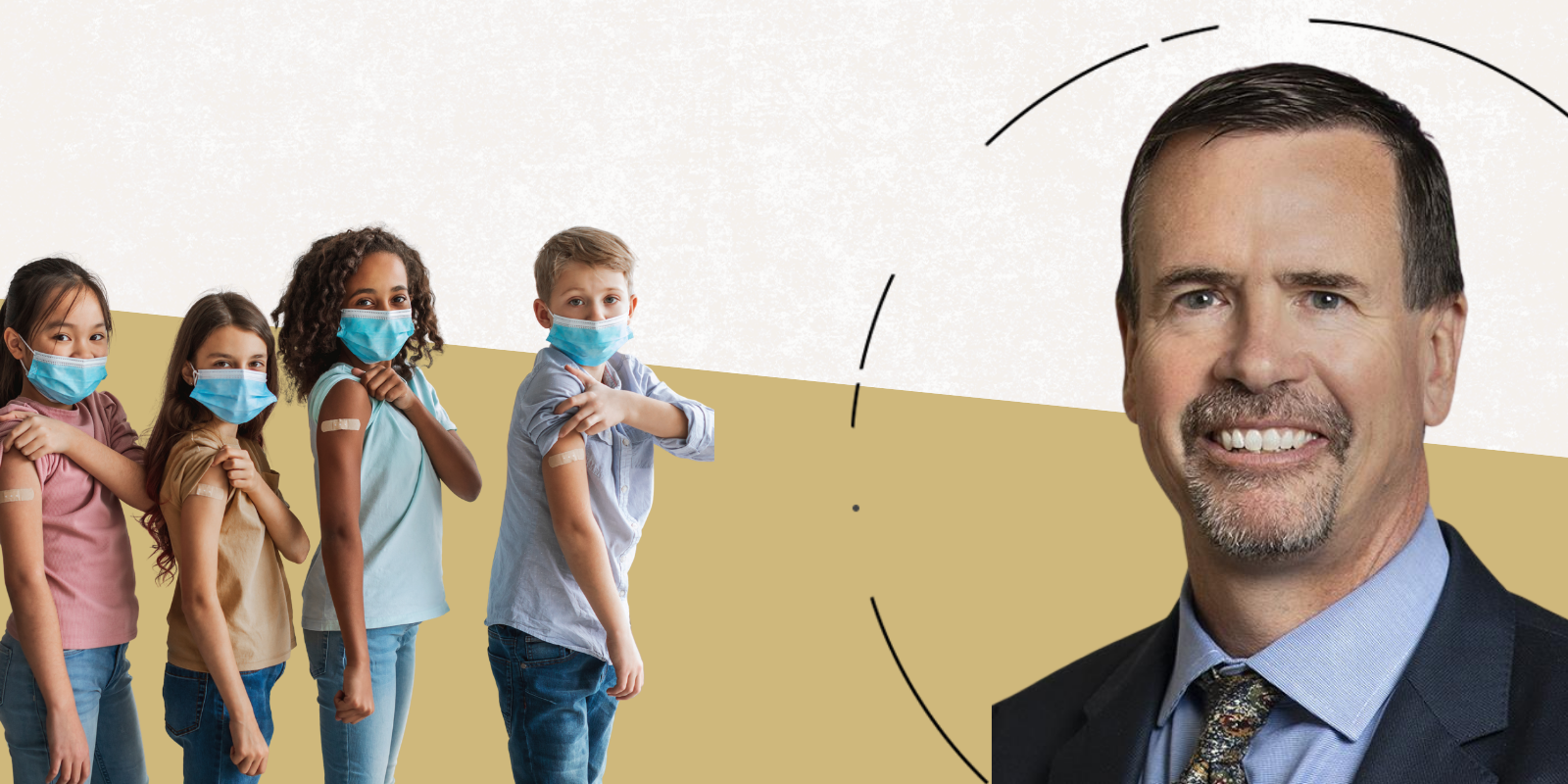
Sean O’Leary, MD, MPH, professor of pediatrics at the University of Colorado Anschutz School of Medicine, director of the Colorado Children’s Outcomes Network (COCONet), a practice-based research network, and an investigator at the Adult and Child Center for Outcomes Research and Delivery Science (ACCORDS), has been awarded two notable commendations for his contributions to health services research in vaccine delivery systems, public attitudes towards vaccination, and health care policy.
Researchers like O’Leary work at the intersection of science, communication, and policy to maintain high vaccination rates and protect population health. His research explores why some people accept or delay vaccines as well as structural barriers that can shape access to vaccines for some patients, something O’Leary points out is often overlooked in conversations about vaccine confidence.
National honors recognize decades of vaccine research leadership
The Henry K. Silver Advocate Award from the National Association of Pediatric Nurse Practitioners (NAPNAP) highlights O’Leary’s contributions to improving public health through research, policy insight, and national visibility in vaccine communication. The award recognizes outstanding contributions to the improvement of pediatric health care.
NAPNAP’s past president, Dan Crawford, DNP, cited O’Leary’s “pioneering spirit” in his congratulatory remarks along with his distinguished resume, representing hundreds of publications, dozens of grant awards, at least one landmark study, and his devotion to mentoring the next generation of the medical field.
“Most importantly, Dr. O’Leary has been a champion for NAPNAP’s inclusion in critical vaccine decision-making points,” Crawford said.
Jerica M. Berge, PhD, MPH, LMFT, CFLE, director of ACCORDS, also points to O’Leary’s strength as a mentor for both the center and the larger CU Anschutz medical campus.
“One of Dr. O’Leary’s many contributions is his commitment to mentoring the next generation of researchers and leaders. He has a remarkable ability to see potential in people and empower them to pursue ambitious goals with confidence and purpose,” she said. “Through his guidance, countless trainees and early-career scholars have developed not only as scientists but also as collaborators, innovators, and advocates for positive change in healthcare delivery.”
A career built on prevention, not recognition
For O’Leary, the recognition is meaningful.
“Receiving awards, that’s not why we do the work,” he says. “But when you do, it’s kind of fun that somebody recognized that maybe you’re doing something that’s helping the world.”
O’Leary was also recently recognized with the Distinguished Alumnus Award from the University of Texas Medical School at Houston, which honors alumni making significant contributions in medical science and education or disease prevention and treatment.
Looking beyond headlines on vaccine confidence
O’Leary emphasizes reality is much more nuanced than what media headlines may suggest about the state of vaccine confidence — both when it comes to vaccination rates and the people involved in the conversations.
“Most parents do vaccinate their kids … we still maintain childhood vaccination coverage over 90%,” he says. “When people talk about ‘vaccine hesitancy,’ they’re lumping individuals” into a homogenous group that is more diverse in their personal experiences than the label indicates.
O’Leary’s work extracts principles from behavioral science, especially regarding strategies that can be used to effectively counter misinformation.
“You lead with the fact, label the myth, explain why it’s a myth, and then repeat the fact,” he says.
O’Leary believes proactive education about “prebunking” is an even more effective strategy. “One way of putting it is cultivating cognitive antibodies,” he says.
Access, not attitudes, is often the bigger barrier
A significant part of O’Leary’s research focuses on systemic barriers preventing access to vaccines for some patients. In doing so, his work highlights how, even among willing patients, complex health care systems can limit their full participation.
“A lot of the barriers to vaccination fall more into the access category,” O’Leary says. Programs such as Vaccines for Children, which serves roughly half of U.S. children, are helping to close these gaps, but broader systemic solutions are needed.
“It would be a much more seamless system if we just covered vaccines as a nation — period,” he says. “We are one of the only high-income countries in the world that doesn’t do that.”
Why prevention is hard to measure and easy to overlook
As for what’s next, O’Leary believes a more coordinated, data-driven approach to understanding and addressing under-vaccination is needed. However, he also acknowledges a persistent challenge for health services researchers: prevention often goes unnoticed.
“When we do our job really well, nothing happens,” O’Leary says. This invisibility can make funding and prioritizing prevention difficult — even as the data shows it saves lives.